
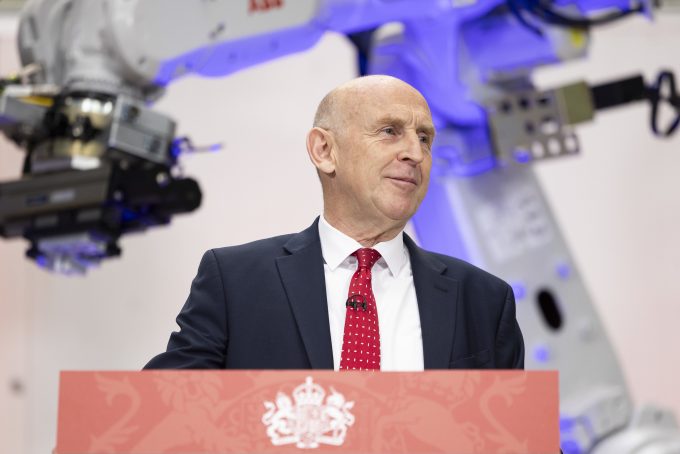
The Office for Budget Responsibility (OBR) has given the chancellor his own “breathing space” after forecasting that his budget will be in surplus by £15bn by 2029-30.
In his first budget speech, chancellor John Healey announced a string of measures to help those struggling with the costs of living, including a £100 payment for 20m households to help with rising energy bills, a 3.9% rise in the national living wage, scrapping of import taxes on 100 food products, a new tax-free allowance for low-income pensioners and plans for new ISAs for first-time investors and house buyers.
This was partly funded by a smaller-than-feared tax raid on banks. A 3% 15-month hike in the additional corporation tax surcharge they pay will raise £1.2bn. NatWest and Lloyds shares rose 1.5% and Barclays added 1.1% after falls in recent weeks.
Warning that the UK’s economic and fiscal position remained “very challenging” after a series of shocks since 2008, the OBR’s chair Professor Jonathan Haskell said Healey’s measures would add £12.4bn to borrowing over the next three years.
This was on top of an £11bn increase in government borrowing since March because of rises in market interest rates and inflation forecasts, the budget watchdog added in its Economic and Fiscal Outlook.
As a net importer of energy, the rise in oil and gas prices from the US war against Iran was a “negative terms-of-trade shock for the UK”, pushing up inflation and lowering real householder disposable income.
The OBR’s central forecast is for CPI inflation to rise to 3.5% next year, compared to its earlier projection of 2%, with real GDP growth slowing from around 1.25% this year to 1% next year, around half a percentage point lower than it previously forecast.
The watchdog stressed that the outlook for the economy and public finances was highly uncertain “with significantly better or worse outcomes of broadly equal probability”.
It said that debt interest spending had risen from £39bn or 1.7% of GDP in 2019-20 to £109bn or 3.5% of GDP this year, and was forecast to rise to £160bn and 4.2% of the economy in 2031-32.
It said: “If energy prices reach a higher and more sustained peak, borrowing could be £17bn above the central forecast in 2027-28, while a lower energy price path could reduce borrowing by £12bn.
“A one per cent change in interest rates could raise or reduce government debt interest costs by £16bn,” it said, adding: “If productivity growth were 0.5 percentage points higher or lower than forecast, borrowing could reach £50bn lower or £40bn higher.”
Nevertheless, the OBR assessed that the chancellor would meet his fiscal mandate of a budget surplus in three years’ time with an estimated £15bn buffer. “The supplementary target for public sector net financial liabilities (PSNFL) to be falling as a share of GDP in 2029-30 is met by a margin of £24bn,” it added.
Yields on UK government bonds, or gilts, dipped as their prices rose as investors welcomed the news.
Ben Jones, global head of research at Invesco, said investors would appreciate Healey’s more “steady as she goes” budget after the two tax-hiking statements from his predecessor Rachel Reeves.
“Against a backdrop of rising gilt yields and geopolitical uncertainty, Healey’s decision to limit spending increases and tax rises shows sensible caution. His opening comments were clearly aimed to ease bond market fears. However, many of the difficult fiscal choices – such as delivering welfare savings and boosting defence spending – have been postponed until the Spending Review next year, which will continue to fuel speculation of a Spring election,” Jones said.
You’ve read the news. Now have your say. Which investment trusts, fund managers and ETFs deserve to win? You decide in the Investors’ Choice Awards 2026. Vote now.
