
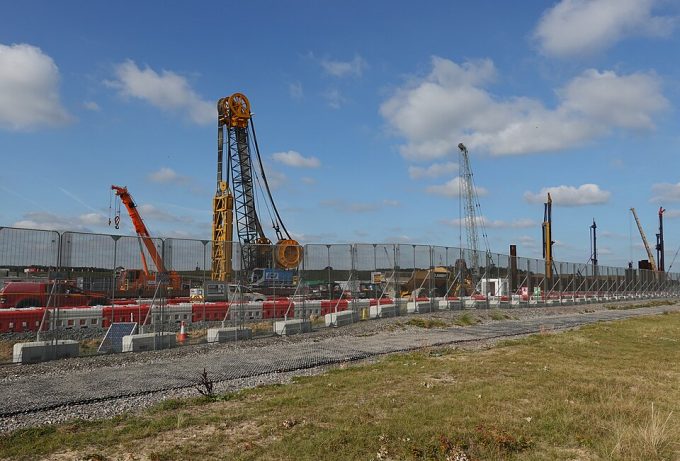
International Public Partnerships (INPP) has had an interesting couple of weeks. On 4 November, it announced that its wholly owned German rail business, BeNEX, had secured another 15-year concession, requiring a further €26m investment and offering an expected internal rate of return (IRR) in the low to mid-teens. Meanwhile, its much larger investment in the Sizewell C nuclear power station has come under scrutiny following a damning report from Parliament’s Public Accounts Committee (PAC).
The PAC described the Sizewell C funding arrangements as a “terrible deal” for UK taxpayers, arguing that consumers and taxpayers are bearing a disproportionate share of the financial risks while private investors stand to earn attractive returns. For INPP shareholders, however, the findings arguably reinforce the investment’s appeal.
We were positive about INPP’s investment in Sizewell C when it was announced in July 2025, believing it offered an unusually attractive combination of returns, inflation-linked income and downside protection, to the extent in fact, as we observed at the time, the terms of the transaction looked almost too favourable – thereby increasing the risk that a subsequent government might decide to reexamine them. The PAC’s criticism therefore comes as little surprise, although there is something of a chicken-and-egg problem here.
The UK urgently needs to electrify, improve its energy security and diversify its sources of generation. The public purse cannot fund this alone, so the government needs to attract private capital. However, successive governments have undermined investor confidence through policy changes, abandoned commitments and measures such as the Electricity Generator Levy, which have eroded expected returns. Investors will understandably demand greater protection or higher returns to compensate for this increased political risk. To some extent, successive governments have created the problem they are now trying to solve.
We believe this is reflected in Sizewell C’s terms. The project represents an exceptionally long-term commitment that will span multiple governments, with plenty of scope for things to go wrong. Political risk is also asymmetric. It is difficult to imagine a future government voluntarily improving investors’ terms, but considerably easier to envisage one seeking to make them less generous. Investors therefore need attractive returns and a healthy margin for error from the outset.
It is also worth remembering that a good deal involves more than headline returns and we believe Sizewell C is a good fit for INPP, and vice versa. INPP’s investment manager, Amber Infrastructure, has considerable experience of large, regulated infrastructure projects, including London’s Thames Tideway Tunnel. That expertise is particularly valuable given the UK’s patchy record of delivering major projects on time and on budget. Nuclear power is no exception, as the long gestation of Sizewell C and the delays and cost overruns at Hinkley Point C demonstrate.
Amber has negotiated an extensive package of protections that substantially reduces INPP’s exposure to the risks normally associated with nuclear projects. Under the regulated asset base model, investors receive inflation-linked revenues during construction, rather than having to wait for the plant to start generating electricity. These revenues are also insulated from fluctuations in wholesale electricity prices. INPP’s investment is expected to generate an IRR in the low teens, including an initial cash yield of around 6% during construction, while providing long-term income that should help offset the declining value of its more mature infrastructure concessions.
Crucially, construction cost overruns are largely passed on to consumers, with government support mechanisms available if costs exceed specified thresholds. There are also provisions for compensation if the project is abandoned in certain circumstances, alongside government-backed safeguards against exceptional nuclear liabilities and refinancing difficulties. These arrangements significantly reduce the potential financial consequences of problems that might otherwise make an investment of this nature prohibitively risky. They also help explain why the PAC believes the balance of risk and reward has shifted too far in favour of private investors.
Nevertheless, the investment is far from risk-free. If construction falls sufficiently far behind schedule, the initial cash yield can be progressively reduced to 4%, then 2% and ultimately zero. Delays could also defer future cash flows and reduce the investment’s valuation. The National Audit Office estimates that higher construction costs could reduce private investors’ returns from 12-13% to around 10.8-11.4%, which still looks relatively attractive. More extreme overruns, however, could expose investors to additional funding requirements, dilution or losses.
There is also the political dimension. Although existing contracts afford investors considerable protection, sustained political pressure could undermine confidence in the stability of the regulatory regime and the willingness of future governments to honour the terms agreed. Time will tell whether Amber’s negotiated protections prove as robust in practice as they appear on paper. However, the history of delays and cost overruns in nuclear construction serves as a reminder that, even with the protections Amber has negotiated, there is still plenty of scope for INPP’s investment to disappoint. Indeed, a deal the PAC currently considers too generous to investors could ultimately look less generous in the future.
Against this backdrop, the latest BeNEX concession illustrates that INPP’s growth opportunities are not confined to Sizewell C. The new contract will expand an established business in which INPP has invested since 2007, providing access to further long-term contracted revenues without venturing into an unfamiliar market. The anticipated low-to-mid-teens IRR also comfortably exceeds INPP’s 9.1% portfolio discount rate and, according to the company, the implied return from repurchasing its shares.
With INPP’s shares continuing to trade at a c 9% discount to NAV at the time of writing, shareholders are entitled to question whether capital should be reinvested or returned to them. Since June 2023, INPP has realised or committed to realise more than £440m of assets, with completed disposals all at or above carrying value. Over the same period, it has made new investments or commitments exceeding £500m, at an average expected IRR of more than 11%. This suggests that there are attractive opportunities to recycle capital into higher-returning assets, although keeping the discount, which has briefly exceeded 20% during the last year, remains important.
Ultimately, we continue to see merit in INPP’s approach. Sizewell C offers potentially attractive long-term returns with substantial downside protection, while BeNEX demonstrates the opportunities to generate growth from existing investments. The challenge is ensuring that the returns justify the risks and that the benefits ultimately flow through to shareholders.
There may also be a much bigger prize beyond INPP itself. If Sizewell C succeeds and the government honours its commitments, it could help rebuild investor confidence, unlock much-needed private capital and allow future infrastructure projects to be financed on more favourable terms for taxpayers and consumers. That would be a better outcome for everyone.
