
Moving to a new phase
Pantheon Infrastructure (PINT) delivered another year of strong progress in 2025. NAV total return was ahead of its 8-10% target, helped by continued operational delivery across the portfolio, rising EBITDA and improving cash generation. The full-year dividend was increased and fully covered. PINT is now moving beyond its initial build-out phase and into a more mature stage where cash generation, realisations and reinvestment are becoming clearer drivers of returns.
That transition became more evident after the year end. The sale of Calpine, completed in January 2026, followed shortly by the partial realisation of Intersect, provided tangible evidence that PINT can both create and crystallise value. Together, these transactions highlight the effectiveness of its model: backing assets with operational upside and recycling capital into new opportunities as the portfolio matures.
Global high-quality infrastructure with strong ESG credentials
PINT aims to provide access to a globally diversified portfolio of high-quality infrastructure assets, primarily in developed OECD markets, which are expected to generate sustainable attractive returns over the long term. It targets co-investment assets that have strong ESG credentials and underpin the transition to a low-carbon economy.
| Financial year ended | Share price TR (%) | NAV total return (%) | Dividend (pps) | Target div. (pps) |
|---|---|---|---|---|
| 30/12/22 | (10.4) | 0.6 | 2.0 | 2.0 |
| 29/12/23 | (7.0) | 11.0 | 4.0 | 4.0 |
| 31/12/24 | 11.5 | 14.9 | 4.2 | 4.2 |
| 31/12/25 | 26.8 | 10.1 | 4.3 | 4.3 |
The managers’ view
PINT is well positioned to perform despite the current macro backdrop
PINT’s managers believe that the fund is well positioned to perform despite the current macro backdrop. While the wider listed infrastructure sector remains affected by persistent discounts, greater bond yield volatility and a challenging exit environment, PINT argues that these pressures do not undermine the fundamental attractions of the asset class.
PINT’s defensive characteristics are even more valuable in today’s unsettled markets
PINT’s portfolio remains focused on high-quality core infrastructure assets with contracted or regulated revenues, protection from inflation linkages and conservative leverage. In the managers’ view, these defensive characteristics are even more valuable in today’s unsettled markets.
Operational performance across the portfolio remains strong, driving EBITDA growth, improved cash generation and greater dividend cover, even before any contribution from realisation proceeds. In PINT’s earlier years, the focus was primarily on deployment and portfolio construction. However, the investment case has become broader and more balanced, supported by operational growth within existing assets, exits at attractive valuations (though the exit process is out of PINT’s hands) and reinvestment into new opportunities sourced through Pantheon’s infrastructure platform.
Exposure to digital infrastructure
PINT has meaningful exposure to digital infrastructure and power & utilities. These investments were originally underpinned by the growth in cloud computing and have since benefitted from the rise in AI spending, which is driving additional demand for data centres and power.
The managers highlight that PINT benefits from long-term contracts with high-quality counterparties, including global technology companies, as evidence of the strategic importance of these assets. This not to say that PINT is making an overt call on the tech sector but, rather, it offers exposure to the infrastructure that supports those trends – the physical assets positioned to benefit from rising higher power consumption, digitalisation and the continued build-out of critical networks.
The realisations of Calpine and Intersect are significant in this context. As covered in our last note in July, Calpine was PINT’s first major realisation since IPO. The partial exit of Intersect, achieved at a material premium to entry cost within a matter of months, reinforced the managers’ view that attractive value can still be created and crystallised in targeted areas of the market. This is significant not just because of the profits realised, but because it provides evidence that PINT can actively recycle capital rather than simply wait for long-dated value to emerge.
Nearly five years after launch, PINT looks well set, being fully invested, increasingly cash generative and beginning to show that exits and reinvestment can sit alongside dividend growth. The portfolio’s defensive characteristics remain central, while the managers are showing they can turn that portfolio into a repeatable cycle of growth, cash generation and value crystallisation.
Asset allocation
The following charts are based on PINT’s Q4 2025 update using data as at 31 December 2025 (note: the charts reflect the portfolio as a percentage of gross asset value).
Figure 1: Portfolio split by geography
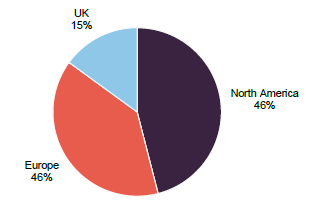
Figure 2: Portfolio split by sector
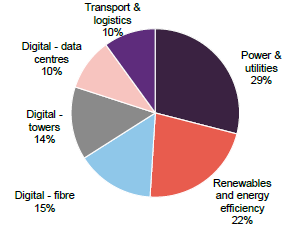
As at 31 December 2025, the company had £620m invested or committed across 14 assets. NAV stood at £611m, with £5m of cash. The business plans of the portfolio companies were fully funded at the time of PINT’s investment.
PINT also has access to a £115m revolving credit facility (RCF), which was undrawn. The manager has indicated that it would be unlikely to use the RCF without clear visibility of how it would be repaid, potentially supported by greater near-term certainty around realisations.
Figure 3: Portfolio split by revenue type
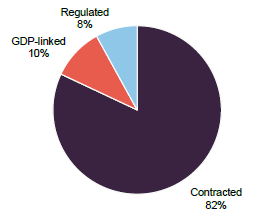
Figure 4: Portfolio split by sponsor
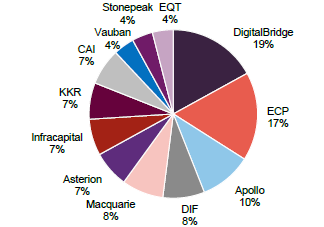
Figure 5: PINT’s portfolio as at 31 December 2025
| Holding | Business | Region | Sponsor | Total investment (£m) | MOIC (x) |
|---|---|---|---|---|---|
| Calpine | Electricity generation | North America | ECP | 107 | 3.0 |
| Primafrio | Transport & logistics | Europe | Apollo | 58 | 1.5 |
| National Gas | Gas utility and metering | UK | Macquarie | 51 | 1.5 |
| Fudura | Renewables and energy efficiency | Europe | DIF | 50 | 1.5 |
| Intersect | Renewables and energy efficiency | North America | CAI | 43 | 1.5 |
| Vantage Data Centers | Data centres | North America | DigitalBridge | 42 | 1.6 |
| National Broadband Ireland | Digital fibre | Europe | Asterion | 42 | 1.4 |
| Zenobe | Renewables and energy efficiency | UK | Infracapital | 41 | 1.3 |
| CyrusOne | Data centres | North America | KKR | 40 | 1.7 |
| Deutsche Funkturm | Digital towers | Europe | DigitalBridge | 37 | 1.3 |
| Delta Fibre | Digital fibre | Europe | Stonepeak | 26 | 1.2 |
| Cartier Energy | District heating | North America | Vauban | 25 | 0.8 |
| Vertical Bridge | Digital towers | North America | DigitalBridge | 24 | 1.1 |
| GlobalConnect | Digital fibre and data centres | Europe | EQT | 22 | 1.2 |
| Total | 608 | 1.5 |
Deutsche Funkturm is the re-branded German division of GD Towers.
The sale of Calpine to Constellation Energy Corporation was completed in January. PINT subsequently received $28.5m in cash and more than 325,000 Constellation shares, of which 50% are locked up until July 2026 and the balance until July 2027.
The latest NAV for PINT was based on a closing share price for Constellation of $350 as at 31 December 2025. At the time of writing, this has fallen to $313, which will have negatively impacted the NAV. NAV sensitivity is around 0.5p per share for every $10 movement in the Constellation price, implying around a 2p hit to PINT’s NAV.
Intersect
The only new investment made since our last note in July 2025 is Intersect, a US-based developer and operator of power infrastructure co-located with data centres. PINT’s initial investment was made in September. Intersect is well positioned to benefit from rising demand for hyperscale data centres, as well as growing base load power requirements driven by cloud computing and AI-related tailwinds.
A partial exit has already been achieved through the sale of the company’s pipeline of energy and data centre projects to Alphabet in March. PINT remains invested in the business operating the retained generation assets, which has been rebranded as IPX Power.
Asset development is expected to continue broadly as planned, with projects selectively retained and progressed, and all portfolio assets expected to be sold once the projects currently underconstruction are completed.
Performance – strong NAV and share price progress
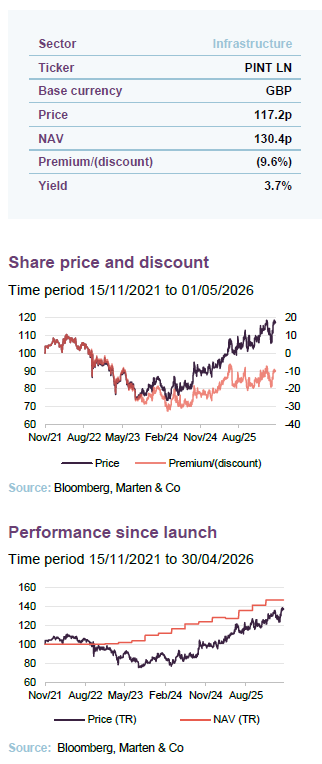
PINT’s NAV performance has continued to outpace its peers. NAV returns have significantly exceeded the pre-IPO target in every year since the portfolio became fully invested. For the twelve months to 30 April 2026, the NAV total return was 15.2%.
Particularly encouraging has been the recent strength in PINT’s share price, which has risen by around a quarter over the past year as the trust’s discount has narrowed.
Figure 6: Cumulative total return performance over periods ending 30 April 2026
| 6 months(%) | 1 year(%) | 3 years (%) | Since launch(%) | |
|---|---|---|---|---|
| PINT share price | 9.2 | 24.2 | 59.6 | 37.6 |
| PINT NAV | 3.9 | 15.2 | 43.9 | 46.7 |
| Peer group1 NAV median | 2.4 | 7.9 | 26.4 | 27.1 |
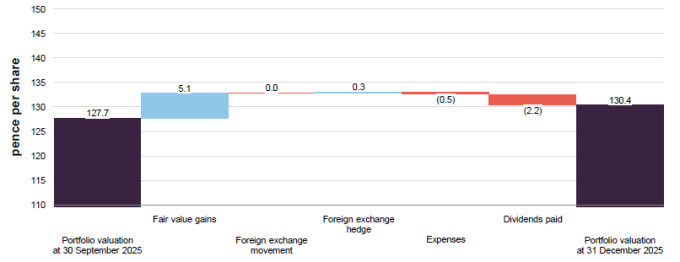
Figure 7 sets out the drivers of returns over the three months ended 31 December 2025. The majority of gains came from underlying EDITDA growth in the portfolio, partly offset by dividends paid.
Figure 7: PINT NAV bridge for three months ended 31 December 2025
Dividend payments
PINT met its target for a 4.3p income return to shareholders for the last financial year, paying out 4.346p in total. The most recent payment was the second interim payment of 2.173p, paid to shareholders on 24 April 2026.
The dividend is now fully covered, at 1.1x for 2025, an improvement over 0.7x in 2024. This is further proof of PINT entering a more mature stage. As further realisations are achieved, dividend coverage should further increase.
The dividend policy remains sustainable and future increases are possible. The board says that it remains committed to dividend progression while maintaining an open dialogue with shareholders on future policy.
Premium/(discount)
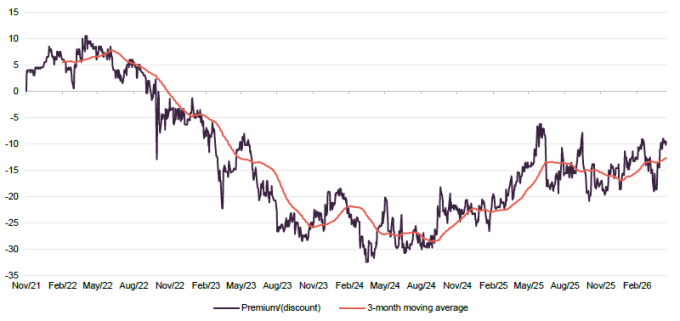
For the 12 months to 30 April 2026, PINT’s discount ranged from 6.3% to 20.9%, with an average figure of 14.4%. This represents both a narrower range and lower average than at the time of our last report in July (using data to 30 June 2025).
Figure 8: PINT premium/discount from launch to 30 April 2026
Potential share buybacks
PINT’s discount control mechanism gives the board discretion to use excess cash flows from realised net gains to buy back shares should a discount wider than 5% persist over any financial year.
This will become relevant from this year onwards, as the first realised net gains are expected to emerge. In considering any buybacks, the board will weigh the benefits to shareholders against the potential returns available from new investments, whilst also taking account of shareholders’ views. For example, the success of the Intersect investment, with a multiple on invested capital (MOIC) of 1.5x in just three months, illustrates the potential of reinvesting as opposed to buying back shares.
In the latest annual report, PINT’s chairman Patrick O’Donnell Bourke reiterated that the board remains mindful of its responsibility to manage the discount. However, he also said that the board and investment manager see a strong case for making new investments, and feedback from shareholders has indicated broad support for continuing to deploy capital into opportunities where this is expected to enhance long-term value creation.
Fund profile
Pantheon Infrastructure (PINT) targets risk-adjusted total returns of 8-10% per annum, comprising capital growth and a progressive dividend. To achieve this, it holds equity and equity-related investments in private infrastructure assets in Western Europe and North America, alongside other leading private asset investment managers and institutional investors.
The company is designed to provide investors with exposure to a diversified portfolio of high-quality infrastructure asset offering a mix of income and growth, with strong downside and inflation protection, in developed markets. Target assets typically exhibit defensive characteristics, including contracted or regulated cash flows, inflation linkage, conservative leverage profiles and strong sustainability credentials.
The fund’s initial focus has been on digital infrastructure (data centres, fibre networks, mobile telecom towers and the like); renewables and energy efficiency (wind, solar, sustainable waste-powered electricity generation, smart metres); power and utilities (energy utilities – transmission and distribution, water and conventional power generation); and transport and logistics (ports, rail, roads, and airports).
The board believes that PINT offers investors stable predictable cash flows, inflation protection, embedded downside protection, and diversification across infrastructure sub-sectors.
SWOT analysis
Figure 9: SWOT analysis for PINT

| Strong NAV performance since launch, underpinned by clear proof-of-concept, with cash generation, realisations and reinvestments driving returns. |
| A progressive dividend policy, including a dividend that is now fully covered by cash flow. |

| PINT is subject to market sentiment towards its sectors and the wider economic environment, particularly interest rate movements. |
| No prospect of a yield, although this should be well understood by shareholders. |

| Digital infrastructure and power & utilities investments, originally driven by growth in cloud computing, could continue to benefit additionally from the rise of AI, with its attendant demand for data centres and power. |
| PINT’s discount has continued to narrow in recent months. However, there is still significant potential for it to narrow further. The trust traded at a premium for some time after launch. |
| Although out of PINT’s direct control, further portfolio realisations could follow Calpine and Intersect, at a strong MOIC. |

| Valuation risk due to the nature of the portfolio of unlisted assets. A relatively small change in underlying assumptions can potentially have a meaningful impact on NAV. |
| Potential discount widening, in response to poor performance and/or poorer sentiment towards infrastructure sectors. |
Bull vs bear case
Figure 10: Bull vs bear case for PINT


| Performance | Strong NAV performance since launch in 2021, and returns for shareholders have been boosted by the narrowing discount. This is underpinned by the transition from an initial build-out phase to a more mature stage. | Although PINT’s performance is generally correlated positively to inflation, periods of particularly high inflation and rapid increases in interest rates – as was seen from mid-2022 onwards – can negatively impact returns. |
| Dividends | PINT met its 4.3p target in the most recent financial year. Dividend policy is sustainable, payments are now covered, and future increases are likely. | Increases would potentially cease being sustainable if conditions changed. However, this is less of a risk now than previously, given full coverage. |
| Outlook | PINT is exposed to growing sectors that are crucial for building the economy of the future. This is most clear in AI-driven data centre demand. | AI is a new and rapidly evolving technology where the shape of that evolution is uncertain. We have recently seen more of a pushback against AI as its massive potential has become clearer. |
| Discount | PINT still trades at a discount that could narrow further and potentially move to a premium, as happened for a period after launch. This could come about from inflation and interest rates further subsiding and from beneficial long-term structural growth themes. | The discount could widen significantly due to circumstances beyond PINT’s control, as happened from late 2022. This could be caused by higher interest rates or any newsflow perceived as negative for the underlying assets. |
Previous publications
Readers interested in further information about PINT may wish to read our previous notes, which are detailed in Figure 11.
Figure 11: QuotedData’s previously published notes on PINT
IMPORTANT INFORMATION
This marketing communication has been prepared for Pantheon Infrastructure Plc by Marten & Co (which is authorised and regulated by the Financial Conduct Authority) and is non-independent research as defined under Article 36 of the Commission Delegated Regulation (EU) 2017/565 of 25 April 2016 supplementing the Markets in Financial Instruments Directive (MIFID). It is intended for use by investment professionals as defined in article 19 (5) of the Financial Services Act 2000 (Financial Promotion) Order 2005. Marten & Co is not authorised to give advice to retail clients and, if you are not a professional investor, or in any other way are prohibited or restricted from receiving this information, you should disregard it. The note does not have regard to the specific investment objectives, financial situation and needs of any specific person who may receive it.
The note has not been prepared in accordance with legal requirements designed to promote the independence of investment research and as such is considered to be a marketing communication. The analysts who prepared this note are not constrained from dealing ahead of it, but in practice, and in accordance with our internal code of good conduct, will refrain from doing so for the period from which they first obtained the information necessary to prepare the note until one month after the note’s publication. Nevertheless, they may have an interest in any of the securities mentioned within this note.
This note has been compiled from publicly available information. This note is not directed at any person in any jurisdiction where (by reason of that person’s nationality, residence or otherwise) the publication or availability of this note is prohibited.
Accuracy of Content: Whilst Marten & Co uses reasonable efforts to obtain information from sources which we believe to be reliable and to ensure that the information in this note is up to date and accurate, we make no representation or warranty that the information contained in this note is accurate, reliable or complete. The information contained in this note is provided by Marten & Co for personal use and information purposes generally. You are solely liable for any use you may make of this information. The information is inherently subject to change without notice and may become outdated. You, therefore, should verify any information obtained from this note before you use it.
No Advice: Nothing contained in this note constitutes or should be construed to constitute investment, legal, tax or other advice.
No Representation or Warranty: No representation, warranty or guarantee of any kind, express or implied is given by Marten & Co in respect of any information contained on this note.
Exclusion of Liability: To the fullest extent allowed by law, Marten & Co shall not be liable for any direct or indirect losses, damages, costs or expenses incurred or suffered by you arising out or in connection with the access to, use of or reliance on any information contained on this note. In no circumstance shall Marten & Co and its employees have any liability for consequential or special damages.
Governing Law and Jurisdiction: These terms and conditions and all matters connected with them, are governed by the laws of England and Wales and shall be subject to the exclusive jurisdiction of the English courts. If you access this note from outside the UK, you are responsible for ensuring compliance with any local laws relating to access.
No information contained in this note shall form the basis of, or be relied upon in connection with, any offer or commitment whatsoever in any jurisdiction.
Investment Performance Information: Please remember that past performance is not necessarily a guide to the future and that the value of shares and the income from them can go down as well as up. Exchange rates may also cause the value of underlying overseas investments to go down as well as up. Marten & Co may write on companies that use gearing in a number of forms that can increase volatility and, in some cases, to a complete loss of an investment.