
3i Infrastructure was a well-deserved winner in this year’s QuotedData Investors’ Choice Awards, and it won an award last year too. What is it that makes it a popular choice for investors who want to diversify their portfolio with exposure to alternative assets and who also want income? We talked to James Dawes, chief financial officer of 3i’s infrastructure business, to find out.
3IN has a remarkable track record of NAV growth over more than one decade now, what drives these returns and are they sustainable in today’s economy?
The original London-listed infrastructure companies focused on government-backed PFI / PPP investments (funding new schools, hospitals, and the like) and regulated business (such as the water companies). 3IN launched in 2007 and it invested in core economic infrastructure as well as PPPs and renewable energy projects. However, in 2015 we set out to do something different. We shifted our focus to a “Core plus” approach to infrastructure, aimed at delivering an average of double-digit percentage returns to shareholders each year. To do that, we invest in growing businesses underpinned by strong market fundamentals, with scope for operational improvements and M&A opportunities, rather than individual infrastructure assets. The sorts of companies we favour provide essential infrastructure services. We like companies that are benefitting from “mega-trends”, such as the need to decarbonise the global economy, the digitalisation of business and society, adapting to demographic changes, and replacing/upgrading crumbling infrastructure.
Our job is to de-risk the business to strengthen downside protections, back it to make attractive, risk-adjusted returns on capital expenditure, and map out the growth opportunities that will attract buyers.
Would it be fair to say that 3IN is a bit more adventurous in its choice of investments than some of its peers?
Yes, to a degree. 3IN does take a somewhat broader approach to the types of investments we consider. While many of our peers focus on heavily contracted or regulated cash flows, 3IN has greater exposure to the broader economic environment, which also gives us more upside as these businesses grow. That said, we always look to ensure that our investments offer strong downside protection, for example by backing companies with dominant market positions or those providing essential services.
The company has grown over the years to have £4.1bn of net assets today. Is that size helpful when it comes to funding infrastructure projects?
3IN has generated both an attractive and growing dividend, and capital growth – having started with £1 at IPO in 2007, the NAV is now over £4, and the dividend has been increased every year since IPO.
Early in its life, when 3IN was smaller, it would sometimes make an investment alongside other similar investors. We really want control of our investments, so nowadays we may still sometimes opt to sell a slice of an investment to co-investors, managed by us alongside 3IN, as a way of managing exposures in the portfolio. Size brings the ability to hold controlling positions – today we hold a majority stake in all but one of our investments. That enables us to influence the development of these companies for the good and respond to opportunities more quickly.
The portfolio is really quite diverse by geography and sector, how do you keep track of everything – is there a big team managing the portfolio?
There are 11 companies in 3IN’s portfolio currently, all but one of which are headquartered in Europe, and they span the communications, energy, social infrastructure, transport & logistics, and utilities sectors.
There are over 40 people in 3i’s European infrastructure team, around 30 of which are investment professionals. Each investee company has its own management team, but 3IN is represented on the boards of each of these companies and is heavily involved in setting the strategic direction of these businesses.
Some investments have been in the portfolio for a long time. What drives the decision to sell something?
On average, the disposals 3IN has made since its focus on core-plus infrastructure in 2015 have come at a 37% uplift to their previous valuations and it has realised 3.2x the money that it’s invested.
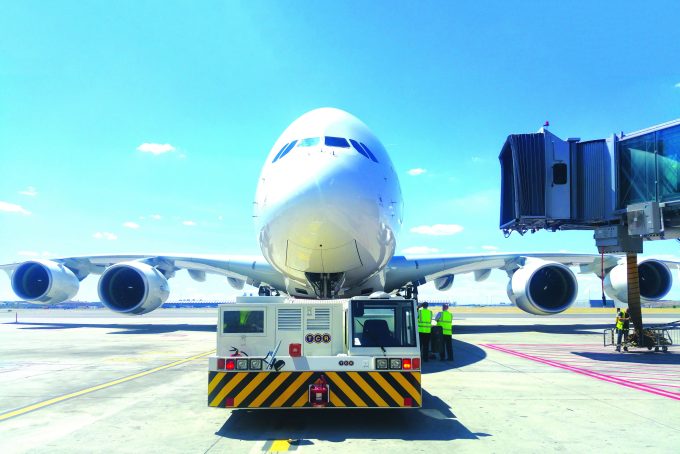
This is probably best answered by looking at a real-world example. We recently disclosed that we had initiated a strategic review of our investment in TCR, which is 3IN’s largest holding (accounting for about 20% of the portfolio). TCR is a Belgian business, but it owns and leases out ground support equipment used in almost 240 airports in over 20 countries. 3IN first invested back in 2016 (at the time TCR was operating from about 100 airports) and we bought out our partners in that deal in 2022 (the benefit of being bigger that I referred to earlier). During that time, 3IN had to shepherd the business through COVID. Airports around the world shut, but TCR’s availability-based contracts meant that it still got paid – demonstrating the downside protection that we aim for in 3IN’s investments.
We still see upside within the business and that is important, as leaving something on the table for the next owner helps secure stronger interest in the company and a better price. However, we had achieved our investment cases with TCR and grown it into a proven global platform which had now been proven. So, it felt like the right time to launch the strategic review for the asset.
Do you have a pipeline of potential new investments? How are these identified?
We prefer to invest through bilateral deals where possible rather than participate in auctions. For example, 3IN has bought unloved, neglected, or cash-starved businesses from within much larger companies. Sometimes we approach owners of assets we’re interested in, such as businesses owned by private equity funds or family offices where we have spotted infrastructure characteristics. We have a number of interesting new opportunities in our pipeline should we sell TCR. We have a borrowing facility to smooth out the timing of investments and exits, to avoid holding too much cash which would weigh on returns. Our current borrowings on that facility would be paid down from the proceeds of a TCR sale.
