
Set fair for the future?
Polar Capital Global Healthcare (PCGH) has delivered relative outperformance against its benchmark. It has achieved this despite headwinds, including some investors’ concerns over the policies of Donald Trump and performance in other sectors, notably technology. The endorsement by shareholders of its package of measures in November (which was covered in the previous note here) might suggest their confidence in the future of the trust. Since the last note, the managers of PCGH have made changes to the portfolio’s sector weightings, in particular a reduction in the allocation to healthcare equipment. The managers state that they are confident in the fundamental strength of the overall healthcare investment opportunity.
Long-term capital growth from healthcare stocks
PCGH aims to deliver long-term capital growth by investing in a diversified portfolio of healthcare companies from various regions. The portfolio includes a range of geographies, healthcare subsectors and company sizes, which provides the managers with flexibility to allocate across the global healthcare opportunity set.
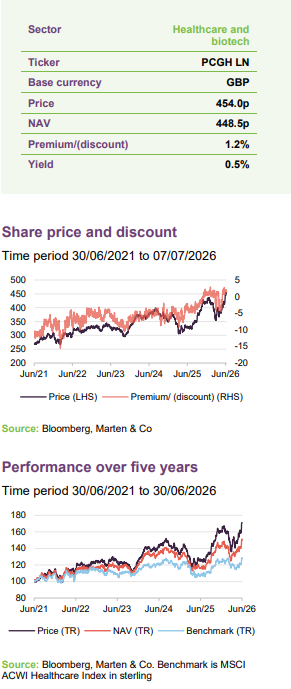
| 12 months ended | Share price total return (%) | NAV total return (%) | MSCI ACWI Healthcare TR (%) | MSCI ACWI total return (%) |
|---|---|---|---|---|
| 30/06/2022 | 13.5 | 10.4 | 8.2 | (4.1) |
| 30/06/2023 | 10.0 | 7.5 | 1.2 | 12.2 |
| 28/06/2024 | 15.6 | 14.6 | 11.3 | 20.6 |
| 30/06/2025 | (11.8) | (14.5) | (12.3) | 7.6 |
| 30/06/2026 | 34.8 | 29.2 | 19.4 | 28.5 |
Market background
In the last note in November (which can be read here), the focus was on the long-term drivers of the global healthcare market. Demographic change and the potential for higher spending in emerging markets are cited by the PCGH managers as positive factors for the sector, and the managers believe that this thesis remains intact.
The US regulatory environment
The PCGH managers state that a positive development in recent months has been related to US regulation. According to the managers, the election of Donald Trump and the appointment of Robert Kennedy Jr as secretary of health and human services led to widespread industry concerns. However, drug approvals continue to be processed by the Food and Drug Administration – including 46 in 2025 – and many of the key personnel at the agency have remained, which the managers believe provides continuity of contacts. There has been a reduction in the level of vaccinations in the US, which the managers attribute at least partly to Kennedy’s long-standing scepticism, but vaccine businesses represent a small part of the PCGH portfolio exposure.
The managers also state that drug-pricing risk appears to have eased somewhat in the past year. The Trump administration’s push for “most-favoured-nation” pricing initially raised concerns that US pharmaceutical revenues could face an aggressive reset, but the first major agreement, with Pfizer, appears to have reduced the risk of a more sweeping and adversarial intervention. Under the deal, Pfizer agreed to offer most-favoured-nation pricing to Medicaid and make discounted drugs available through the planned TrumpRx direct-to-consumer platform. Other companies, including AstraZeneca, have since reached similar agreements.
Reasons to be optimistic about the sector
The PCGH managers identify several factors that they believe could benefit the healthcare sector:
Innovation – according to the managers, pipeline newsflow remains strong across the sector, and the pace of new drug approvals continues to demonstrate the industry’s capacity to bring new products to market. Year-to-date to the middle of May, there had been 14 new novel drugs approved by the US Food and Drug Administration. The managers state that this is particularly relevant at a time when healthcare systems globally are under pressure to improve access, increase efficiency and address unmet medical needs. They note that innovation is not limited to medicines, but also includes delivery devices, diagnostics and technologies that may improve the way in which care is provided.
Consolidation – the managers note that large pharmaceutical and biotechnology companies continue to face the challenge of patent expiries over the coming decade, which they believe creates a need to replenish pipelines and sustain revenue growth. According to the managers, M&A activity has continued at a notable pace in 2026, with several transactions struck at premiums. They believe this could be supportive for smaller and mid-sized healthcare companies with attractive assets, particularly in biotechnology, where PCGH remains overweight (see page 6).
Rising healthcare utilisation – demographic change, evolving patient behaviour and the continued clearing of pandemic-era backlogs appear to be supporting demand across a range of healthcare subsectors. Companies exposed to areas such as healthcare services, distribution, equipment and facilities may benefit, particularly where higher volumes could lead to increased revenue and profit growth.
Easing of US policy concerns – US policy risk has been a significant factor affecting healthcare valuations. Some of this concern appears to have lessened as the policy backdrop has become clearer. The continuation of Medicare drug price negotiations has so far been more targeted than some investors had anticipated, while the focus on pharmacy benefit managers suggests that policymakers are also considering other parts of the healthcare supply chain rather than placing the full burden on drug manufacturers. A less severe outcome than the market had been discounting may support a recovery in sentiment towards the sector.
Slowing economic growth – Healthcare is often considered to have defensive characteristics if economic growth slows. Demand for medicines, treatments, medical devices, and healthcare services appears to be less sensitive to the economic cycle than many other areas of the market, as patients generally continue to require care regardless of broader economic conditions. This may support relatively resilient revenues and earnings at a time when other sectors could come under pressure from weaker consumer spending or lower industrial activity.
Short-term challenges
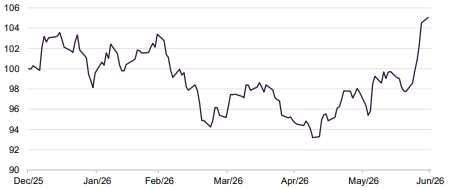
The managers say that at the beginning of the year, new short-term challenges emerged, centred on artificial intelligence (AI) and the Iran war. Together these appear to have had an impact on the performance of the sector, as shown in Figure 1. This was followed by a recovery in recent weeks.
Figure 1: MSCI ACWI Healthcare index YTD in sterling
Artificial intelligence
The release of Claude Desktop appeared to cause some concern in parts of the healthcare sector.
The PCGH managers have highlighted concerns raised in parts of the healthcare sector in February, following the release of Claude Desktop. These concerns focused on the potential for AI-driven disintermediation in parts of the healthcare services industry, and the possibility that increasingly capable AI tools could reduce demand for outsourced research, data management and trial support functions over time.
If AI can automate elements of clinical trial design, patient recruitment analysis or regulatory workflows, pharmaceutical and biotechnology companies may eventually require less external support from traditional contract research organisation (CRO) providers. This possibility appears to have contributed to a change in market perception, although the practical impact of these tools on complex clinical trial execution remains uncertain and may take time to assess.
CROs continue to play a role in the conduct of clinical trials, combining therapeutic expertise, regulatory knowledge and global execution capabilities. While AI may improve productivity and change parts of the workflow, the extent to which it could displace specialist outsourced clinical research providers is unclear.
Nevertheless, the episode appears to have contributed to a derating across the sector, with investors becoming more cautious towards companies perceived as vulnerable to automation. This was a headwind for some of PCGH’s holdings, notably ICON (see page 12).
War in the Middle East
War in Iran appears to have been destabilising for the sector.
The Claude Desktop-related concerns were followed by the American/Israeli-led war in Iran, which began at the end of February. This appears to have had some direct impact, relating to the closure of the Strait of Hormuz; specifically, disruption to supplies of sulphuric acid – half the global supply of which passes through the strait – and helium, which is used in MRI machines.
Figure 2: US consumer price index (CPI), year to 31 May 2026
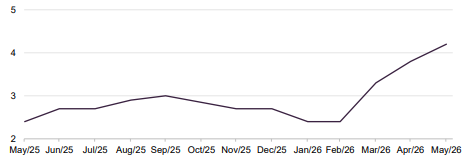
The sector may face an indirect risk, particularly the possibility that interest rates could remain higher than they otherwise would. As shown in Figure 2, the months after the beginning of the war have seen US inflation increase, with the CPI figure of 4.2% for May being the highest in three years.
With heightened inflation occurring alongside consistently strong labour market growth, previous optimism about interest rate cuts – in the US and elsewhere – appears to have diminished. Outright rate rises are not currently widely predicted, but the PCGH managers warn that if these prove necessary, there is a chance of a repeat of 2022, when rapidly rising rates caused the prices of smaller healthcare companies in particular to fall, as the market turned away from growth stocks. However, this is not currently the consensus forecast among investors, and the sector has recovered in recent weeks.
Asset allocation
PCGH’s asset allocation has changed quite significantly since our last note.
There have been changes to PCGH’s sector allocation since the last note in November, which used data as at the end of September. As shown in Figures 3 and 4, the largest allocation remains to pharmaceuticals, but the underweight in the sector versus the benchmark has narrowed to 5.5%.
The weighting to the healthcare services sector has increased, with this now being the second-largest overweight versus the benchmark. The overweight position to biotechnology has been maintained, with PCGH’s managers stating they remain positive on innovation in the sector.
Exposure to healthcare equipment has been reduced since the last note, from 24.2% and an overweight position, to 7.7% and an underweight. PCGH’s managers have expressed concerns about slowing topline growth in the sector, the lack of new product cycles, and company valuations. The managers state that the position will be kept under review, as M&A activity could provide a solution for some companies, and recent share price falls could present some opportunities.
Figure 3: Portfolio by sector as at 31 May 2026
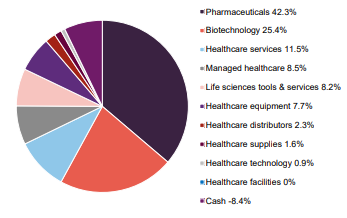
Figure 4: Portfolio sector weights relative to benchmark as at 31 May 2026
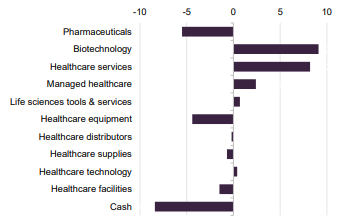
The portfolio’s cash component has moved from a small net positive to an 8.4% net negative. This appears to reflect PCGH’s current gearing, which the managers state is a sign of their positive view on the opportunities available in the wider healthcare sector.
Figure 5: Portfolio by country as at 31 May 2026
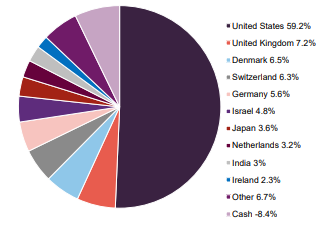
Figure 6: Portfolio country weights relative to benchmark as at 31 May 2026
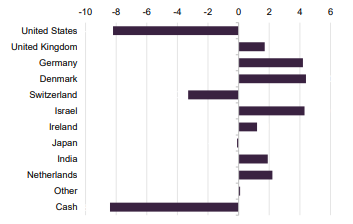
There have also been changes to PCGH’s country weightings, which appear to be less significant, and are attributed to bottom-up stock selection rather than a broader macro view on any particular country.
The US remains the largest country weighting in the portfolio, although the underweight relative to the index also continues. Germany has moved from the eighth-highest weighting to fifth. Denmark has fallen from second position to third, but remains the largest overweight relative to the index.
Top 10 holdings
There have been changes to the composition of PCGH’s top 10 holdings since the previous note in November. Roche, UnitedHealth Group, CVS Health, Cigna Corp, Novo Nordisk and Merck are now in the top 10, replacing Abbott Laboratories, UCB, Genmab, Sandoz, Exact Sciences and Edwards Lifesciences. These changes appear to reflect the changes to sector allocation detailed above; Abbott Laboratories is a healthcare equipment company, while UnitedHealth, CVS Health and Cigna Corp are in the healthcare services sector. There are now six pharmaceuticals companies in the top 10, compared to five previously.
Figure 7: PCGH 10 largest holdings as at 31 May 2026
| Stock | Sector | Country | % at 31/05/26 | % at 30/09/25 | % change |
|---|---|---|---|---|---|
| Eli Lilly | Pharmaceuticals | United States | 9.5 | 7.1 | 2.4 |
| Roche | Pharmaceuticals | Switzerland | 6.3 | – | 6.3 |
| UnitedHealth Group | Healthcare services | United States | 6.1 | – | 6.1 |
| AstraZeneca | Pharmaceuticals | United Kingdom | 5.5 | 6.1 | (0.6) |
| Thermo Fisher Scientific | Life sciences tools and services | United States | 4.9 | 3.4 | 1.5 |
| Teva Pharmaceuticals | Pharmaceuticals | Israel | 4.8 | 3.3 | (1.5) |
| CVS Health | Healthcare services | United States | 4.4 | – | 4.4 |
| Cigna Corp | Healthcare services | United States | 3.7 | – | 3.7 |
| Novo Nordisk | Pharmaceuticals | Denmark | 3.6 | 2.3 | 1.3 |
| Merck KGaA | Pharmaceuticals | Germany | 3.4 | – | 3.4 |
| Total | 52.2 |
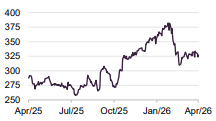
Figure 8: Roche (CHF)
Roche
Roche (roche.com) is a Swiss company that develops medicines and diagnostic tests, with a presence in pharmaceuticals, oncology, immunology, ophthalmology and diagnostics.
The PCGH managers added Roche following positive data for a key oncology asset in early-stage breast cancer, and in anticipation that further pipeline newsflow could affect the company’s outlook.
The company reported first-quarter 2026 sales growth of 6% at constant exchange rates, with pharmaceutical sales up 7% and diagnostics sales up 3%. Growth was attributed to demand for medicines including Xolair, Phesgo, Hemlibra, Vabysmo and Ocrevus, which the company stated helped to offset biosimilar competition and currency headwinds, particularly the strength of the Swiss franc. The shares declined earlier this year following the outcome of the Phase 3 trial of its oral breast cancer drug, Giredestrant.
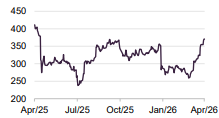
Figure 9: UnitedHealth Group (USD)
UnitedHealth Group
UnitedHealth Group (unitedhealthgroup.com) is a US healthcare and insurance group that operates through UnitedHealthcare, its health benefits business, and Optum, its healthcare services, data, pharmacy and care delivery platform. The purchase by PCGH’s managers appears to have contributed to the increase in the portfolio’s healthcare services allocation to an overweight position versus the index (page 6).
The company reported first-quarter 2026 revenues of $111.7bn and earnings from operations of $9.0bn. The update indicated that, despite pressure across the managed care sector from elevated medical costs, regulatory scrutiny and investor concern around Medicare Advantage, UnitedHealth continues to generate cash and maintain operational resilience.
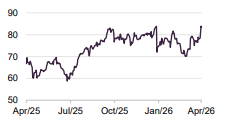
Figure 10: CVS Health (USD)
CVS Health
CVS Health (cvshealth.com) is a healthcare services company that combines pharmacy services, pharmacy benefit management, health insurance and retail healthcare.
The company’s recent performance appears to have been supported by indications that pressure in Aetna, its health insurance business, is easing. CVS reported first-quarter 2026 revenues of $100.4bn, up 6.2% year on year, and raised its full-year guidance following higher reported contributions from its Health Care Benefits and Pharmacy & Consumer Wellness segments. This improvement may offset previous concerns over rising medical costs, margins in the insurance business, and execution across its healthcare platform.
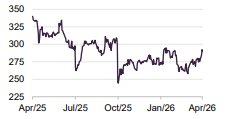
Figure 11: Cigna Corp (USD)
Cigna Corp
Cigna Corp (thecignagroup.com) is a global health company operating through Cigna Healthcare, its health benefits business, and Evernorth Health Services, which provides pharmacy, care and benefits services.
PCGH’s managers describe Cigna as attractively valued and state that the company is taking steps to reduce political risk around its pharmacy benefit management business. The market also appears to be modelling very conservative 2026 and 2027 earnings.
Cigna reported first quarter 2026 revenues rising 5% to $68.5bn and adjusted income from operations increasing to $2.1bn, or $7.79 per share. The company also raised its 2026 outlook for adjusted income from operations to at least $30.35 per share, citing disciplined execution and growth across its diversified platform.
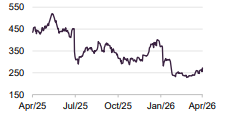
Figure 12: Novo Nordisk (DKK)
Novo Nordisk
Novo Nordisk (novonordisk.com) is a Danish company focused on diabetes, obesity and other serious chronic diseases, including its GLP-1 treatments for obesity and diabetes.
The company is a global provider of diabetes and obesity treatments through products such as Ozempic and Wegovy. Investor expectations appear to have increased following a period of significant growth. Recent updates have indicated continued demand for obesity treatments as well as challenges facing the business, including competition, pricing scrutiny and the need to expand supply.
The shares have been relatively weak in recent months, and the PCGH managers attribute this to 2026 guidance that they consider disappointing and late-stage obesity data for CagriSema, its injectable combination weight loss and type 2 diabetes therapy, which they describe as lacklustre.
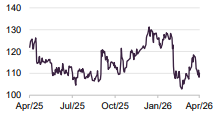
Figure 13: Merck KGaA (EUR)
Merck KGaA
Merck KGaA (merckgroup.com) is a German science and technology company operating across life science, healthcare and electronics. Its healthcare business includes medicines in oncology, neurology and immunology, while the wider group also supplies products and services used in drug discovery, development and manufacturing, as well as materials for semiconductor and display applications.
The company reported first-quarter net sales of €5.1bn and organic growth of 2.9% for 2026. Performance appears to have been supported by Process Solutions, part of its life science division, and semiconductor materials, while foreign exchange movements remained a headwind. Merck upgraded its full-year 2026 guidance, citing stronger momentum in life science and resilience in healthcare. However, the business continues to face pressure from factors including currency effects and patent-related challenges in parts of its healthcare portfolio.
Performance
Figure 14: PCGH NAV total return performance relative to benchmark to 30 June 2026
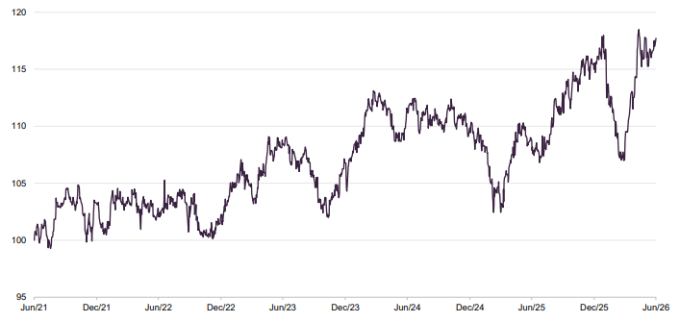
Despite the challenging conditions in the sector, the managers of PCGH have delivered a return ahead of the benchmark over the past five years, as shown in Figure 14.
Figure 15: Total return performance for periods ending 30 June 2026
| 3 months (%) | 6 months (%) | 1 year (%) | 3 years (%) | 5 years (%) | Since 31 July 2019 (%) | |
|---|---|---|---|---|---|---|
| PCGH price | 26.0 | 5.9 | 34.8 | 37.3 | 71.3 | 104.2 |
| PCGH NAV | 18.3 | 5.0 | 29.2 | 26.5 | 50.2 | 84.8 |
| Benchmark | 7.6 | 2.9 | 19.4 | 16.5 | 27.6 | 61.6 |
| MSCI ACWI | 16.7 | 12.8 | 28.5 | 66.7 | 79.3 | 127.2 |
| NASDAQ Biotech | 17.2 | 16.2 | 61.7 | 58.1 | 38.1 | 91.6 |
Both NAV and share price performance over one, three and five years, and since launch, have remained ahead of the benchmark, as shown in Figure 15.
Top contributors
Figure 16: Top positive contributors to return relative to benchmark to 31 May 2026 YTD
| Stock | Average stock weight (%) | Active weight (%) | Stock return (%) | Stock return versus benchmark (%) | Contribution (%) |
|---|---|---|---|---|---|
| Roivant Sciences | 2.52 | 2.52 | 37.93 | 41.16 | 0.92 |
| CVS Health | 4.50 | 3.27 | 16.37 | 19.6 | 0.78 |
| Boston Scientific Corp | 0.00 | (1.29) | (49.43) | (46.21) | 0.77 |
| Centene Corp | 2.56 | 2.30 | 44.55 | 47.78 | 0.72 |
| Abbott Laboratories | 0.00 | (2.21) | (31.04) | (27.81) | 0.72 |
Roivant Sciences (roivant.com) is a biopharma company focused on developing and commercialising medicines through its “Vant” model of subsidiary companies. Its share price appears to have been influenced by clinical and corporate developments, including data described as positive in difficult-to-treat rheumatoid arthritis. Roivant has also reached a $2.25bn global settlement with Moderna relating to Genevant and Arbutus patent litigation.
Centene Corp (centene.com) is a US-managed healthcare company focused on government-sponsored health insurance programmes, including Medicaid, Medicare and the Health Insurance Marketplace. Its share price appears to have been influenced by a stronger start to 2026, with first-quarter revenue rising 7% to $49.9bn. According to the company, performance was supported by Medicaid margin improvement initiatives, better-than-expected medical cost trends in Medicare, and growth in premium revenue.
We have covered CVS healthcare above (see page 8).
As shown in Figure 16, the list of top five relative positive contributors year-to-date versus the benchmark includes two stocks that are not held by PCGH and which performed poorly. Boston Scientific cut its full-year guidance, while Abbot Laboratories issued lower earnings guidance and reported lower performance in parts of its medtech business.
Figure 17: Top negative contributors to return relative to benchmark 31 May 2026 YTD
| Stock | Average stock weight (%) | Active weight (%) | Stock return (%) | Stock return versus benchmark (%) | Contribution (%) |
|---|---|---|---|---|---|
| iRhythm Technologies | 2.19 | 2.19 | (35.94) | (32.71) | (0.95) |
| Johnson & Johnson | 0.00 | (6.77) | 9.87 | 13.10 | (0.75) |
| ICON | 0.97 | 0.97 | (25.47) | (22.25) | (0.75) |
| Fresenius SE | 3.07 | 2.79 | (23.99) | (20.77) | (0.60) |
| Merck & Co | 0.00 | (3.49) | 13.40 | 16.62 | (0.50) |
iRhythm Technologies (irhythmtech.com) fell despite continued growth in demand for its Zio cardiac monitoring platform. The shares appeared to be affected by weaker sentiment towards higher-growth healthcare technology companies, as well as ongoing concerns around regulatory and legal issues linked to its Zio AT system.
ICON (iconplc.com) was affected by the market volatility following the release of Claude Desktop (see page 4). The company also disclosed an internal review into accounting issues and withdrew its outlook. Although the potential revenue overstatement appeared modest in percentage terms, the episode appears to have negatively impacted investor confidence and added to wider pressure on contract research organisation stocks.
Fresenius SE (fresenius.com) fell after its 2026 outlook did not meet market expectations, with forecast core earnings growth appearing to fall short of consensus despite ongoing progress at Kabi and Helios. The shares also appeared to be affected by broader caution regarding the group’s ongoing turnaround, as investors weighed improving cash flow and debt reduction against uncertainty over the pace of profit growth.
In the case of Johnson & Johnson and Merck & Co, PCGH appears to have been impacted by not holding two stocks that performed strongly. Johnson & Johnson upgraded its guidance, while Merck & Co was supported by demand for Keytruda and investor confidence in its broader pharmaceutical pipeline, despite continued scrutiny around its longer-term reliance on the cancer drug.
Premium/(discount)
Over the 12 months ended 30 June 2026, PCGH’s share price moved within a range of a 5.0% discount to a 2.9% premium, with an average position of a 1.1% discount. At 8 July 2026, PCGH was trading on a premium of 1.2%, which has been uncommon amongst investment trusts in recent years.
The narrowing of PCGH’s discount over Q2/Q3 2025 was likely in anticipation of an exit opportunity, which came in the form of new regular five-yearly tender offers (see below). Following the removal of certain shareholders, the discount tightened further, and when PCGH moved to a premium at the end of 2025, the board was able to reissue equity. In total, 6,073,026 shares were issued between December 18 and 20 April.
Figure 18: PCGH premium/(discount) over five years ended 30 June 2026
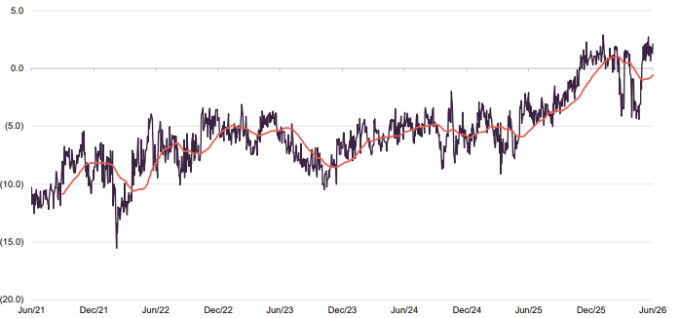
The board has also said that it plans to use share buybacks to modify discount volatility, as necessary, which should also help keep the discount within a relatively narrow range going forward.
At each AGM, PCGH shareholders are asked to approve the issuance of up to 10% of its share capital and the repurchase of up to 14.99%.
Fund profile
PCGH aims to generate capital growth through investments in a global portfolio of healthcare stocks that is diversified by geography, industry subsector and investment size.
More information is available on the trust’s website polarcapitalglobalhealthcaretrust.co.uk
PCGH started in 2010 as Polar Capital Global Healthcare Growth and Income Trust with an issue of ordinary shares and subscription shares. The subscription shares were exercised in full in July 2014, which affects the trust’s NAV returns for that early period.
In June 2017, the trust was reconstructed and adopted its current name. About 26.3m shares were bought back and 27.8m shares issued around that time. The company also issued zero dividend preference shares, which matured early in 2025.
Regular five-yearly exit opportunities
As discussed in our November 2025 note, in Q4 2025 PCGH proposed a package of measures including lower fees, changes to the trust’s structure, and regular five-yearly 100% exit opportunities. Shareholders approved the proposals. At the first of the five-yearly exit opportunities, 27,253,026 shares were validly tendered (22.47% of the issued share capital excluding shares held in treasury). The next exit opportunity will be offered in 2030.
The team appears to have considerable real-world experience of the pharma and biotech industry
PCGH’s investment manager and AIFM is Polar Capital LLP. The lead managers on the trust are James Douglas and Gareth Powell. The management team has experience in the pharma and biotech industry, which may inform its investment decisions.
PCGH’s performance is benchmarked against the total return of the MSCI ACWI Healthcare Index (in sterling).
Previous publications
Readers seeking further information about PCGH may refer to earlier notes, which are accessible by clicking on them in Figure 19 or by visiting the website.
Figure 19: QuotedData’s previously published notes on PCGH
| Title | Note type | Publication date |
|---|---|---|
| Healthy returns and a rosy outlook | Initiation | 5 March 2024 |
| Vital signs are good | Update | 14 November 2024 |
| Recovery Play | Update | 20 August 2025 |
| Decision time | Update | 12 November 2025 |
Important Information
Marten & Co (which is authorised and regulated by the Financial Conduct Authority) was paid to produce this note on Polar Capital Global Healthcare Trust Plc by Marten & Co.
This note is for information purposes only and is not intended to encourage the reader to deal in the security or securities mentioned within it.
Marten & Co is not authorised to give advice to retail clients. The research does not have regard to the specific investment objectives financial situation and needs of any specific person who may receive it.
The analysts who prepared this note are not constrained from dealing ahead of it but, in practice, and in accordance with our internal code of good conduct, will refrain from doing so for the period from which they first obtained the information necessary to prepare the note until one month after the note’s publication. Nevertheless, they may have an interest in any of the securities mentioned within this note.
This note has been compiled from publicly available information. This note is not directed at any person in any jurisdiction where (by reason of that person’s nationality, residence or otherwise) the publication or availability of this note is prohibited.
Accuracy of Content: Whilst Marten & Co uses reasonable efforts to obtain information from sources which we believe to be reliable and to ensure that the information in this note is up to date and accurate, we make no representation or warranty that the information contained in this note is accurate, reliable or complete. The information contained in this note is provided by Marten & Co for personal use and information purposes generally. You are solely liable for any use you may make of this information. The information is inherently subject to change without notice and may become outdated. You, therefore, should verify any information obtained from this note before you use it.
No Advice: Nothing contained in this note constitutes or should be construed to constitute investment, legal, tax or other advice.
No Representation or Warranty: No representation, warranty or guarantee of any kind, express or implied is given by Marten & Co in respect of any information contained on this note.
Exclusion of Liability: To the fullest extent allowed by law, Marten & Co shall not be liable for any direct or indirect losses, damages, costs or expenses incurred or suffered by you arising out or in connection with the access to, use of or reliance on any information contained on this note. In no circumstance shall Marten & Co and its employees have any liability for consequential or special damages.
Governing Law and Jurisdiction: These terms and conditions and all matters connected with them, are governed by the laws of England and Wales and shall be subject to the exclusive jurisdiction of the English courts. If you access this note from outside the UK, you are responsible for ensuring compliance with any local laws relating to access.
No information contained in this note shall form the basis of, or be relied upon in connection with, any offer or commitment whatsoever in any jurisdiction.
Investment Performance Information: Please remember that past performance is not necessarily a guide to the future and that the value of shares and the income from them can go down as well as up. Exchange rates may also cause the value of underlying overseas investments to go down as well as up. Marten & Co may write on companies that use gearing in a number of forms that can increase volatility and, in some cases, to a complete loss of an investment.