
Strong NAV growth, more winners emerging
Seraphim Space Investment Trust (SSIT) has continued to make strong portfolio progress. ICEYE’s latest funding round confirmed a substantial rise in its valuation, HawkEye 360 has listed, and York Space Systems has acquired ALL.SPACE. SSIT’s £137m C share issue provides capital for existing holdings and new opportunities, while Seraphim’s New Space ETF could increase demand for its shares.
ICEYE’s growth has increased concentration risk, but the manager sees it as the first holding to have “popped”, with Xona, Pixxel and Hubble offering significant potential. With the long-term outlook for SpaceTech strong and further growth in net asset value (NAV) expected, we think SSIT’s current share price discount to NAV is increasingly hard to justify.
The world’s first listed SpaceTech fund
A diversified, international portfolio of predominantly growth-stage, privately-financed ‘SpaceTech’ businesses that have the potential to dominate their field and are category leaders with first mover advantages in areas such as global security (defence), climate and sustainability, connectivity, autonomous mobility, telecommunication and smart cities.
At a glance
Share price and discount
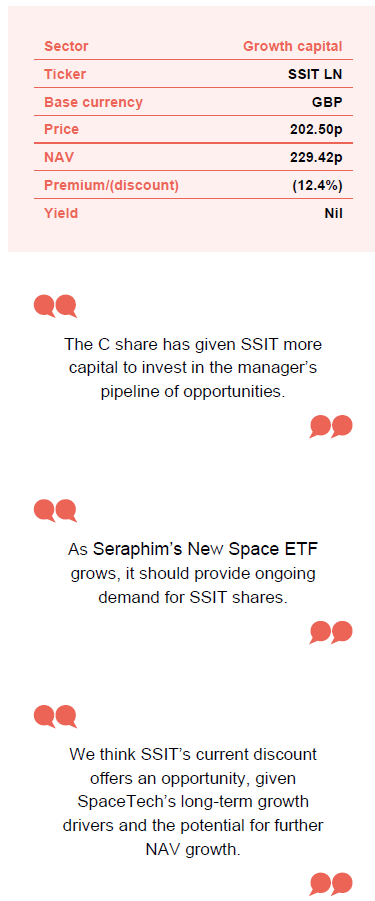
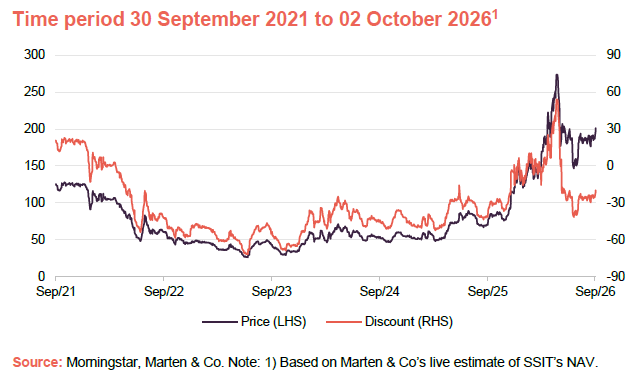
Over the past 12 months, SSIT’s shares have traded between a 44.6% discount to NAV and a 49.4% premium to this live NAV estimate, averaging a 13.5% discount. On 2 October 2026, the discount was 12.4%. We think SSIT’s current discount offers an opportunity, given SpaceTech’s long-term growth drivers and the potential for further NAV growth.
Performance over five years
Changes in defence and geopolitics are significant long-term drivers of growth, with the manager expecting these trends to support quarter-on-quarter growth in NAV this year and beyond.
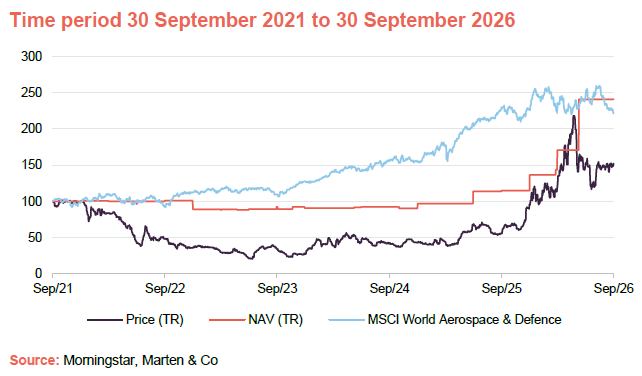
SSIT’s share price continues to lag the MSCI World Aerospace and Defence Index despite benefiting from the same trends driving defence stocks. The gap has narrowed, but we still believe SSIT has strong potential to catch up.
| Year ended | Share price total return (%) | NAV total return (%) | MSCI World Aerospace and Defence total return (%) |
|---|---|---|---|
| 30/09/2022 | (51.8) | 1.0 | (4.0) |
| 30/09/2023 | (28.5) | (8.1) | 10.2 |
| 30/09/2024 | 24.2 | (0.3) | 20.0 |
| 30/09/2025 | 31.8 | 24.3 | 16.8 |
| 30/09/2026 | 169.5 | 91.9 | 18.5 |
Fund profile
More information is available on the trust’s website investors.seraphim.vc
More information is available on the trust’s website investors.seraphim.vc
SSIT seeks long-term capital growth by investing in a diversified international portfolio of mainly growth-stage, privately financed SpaceTech businesses at B-stage or later. SSIT defines these as businesses that rely on space-based connectivity or precision, navigation and timing signals, or whose technology or services address, derive from or could benefit the space sector.
Its portfolio companies are typically leaders in their fields with potential to grow globally. Many benefit from being first to market in areas including global security, cybersecurity, food security, climate change and sustainability.
Launched in July 2021, SSIT met its fundraising target and began with about £178.4m in cash. Total assets were £337.5m at the end of December 2025.
SSIT’s alternative investment fund manager is Seraphim Space Manager LLP (Seraphim).
Measuring success
SSIT targets annualised NAV returns of 20% over the long term. It has no formal benchmark, but for this note we compare it with the MSCI World Aerospace and Defence Index.
Manager’s view
Addressing investor concerns
SSIT’s manager says that a number of issues have been raised during recent investor meetings and its recent investor webinar that it is keen to address. We look at each of these in turn. Otherwise, the manager’s long-term themes remain intact and we recommend readers see our April 2026 note where these are explored in more detail (see page 18 of this note).
ICEYE’s success has created an unusual problem for SSIT
SSIT’s concentration in ICEYE and whether the manager remains comfortable with this: ICEYE’s success has created an unusual problem for SSIT: the better the company performs, the greater the portfolio’s exposure to it becomes. However, the manager remains comfortable with the position. Seraphim believes ICEYE has substantial growth ahead and sees no reason to sell solely because the holding has grown. Mark Boggett, CEO of SSIT’s manager Seraphim VC, calls ICEYE the first portfolio company to have “popped”. It is the trust’s most mature investment and is benefiting from the commercial and defence opportunities Seraphim anticipated when it invested.
Seraphim’s conviction has been tested by real opportunities to realise profits
ICEYE’s latest funding round gave existing investors a significant opportunity to sell. SSIT was invited to do so but declined, as it had in an earlier round. Selling would also have brought forward a sizeable performance fee for the manager. Seraphim believes the potential gains from retaining ICEYE outweigh the benefits of selling now.
ICEYE is just the first portfolio company to have “popped”
Are other portfolio companies capable of developing into businesses of comparable scale to ICEYE and thereby reducing the portfolio’s concentration over time:
Seraphim believes ICEYE is the first holding to have “popped” and it is not a one-off. Other businesses are at earlier stages but serve large markets and could become much larger contributors to NAV. It highlights Xona Space Systems, which is developing a private GPS network with stronger signals, centimetre-level accuracy and military-grade security. Funding rounds at Pixxel and Hubble Network attracted significant outside investment, supporting Seraphim’s view of their potential in Earth observation and satellite-enabled connectivity respectively.
Maintaining the ICEYE holding is a major strategic initiative, which has the board’s support
Is SSIT’s board aligned with the manager’s position on ICEYE and the trust’s wider capital allocation: The size of SSIT’s ICEYE position naturally raises a governance question as well as an investment one: is the board comfortable allowing a single holding to become so important to SSIT? Seraphim’s position on retaining ICEYE has been consistent and well documented. Mark says the board does not choose individual investments, but oversees risk, portfolio concentration and investment decisions. The manager has faced continued scrutiny as ICEYE has become a larger part of NAV.
The C share issue has given SSIT the firepower to pursue opportunities that it previously had to pass up
The deployment of the proceeds from the recent C share issue, including the pace of deployment and discipline around valuations: Mark says that the C share issue has given SSIT the firepower to pursue opportunities that it previously had to pass up because of limited cash. Hubble Network (see pages 8 and 9) is a good example: Seraphim VC had invested at an early stage and wanted to participate in a subsequent funding round through the trust but lacked the resources to do so. The new capital has now allowed SSIT to make a meaningful follow-on investment in this company.
Commitments have already exceeded the £40m threshold required for the first C share conversion
Commitments have already exceeded the £40m threshold required for the first C share conversion and so investor concern has shifted from whether SSIT would invest the money quickly enough to whether it might invest too quickly. Seraphim says it has a strong pipeline, including businesses it has followed for years or invested in through its wider platform. Familiarity does not remove the need for price discipline. The test is whether the C share proceeds go into businesses that can deliver attractive returns at the prices paid. SSIT’s manager is confident they will.
C share was raised on premise of investing in SpaceTech businesses. This should not be changed after the event.
Rather than deploying the C share proceeds to new investments, should they be used instead for share buybacks:
A few investors argue that buying back ordinary shares at a discount would deliver an immediate uplift in value. Mark says the capital was raised specifically to invest in SpaceTech businesses, not to buy back SSIT shares. Changing that purpose after the event would not be appropriate in his view. Buybacks could still be used to manage the discount in future, but that is separate from how the C share proceeds should be used. We agree.
It remains difficult to reconcile the discount with the improving fundamentals in the portfolio
Why is SSIT trading at a discount and what could help close it: Mark says the discount is hard to reconcile with the portfolio’s improving fundamentals. We agree. Possible reasons include its private holdings, volatility, concentration in ICEYE, space being a relatively new investment theme and the rapid rise in net asset value (NAV). Clearer communication and evidence that other holdings can follow ICEYE’s path could help. Seraphim’s New Space ETF, in which SSIT is the largest holding, could also attract more investors and narrow the discount.
With SSIT, investors gain exposure to a diversified portfolio spanning a range of space-based activities
Why should investors own SSIT rather than seeking direct exposure to individual space businesses such as SpaceX: Unlike a single investment in SpaceX, SSIT offers a portfolio spanning Earth observation, communications, positioning, defence and commercial uses. It includes businesses unavailable on public markets.
Seraphim also uses its accelerator and venture activities to find companies early, build its understanding and increase its investment as they mature. Xona is one example. Rather than focusing on SpaceX, SSIT seeks the next generation of major space businesses.
Growing investor conviction in space as an investment theme: Investor confidence in space as a long-term investment theme appears to be growing. The sector is expanding, becoming more commercial and remains hard to access through public markets. Lower launch and satellite costs are making new business models possible, as the internet once did.
Mark Boggett says “we are just scratching the surface of SSIT’s NAV growth potential”
Despite recent gains, Mark sees further growth potential for dual-use space technology and SSIT’s NAV. ICEYE currently leads, but he believes every portfolio company could follow a similar path. He expects NAV to grow each quarter for the rest of this year and next.
Asset allocation
At 31 March 2026, SSIT held 24 direct investments: 23 portfolio companies and an investment in another fund. Their fair value rose to £433.3m from £331.6m at 31 December 2025, largely due to valuation gains. The top 10 holdings made up 98.1% of NAV, up from 91.9% at year-end. ICEYE’s latest valuation increase will have raised this concentration further. The deployment of the C share proceeds and subsequent conversion to ordinary shares, at the end of September, will help offset this. Nonetheless, SSIT continues to offer exposure across a broad range of SpaceTech subsectors.
SSIT’s manager says the portfolio focuses on leading companies with strong growth potential, selected for their quality rather than through a broad-brush approach. Although it holds relatively few individual investments, the portfolio remains spread across SpaceTech subsectors and geographies.
Platform businesses still dominate the portfolio. This reflects the manager’s focus on companies building satellite networks or space-based infrastructure that can grow without costs rising as quickly, such as ICEYE’s SAR constellation and Xona’s emerging LEO position and timing network.
Figure 1: SSIT portfolio by sub-sector as at 31 December 2025
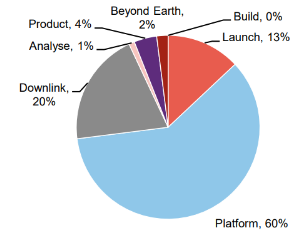
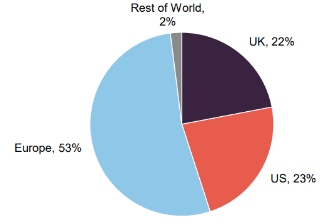
Figure 2: SSIT portfolio by geography as at 31 December 2025
Recent investment and exit activity
£21.3m of C share proceeds invested in follow-ons
SSIT committed £0.7m to a follow-on investment in ALL.SPACE in the quarter ended 31 March 2026. As noted on page 3, August’s first C share investments went to existing holdings Pixxel and Zeno Power, then Hubble Network, discussed below.
Hubble Network – bringing Bluetooth connectivity to space
£22.2m of C share proceeds invested in new holding, Hubble Network
Hubble Network (hubble.com) is SSIT’s first new investment using the C share proceeds. In our view, it shows the scale of the opportunity in new space. Its founders built Life360, which owns Bluetooth tracking specialist Tile. Their experience with Tile led them to tackle Bluetooth’s short range.
Their work showed that Bluetooth signals could be detected over miles and, after tests with a weather balloon, from the edge of space. This could matter for internet-connected devices, as conventional satellite tracking equipment is relatively expensive and uses a lot of power, making it uneconomic to monitor lower-value goods or requiring frequent battery replacement. Bluetooth is cheap, lightweight and uses little power, making more uses possible.
Hubble could combine its network with low-cost smart labels containing Bluetooth devices. Attached to individual items, these would let businesses track goods through supply chains. Other potential uses include military equipment, parcels, industrial assets, consumer products and agricultural goods.
Hubble is building a satellite network for its service
Hubble aims to connect low-cost, low-power devices directly to satellites using Bluetooth. It has seven satellites in orbit and plans a much larger network. Seraphim believes this gives Hubble one of the largest potential markets it has encountered. The technology has already been demonstrated; the challenge now is to add satellites, win customers and expand the service.
Hubble also shows Seraphim’s approach of investing early and increasing its stake as a business grows. Seraphim first invested at seed stage, allowing it to learn about the founders, technology and market before investing more through SSIT as the business matured. SSIT could not invest much in Hubble’s previous funding round because it lacked cash, but increased its stake substantially in the latest round using the C share.
Portfolio cash runway and SSIT cash burn
Figures 3 and 4 show how much funding SSIT’s portfolio companies need to reach cash-flow break-even, measured by fair value and company count respectively. The figures use the latest available management projections, as at 31 December 2025.
SSIT says that, at 31 March 2026, 86% of its portfolio by fair value had a robust cash runway: 73% was fully funded and a further 13% had funding for at least 12 months. The company held £20.9m in cash at that date (31 December 2025: £22.1m), with a potential further £4.1m from its three remaining listed holdings, equivalent to 1.0% of ordinary share NAV.
As noted previously, SSIT spends carefully, targeting follow-on investments to help reduce portfolio funding risk. However, as discussed on page 3, the C share issue provides significant funds for new and existing investments.
Figure 3: SSIT portfolio by funding duration as at 31 December 2025 (fair value)
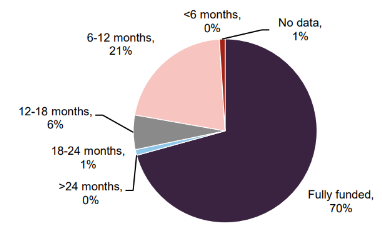
Figure 4: SSIT portfolio by funding duration at 31 December 2025 (number of co.s)
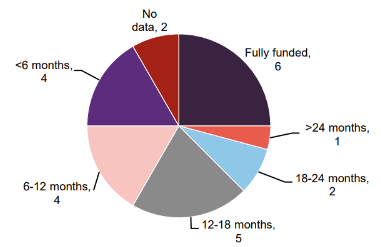
Maturity profile
SSIT is a growth capital fund and, as such, its portfolio is focused on companies that are beyond the earliest stages of funding. Its holdings have launched, or are preparing to launch, their products and are moving towards profitability.
SSIT draws on Seraphim’s venture capital arm to screen out early-stage companies, such as start-ups, that face significant risks in bringing their products to market. Around 70% of its investments are in Series C or Series D funding rounds, usually the final rounds of private funding before a potential stock market listing.
Top holdings
Figure 5 shows SSIT’s top 10 holdings as at 31 March 2026 and how they have changed since 31 December 2025 – the latest data available when we last published.
Figure 5: SSIT 10-largest holdings as at 31 March 2026
| Stock | Subsector | Country | As at 31/03/26 (%) | As at 31/03/26 (£m) | As at 31/12/25 (£m) | Change (£m) |
|---|---|---|---|---|---|---|
| ICEYE | Platform/Earth observation | Finland | 47.1 | 198.4 | 131.6 | 66.8 |
| ALL.SPACE | Downlink/ground terminals | UK | 13.6 | 57.4 | 53.8 | 3.6 |
| HawkEye 360 | Platform/Earth observation | US | 9.8 | 41.4 | 34.1 | 7.3 |
| D-Orbit | Launch/in-orbit services | Italy | 9.8 | 41.3 | 41.9 | (0.6) |
| Xona Space Systems | Platform/navigation | US | 6.7 | 28.4 | 10.5 | 17.9 |
| LeoLabs | Product/data platforms | US | 3.7 | 15.8 | 12.4 | 3.4 |
| SatVu | Platform/Earth observation | UK | 2.6 | 11.2 | 11.2 | 0 |
| Tomorrow.io | Data platforms | US | 2.1 | 8.8 | 4.3 | 4.5 |
| Skylo | Satcoms | US | 1.6 | 6.9 | 6.8 | 0.1 |
| Zeno | Space infrastructure | US | 0.9 | 3.8 | 3.7 | 0.1 |
| Total of top 10 | 98.1 | 421.3 | 310.2 | 111.1 |
All holdings in Figure 5 were constituents of SSIT’s top 10 when we last published. Their rankings have changed little, although some valuations, including ICEYE’s have risen significantly. Xona Space Systems stands out in particular. Updates are provided below. As discussed in the performance section (see page 12), HawkEye 360 completed its IPO and listed on Nasdaq. Further discussion on all of SSIT’s holdings can be found in our previous notes – see page 18 of this note.
ICEYE – completion of series F financing round has added 73p to SSIT’s NAV
Seraphim chose not to sell any ICEYE shares as part of the financing, reflecting its conviction in its growth prospects.
ICEYE (iceye.com) remains SSIT’s largest holding. Its €1bn Series F financing round, comprising €450m of new capital and €550m for sales of existing shares, has completed following regulatory approval. The new valuation raises the fair value of SSIT’s holding by around £202m, or 102%, equivalent to approximately 73p per ordinary share relative to the 31 March 2026 NAV. This will be reflected in the 30 September 2026 NAV and feed into the first partial conversion of C shares.
Seraphim chose not to sell any ICEYE shares in the round. As noted in the manager’s view section, SSIT’s manager believes ICEYE has significant further growth ahead and remains on a robust path towards an eventual IPO.
Xona Space Systems – secured regulatory approval to use GPS spectrum
Xona has raised around $200m and is preparing to build out its initial constellation.
Xona Space Systems (xonaspace.com) has secured regulatory approval from the FCC to use GPS spectrum, a milestone SSIT’s manager considers significant. It is developing a commercial low Earth orbit network for positioning, navigation and timing to complement GPS. The network is designed to offer stronger signals, centimetre-level accuracy and military-grade security.
Xona has demonstrated the technology in orbit. Seraphim believes it could become a substantial business, with an opportunity potentially like a “GPS equivalent of Starlink”.
Performance
Q3 FY26
At 31 March 2026, SSIT’s net asset value (NAV) was £421.3m, or 177.63p per share, up 24.8% from £337.5m, or 142.3p per share, at 31 December 2025. It was up 49.9% over the first three quarters of the year ending 30 June 2026, from £281.1m, or 118.52p per share, at 30 June 2025. Our last note covers the first half of FY26.
As in our last update, the main driver was unrealised gains in the portfolio’s value of £95.5m, or 40.3p per share, largely reflecting ICEYE’s strong performance and funding rounds at Xona Space Systems and Tomorrow.io, and HawkEye 360’s indicative IPO pricing, were supported by defence and geopolitical trends. There was also a £5.5m currency gain and £0.7m of acquisitions.
Material valuation increase in the value of ICEYE
As discussed on page 11, ICEYE completed its Series F financing and received the necessary regulatory approvals, confirming a significant valuation uplift for SSIT’s NAV of 73p per share. The transaction falls in the first quarter of the financial year ending 30 June 2027. This strong start supports Mark Boggett’s view that SSIT will continue to see quarter-on-quarter NAV growth this year and beyond (see below).
HawkEye 360 – potential to re-rate as sentiment improves
Figure 6: HawkEye 360 share price (USD)
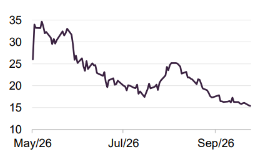
HawkEye 360 (www.he360.com) completed its New York Stock Exchange flotation in May 2026 at $26 a share, the top of its indicated range. It issued 16m new shares, raising $416m before costs and valuing its shares at approximately $2.84bn. Excluding the IPO proceeds, its enterprise value was 38% above the valuation SSIT used at 31 December 2025. SSIT’s 2.43m shares were worth approximately $63.2m at the offer price and are subject to a six-month lock-up.
The shares opened at $33.80 but have since fallen to $14.99 at the time of writing. We have reflected this in our live estimate of SSIT’s net asset value, despite HawkEye 360’s continued operational progress.
In Q2, revenue rose 87% year-on-year to $49.8m. International revenue grew 134% to $21m, and the order backlog reached $292.2m. The company reported a $15.3m net loss, while adjusted EBITDA fell from $7.8m to $7.0m. Operating cash flow rose 152% to $11.6m, and free cash flow reached $5.4m, against a $1.3m deficit a year earlier.
SSIT’s manager points to strong revenue growth, orders and new contracts. It sees the share price weakness as a short-term shift in market sentiment rather than a sign of weaker trading, and believes the shares could recover as the company delivers and profitability improves.
Derating appears to be a market sentiment issue rather than a fundamental deterioration in the business.
Demand for HawkEye 360’s radio-frequency signals intelligence is accelerating, particularly among defence, intelligence and allied-government customers. The company should also benefit from its planned Clusters 15 and 16 expansion, its first Block 3 Kestrel satellites and the integration of Innovative Signal Analysis’s algorithms. It has just announced $18m of contract awards in the Middle East. The lower valuation appears to reflect market sentiment rather than a decline in the business’s performance.
ALL.SPACE
Figure 7: ALL.SPACE share price (USD)
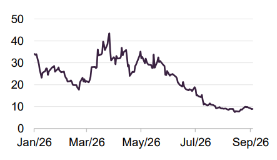
York Space Systems (www.yorkspacesystems.com) acquired ALL.SPACE on 8 July 2026. SSIT received US$17.9m in cash (£13.4m) and 1.24m York shares. It could receive up to a further US$8.1m through escrow and holdbacks, subject to adjustments after completion. As activity around ALL.SPACE progressed, SSIT raised its valuation from £30m at 30 September 2025 to £54m at the end of December and £57.4m, or 13.6% of NAV, at 31 March 2026.
York’s share price affected the value SSIT received. At the price on completion, the initial payment was worth about £34.7m, potentially rising to around £40.7m if all deferred amounts are received. This is below ALL.SPACE’s March valuation, largely because York’s listed shares weakened, rather than because the agreed deal value fell. SSIT retains exposure to any share price recovery. We have included this movement in our live estimate of SSIT’s NAV.
Further NAV growth expected
SSIT’s manager continues to see changes in defence and geopolitics as significant long-term drivers of growth. As noted previously, Seraphim VC’s CEO, Mark Boggett, expects these trends to support quarter-on-quarter growth in net asset value this year and beyond, as recent contracts generate revenue for portfolio companies and further contracts are signed.
We previously noted that SSIT’s share price lagged the MSCI World Aerospace and Defence Index despite benefitting from the same trends driving defence stocks. The gap has narrowed, but we still believe SSIT has strong potential to catch up. Its manager estimates that around 70% of the portfolio has defence applications. Portfolio companies continue to show growing profitability, with 85% of the portfolio expected to be profitable before interest, tax, depreciation and amortisation this year.
Figure 8: SSIT performance from launch to 30 September 20261
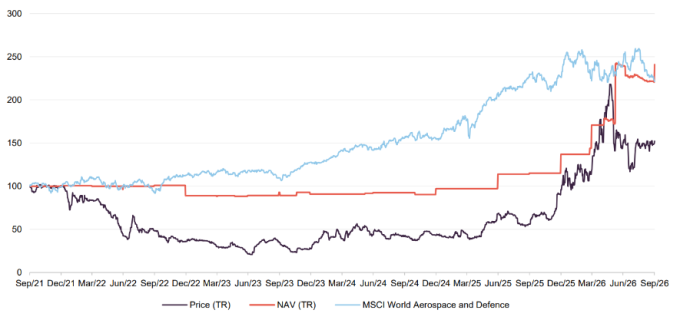
York Space Systems and its payment in part cash and York Space System Shares and the recent completion of ICEYE’s series F funding round.
Figure 9: SSIT performance over periods ended 30 September 2026
| 3 months (%) | 6 months (%) | 1 year (%) | 3 years (%) | 5 years (%) | Since launch1 (%) | |
|---|---|---|---|---|---|---|
| Price | 1.6 | 28.9 | 169.5 | 341.2 | 52.2 | 90.8 |
| NAV2 | (7.7) | 53.3 | 91.9 | 137.7 | 120.6 | 134.1 |
| MSCI World Aerospace and Defence | 1.5 | 18.3 | 18.5 | 66.0 | 75.5 | 77.1 |
Premium/(discount)
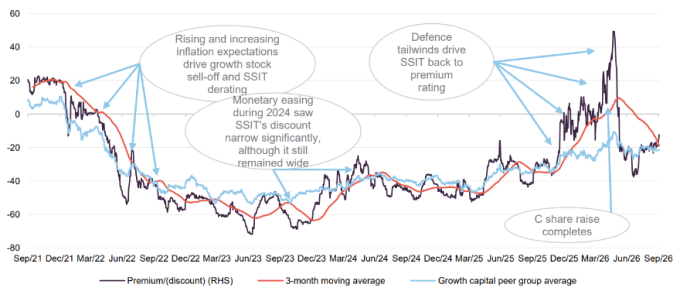
As Figure 10 shows, SSIT’s rating has improved significantly since April last year, particularly since December. Rising geopolitical tensions, especially uncertainty over US commitments to NATO and support for Ukraine, have prompted European nations and other non-US NATO allies to rethink their security arrangements and invest heavily in defence.
The war in Ukraine continues to show how both the dual uses of SpaceTech, and its critical nature in defence
The war in Ukraine continues to show how SpaceTech serves both civilian and military purposes, and why it is critical to defence. Conflicts elsewhere, including between Iran, the US and Israel, have reinforced this point. Even if current hostilities subside, we believe the weaknesses exposed in global defence infrastructure and alliances will sustain the drive to rearm.
The market’s recognition of SpaceTech’s defence role was a major factor in SSIT moving from a discount to net asset value (NAV) of around 50% 18 months ago to a premium in the mid-20s before April’s announcement of plans to issue the C share. The issue has helped meet pent-up demand, which may explain why the premium narrowed. Concentration risk following ICEYE’s success, and the rapid rise in NAV, may also be factors.
Given the significant valuation gains that have been achieved since SSIT’s NAV was last published (at 31 March 2026), we have built our own live estimate of SSIT’s NAV. This accounts for the HawkEye 360 IPO; York Space Systems’ purchase of ALL.SPACE, paid for partly in cash and York Space System Shares; and the recent completion of ICEYE’s series F funding round. This NAV has been used for the charts and tables throughout this report including Figure 10.
SSIT’s discount narrowing has disconnected from its wider growth capital peer group
Over the past 12 months, SSIT’s shares have traded between a 44.6% discount and a 49.4% premium to this live NAV estimate, averaging a 13.5% discount. On 2 October 2026, the discount was 12.4%. The growth capital peer group’s average discount ranged from 10.7% to 35.0%, averaging 23.8%. It was 21.4% on 2 October.
We think SSIT’s current discount offers an opportunity, given SpaceTech’s long-term growth drivers and the potential for further NAV growth. The new Seraphim New Space UCITS ETF has a 10% allocation to SSIT, which should support demand for its shares while the ETF grows. The reverse is also true.
Figure 10: SSIT premium/(discount) since 30 September 20211
Previous publications
Figure 11: QuotedData’s previously published notes on SSIT
SWOT analysis
| Strengths | Weaknesses |
|---|---|
| SSIT offers a unique investment proposition in the London-listed closed end funds space. While a few other trusts have a proportion of their portfolio in SpaceX, only SSIT gives investors pure play exposure to some of the most exciting private companies in SpaceTech.
SSIT offers a way for all investors to get exposure to this high growth and otherwise difficult to access sector, for the price of a share. Seraphim is a specialist investor with deep sector expertise, an extensive industry network and a strong track record of identifying promising businesses at an early stage. SSIT’s portfolio has displayed impressive growth recently with a number of its largest portfolio companies showing very material valuation uplifts. The portfolio has also matured considerably. Several of its larger holdings now have meaningful revenues, sizeable order books and improving profitability, while recent funding rounds and corporate transactions have provided increasing third-party validation of valuations. ICEYE is the clearest example of the value that can be created when an early-stage investment develops into a global market leader. The recent C share issue has strengthened SSIT’s financial position, providing additional capital to support existing investments and take advantage of a healthy pipeline of new opportunities. A larger asset base should also improve liquidity and spread fixed costs more widely. |
SSIT could suffer periods when absolute and/or relative performance is difficult, particularly when the market backdrop is unhelpful for growth investors, such as when inflation and interest rates pick up.
No prospect of a yield, although this should be well understood by shareholders. SSIT’s portfolio remains heavily exposed to unquoted companies, making valuations less transparent and more subjective than for a conventional listed-equity portfolio. Investors must therefore place considerable reliance on the manager’s valuation methodology and on periodic funding rounds to validate carrying values. Portfolio concentration has also increased substantially, particularly as ICEYE has grown in value. While this reflects investment success, it means that, for now, SSIT’s NAV is quite sensitive to developments at a relatively small number of companies. However, the C share will help reduce the concentration. |
| Opportunities | Threats |
| The long-term growth drivers for SpaceTech are powerful. Falling launch costs, advances in satellite technology and growing demand for communications, Earth observation, navigation and data services are expanding the industry’s addressable market.
The political temperature has risen across the globe and wars in Ukraine and Iran illustrate how important SpaceTech is to modern defence. With Europe rapidly rearming and other nations looking to bolster their defences, some of SSIT’s holdings could have long growth runways. Investors appear to be looking more favourably at SpaceTech, recognising its increasing importance in defence and, while its share price has benefitted, it still looks compelling versus aerospace and defence companies more broadly. The investment opportunity offered by SpaceTech is way larger than any one company (as owning just Nvidia or OpenAI would miss much of the broader AI revolution). SSIT provides this broad exposure in a way that owning SpaceX – directly or indirectly – cannot. |
The market could once again turn against growth investing, particularly if inflation re-emerges as a threat and nominal GDP growth falters. However, the need for nations to bolster their defences will likely outweigh such considerations.
Given the concentrated nature of the portfolio, single stock issues could hurt performance. SpaceTech remains a capital-intensive and technologically demanding industry. Portfolio companies can require substantial amounts of funding before becoming self-sustaining, leaving them exposed to weaker capital markets or investor risk aversion. Technological failure, launch delays, satellite malfunctions and competitive disruption can all impair individual investments. Competition is also increasing as governments, defence contractors and well-funded private companies commit more capital to the sector. A large proportion of SSIT’s value remains unrealised. IPO and M&A markets can close quickly, meaning it could take longer to dispose of investments and the value achieved could be impacted. SSIT’s discount could remain wide if investors continue to apply a substantial risk premium to private-company valuations, portfolio concentration and the wider listed growth-capital sector. |
Bull vs. bear case
| Aspect | Bull case | Bear case |
|---|---|---|
| Performance | SSIT’s portfolio, which has considerable dual use applications, has been benefitting from strong defence tailwinds, which look set to continue.
Manager takes a focused approach, doubling down on positions it views as the most promising. |
Growth focused investments generally benefit from subdued inflation and interest rates and, with oil prices still elevated edging up, interest rates look set to be higher for longer.
The flip side of manager’s focused approach is that it can skew the portfolio – for example, ICEYE accounts for 39% of NAV. |
| Dividends | SSIT focuses on capital growth and is only likely to pay a dividend to maintain its investment trust status and it would need to recover significant revenue losses first. | Investors should not consider investing in SSIT if they require income from their investment. |
| Outlook | The structural backdrop for SpaceTech remains compelling. At the same time, geopolitical tensions are driving increased government and defence spending on space-based capabilities.
SSIT’s manager believes that the sector remains at an early stage of development and that the portfolio is only beginning to reflect the scale of the opportunity. The successful C share issue also gives SSIT substantial fresh capital to invest into what the manager describes as a strong pipeline of opportunities. |
SSIT’s typical investee company requires funding, which has been difficult in an environment of higher interest rates where the IPO window has been shut. The funding environment appears to be improving for higher quality SpaceTech companies, although SSIT could see its performance suffer if this reversed.
Competition is also increasing as governments, defence contractors and well-funded private companies commit more capital to the sector. Technological disruption, launch failures, delays or changes in government procurement priorities could all undermine individual investments. |
| Discount | Adjusting for the impact on NAV from the recent ICEYE funding round, SSIT is trading at a sizeable discount to NAV. If transactions continue to validate SSIT’s carrying values, investor confidence in the NAV should grow and the SSIT’s rating should improve. Seraphim VC’s new ETF should provide demand for SSIT’s shares.
SSIT’s manager still expects to see quarter-on-quarter NAV and believes this should support SSIT trading on a meaningful premium in anticipation. ICEYE is converting its €1.6bn order backlog which should provide significant growth given it accounts for a high proportion of SSIT’s NAV. |
SSIT’s discount could come under pressure if inflation picks up or if the SpaceTech and/or aerospace and defence sectors move out of favour. SSIT’s size limits its ability to undertake buybacks.
A discount could also persist because of the inherent uncertainty attached to private-company valuations and SSIT’s growing portfolio concentration, although the recent C share should help in that regard. Investors any demand a significant margin of safety until more of the NAV is crystallised through exits or quoted-market valuations. |
| Other | Seraphim VC brings specialist knowledge and access to a sector that can be difficult for generalist investors to assess. Its network, sector expertise and ability to invest from an early stage have allowed it to back businesses that later developed into significant companies.
The recent C share fundraising has given SSIT the firepower to support existing portfolio companies and back new investments. Spreading its fixed costs over a larger asset base should help lower the ongoing charges ratio. |
SSIT remains a specialist investment company exposed to a relatively young and rapidly evolving industry. All the manager’s specialist knowledge helps to derisk them, the portfolio contains technological, execution and financing risks that are materially higher than those of a conventional quoted-equity portfolio.
Its growing exposure to defence and government customers potentially introduces political and procurement risk. Successful exits remain crucial – SSIT needs IPOs, trade sales or secondary transactions to turn its unrealised gains into cash which it can recycle into new opportunities. |
IMPORTANT INFORMATION
Marten & Co (which is authorised and regulated by the Financial Conduct Authority) was paid to produce this note on Seraphim Space Investment Trust Plc.
This note is for information purposes only and is not intended to encourage the reader to deal in the security or securities mentioned within it.
Marten & Co is not authorised to give advice to retail clients. The research does not have regard to the specific investment objectives financial situation and needs of any specific person who may receive it.
The analysts who prepared this note are not constrained from dealing ahead of it but, in practice, and in accordance with our internal code of good conduct, will refrain from doing so for the period from which they first obtained the information necessary to prepare the note until one month after the note’s publication.
Nevertheless, they may have an interest in any of the securities mentioned within this note.
This note has been compiled from publicly available information. This note is not directed at any person in any jurisdiction where (by reason of that person’s nationality, residence or otherwise) the publication or availability of this note is prohibited.
Accuracy of Content: Whilst Marten & Co uses reasonable efforts to obtain information from sources which we believe to be reliable and to ensure that the information in this note is up to date and accurate, we make no representation or warranty that the information contained in this note is accurate, reliable or complete. The information contained in this note is provided by Marten & Co for personal use and information purposes generally. You are solely liable for any use you may make of this information. The information is inherently subject to change without notice and may become outdated. You, therefore, should verify any information obtained from this note before you use it.
No Advice: Nothing contained in this note constitutes or should be construed to constitute investment, legal, tax or other advice.
No Representation or Warranty: No representation, warranty or guarantee of any kind, express or implied is given by Marten & Co in respect of any information contained on this note.
Exclusion of Liability: To the fullest extent allowed by law, Marten & Co shall not be liable for any direct or indirect losses, damages, costs or expenses incurred or suffered by you arising out or in connection with the access to, use of or reliance on any information contained on this note. In no circumstance shall Marten & Co and its employees have any liability for consequential or special damages.
Governing Law and Jurisdiction: These terms and conditions and all matters connected with them, are governed by the laws of England and Wales and shall be subject to the exclusive jurisdiction of the English courts. If you access this note from outside the UK, you are responsible for ensuring compliance with any local laws relating to access.
No information contained in this note shall form the basis of, or be relied upon in connection with, any offer or commitment whatsoever in any jurisdiction.
Investment Performance Information: Please remember that past performance is not necessarily a guide to the future and that the value of shares and the income from them can go down as well as up. Exchange rates may also cause the value of underlying overseas investments to go down as well as up. Marten & Co may write on companies that use gearing in a number of forms that can increase volatility and, in some cases, to a complete loss of an investment.