
Strong NAV growth underway, with further upside expected
Seraphim Space Investment Trust’s (SSIT’s) recent results show strong NAV progression, driven by valuation uplifts across its core holdings and improving operational momentum. However, the manager’s excitement about the portfolio’s prospects is undimmed. It believes that there is significantly more NAV growth to come as contracts convert into revenues and momentum builds.
The backdrop for SpaceTech has shifted materially, with SpaceTech now increasingly recognised as critical national infrastructure. Rising defence spending and faster procurement, particularly in Europe, are boosting demand in areas where SSIT is well exposed. This is already feeding through into larger contracts, better revenue visibility and clearer routes to profitability across the portfolio.
SSIT’s manager believes that its current rating does not fully capture the strength or durability of these structural growth drivers and that the long-term opportunity remains underappreciated.
The world’s first listed SpaceTech fund
A diversified, international portfolio of predominantly growth-stage, privately-financed ‘SpaceTech’ businesses that have the potential to dominate their field and are category leaders with first mover advantages in areas such as global security (defence), climate and sustainability, connectivity, autonomous mobility, telecommunication and smart cities.
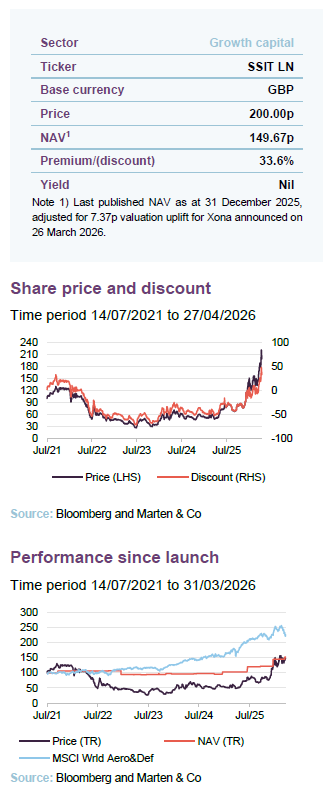
| Year ended | Share price total return (%) | NAV total return (%)1 | MSCI World Aerospace and Defence TR (%) |
|---|---|---|---|
| 31/03/2023 | (64.2) | (11.8) | 7.1 |
| 31/03/2024 | 31.0 | 3.1 | 21.4 |
| 31/03/2025 | 12.2 | 6.8 | 24.1 |
| 31/03/2026 | 171.7 | 48.1 | 29.8 |
Fund profile
More information is available on the trust’s website investors.seraphim.vc
SSIT aims to generate capital growth over the long term through investment in a diversified international portfolio of predominantly growth-stage (B-stage or later), privately financed SpaceTech businesses (which SSIT defines as entities that rely on space-based connectivity and/or precision, navigation, and timing signals or whose technology or services are already addressing, originally derived from, or potentially benefiting, the space sector).
SSIT’s portfolio companies are typically category leaders with the potential to scale globally. They frequently benefit from first-mover advantages across areas such as global security, cybersecurity, food security, climate change and sustainability.
SSIT was launched in July 2021, hitting its capital raise target, and started life with cash of about £178.4m. Total assets at the end of December 2025 were £337.5m.
SSIT’s AIFM is Seraphim Space Manager LLP (Seraphim).
Measuring success
SSIT is targeting annualised NAV returns of 20% over the long term. The trust has no formal index benchmark but given the subject matter of this note we have compared it with the MSCI World Aerospace and Defence Index for simplicity’s sake.
Manager’s view
Just scratching the surface of NAV growth
Mark Boggett says “we are just scratching the surface of SSIT’s NAV growth potential”
Mark Boggett, the CEO of SSIT’s investment manager, is very clear on what he believes is the growth outlook for dual use SpaceTech and, therefore, SSIT. In his view, even with the recent strong gains reported in its recent interim results – see the performance section on page 14 for further discussion – as well as the 167% valuation uplift for Xona discussed on page 16, we are just scratching the surface of SSIT’s NAV growth potential. ICEYE may be leading the pack currently, but Mark believes that all of SSIT’s portfolio companies have the potential to follow a similar growth trajectory.
Mark is expecting to see further quarter on quarter NAV growth as we move through 2026 and beyond, as both recently signed contracts convert to revenues and the underlying portfolio companies secure further contract wins at an accelerating rate. Given this backdrop and the strength of the structural growth drivers that underpin this, Mark is firmly of the view that, even with SSIT currently trading around par, SSIT’s share price offers very good value.
SpaceTech recognised as critical national infrastructure
A growing recognition of SpaceTech as critical national infrastructure
As we have discussed in previous notes, the manager believes that the SpaceTech sector has entered a new phase, underpinned by structural increases in defence spending and a growing recognition of SpaceTech as critical national infrastructure. It is clear that rising geopolitical tensions and the need for sovereign capability have led to a shift in national priorities. This is accelerating procurement across intelligence, surveillance, and reconnaissance (ISR); secure communications; and space domain awareness – areas where SSIT’s portfolio is well positioned. Developments since we last published, in particular the US and Israel’s war on Iran, have brought this into even sharper relief.
SpaceTech’s importance is increasingly visible in new contract wins
This shift is already translating into tangible commercial outcomes. Across the portfolio, companies are securing larger and earlier-stage contracts from government customers, reflecting a change in procurement behaviour that increasingly favours proven commercial providers. This demand is not limited to the US – which has been a big investor – with Europe, Japan, and other allied nations rapidly stepping up investment to address capability gaps and reduce reliance on external providers.
Improved economics mean more nations can procure their own satellite constellations
NATO members as a group are now committing to materially higher levels of defence expenditure: US threats to withdraw support to Ukraine, including Elon Musk’s threat to remove access to Starlink, highlighted just how vulnerable NATO is without US support. With the falling costs of both launch and hardware (think space 2.0 – smaller lighter cheaper satellites that use components from other applications to keep costs down), the economics have fundamentally changed. This means that nations who were previously unable to afford to own hardware in space can now procure their own constellations – for example, Greece, Finland, Poland, and Switzerland purchased their own satellites last year, and this is a tailwind that ICEYE is benefitting from.
For example, SSIT’s manager notes that ICEYE has won four contracts over the last year with European nation states that are each worth in excess of £100m. These include a landmark €1.7bn award to its joint venture with Rheinmetall from the German military. The German deal was completed in less than six months, highlighting how urgent demand for this technology is overriding traditional procurement processes; a €200m deal with Poland’s Ministry of National Defence to supply three synthetic aperture radar (SAR) satellites, a ground segment for data access and an option for three more satellites – boosting Poland’s defence and reconnaissance capabilities amid the war in Ukraine; a $168m contract with the defence forces of Finland for three satellites with options for more; and a SEK 1.3bn agreement with the Swedish armed forces for 10 satellites and related data services.
Capital markets are supporting SpaceTech
$12.4bn invested in SpaceTech over 2025
Capital markets are also showing signs of recovery. SpaceTech funding reached record levels in 2025, with $12.4bn invested globally, surpassing the previous peak and demonstrating the resilience of the sector relative to broader venture capital markets. The funding environment has also broadened, with more growth-stage rounds and fewer concentrated mega-deals, which the manager believes supports a more sustainable investment cycle.
Excitement is building about SpaceX’s upcoming IPO, which is predicted to be the largest ever. That is coupled with renewed interest in space exploration, driven by the success of the latest phase of NASA’s Artemis mission. Amongst the listed stocks, the manager highlights share price appreciation at Spire Global and Planet Labs PBC (up 164% and 68%, year-to-date, respectively).
Strong operational progress is driving valuation gains
Private portfolio valued at 200% of cost
Within SSIT’s portfolio, this improving backdrop is reflected in both operational progress and valuation gains. Key holdings, including ICEYE, ALL.SPACE, HawkEye 360, D-Orbit, and, more recently Xona, have delivered meaningful valuation uplifts, contributing to the private portfolio exceeding 200% of cost for the first time. Many companies are now demonstrating strong revenue growth, and management teams representing the majority of portfolio value are targeting EBITDA profitability over the next 12–24 months.
SSIT’s manager believes that these trends still have much further to run. There is little doubt that SSIT has experienced considerable success with its largest holding ICEYE, which more than doubled revenues in 2025 to €250m and generated more than €100m in EBITDA. ICEYE’s management has also stated that the business is on track to exceed €1bn of revenues by 2027.
Another success is HawkEye 360, which published a prospectus in relation to its proposed IPO on 27 April 2026. SSIT says that, if the IPO were to be priced at the midpoint of its indicated $24–$26 offer range, this implies a valuation of at $2.36bn for the business on a fully diluted basis, which translates to a 4.66p per share uplift in SSIT’s NAV (see pages 12 and 13 for more details).
While the exact timing is uncertain, Mark believes SSIT’s other private holdings are just as exciting, and he expects them to follow comparable growth trajectories over time.
The opportunity in AI
SSIT’s manager also highlights the growing convergence between AI and space infrastructure, pointing to developments such as the integration of xAI into SpaceX as an illustration of where the market may be heading. More broadly, the rapid scaling of AI models is driving an unprecedented surge in demand for compute and supporting infrastructure, with companies such as NVIDIA at the centre of this buildout. The manager notes that while advances in chips and model architecture have enabled this progress, they are also intensifying demands on power, cooling and physical infrastructure.
Elon Musk’s thesis is that the primary constraint on the next phase of AI development will not be algorithms, but access to energy. As AI models scale, so too does their power consumption, raising questions about whether terrestrial grids – particularly in the West – can keep pace with accelerating demand for compute capacity.
Data centres in space?
Musk has argued that space offers a compelling solution. By placing data centres in orbit, systems can access effectively unconstrained solar energy, avoiding many of the limitations associated with land, grid capacity and permitting requirements. This stands in contrasts to regions such as China, which are currently better positioned from an energy perspective given continued reliance on fossil fuels and rapid deployment of nuclear capacity. The implication is that long-term AI leadership may depend as much on energy availability as on technological capability.
SpaceX is uniquely positioned to pursue this approach. Having already deployed thousands of satellites, it has demonstrated an ability to build, launch, and operate large-scale orbital networks. The next step, in Musk’s vision, is to transition from communications satellites to distributed, space-based data centre infrastructure, capable of being scaled incrementally and interconnected globally.
SSIT’s manager believes this has broader implications for the sector. In his view, as demand for compute continues to accelerate, AI companies will increasingly need to consider not just chips and models, but also access to energy and infrastructure – potentially including space-based solutions – if they are to remain competitive. While still an emerging concept, the alignment of AI, energy and orbital infrastructure reinforces the long-term strategic importance of SpaceTech.
As the manager notes, this is a thesis being actively pursued by one of the most successful entrepreneurs in the sector. While execution risks remain, it is not a strategy that can be easily dismissed. SSIT’s portfolio is exposed to companies well positioned to benefit from these developments. The manager also highlights that there are opportunities for portfolio companies to capture benefits by leveraging the use of AI in their own offering. Mark highlights HawkEye 360, Tomorrow.io and LeoLabs as all being business that, at heart, are AI companies leveraging low cost infrastructure to provide valuable insights on their own proprietary datasets.
Despite the strength of the opportunity set, capital discipline is still key
The manager also highlights the importance of capital discipline. SSIT has remained liquid without raising new equity, supported by selective participation in funding rounds and recycling of capital from realised positions. This approach allows the trust to continue backing its highest-conviction opportunities while maintaining balance sheet flexibility.
However, as we have previously discussed, SSIT’s manager has a strong pipeline of opportunities, both within the existing portfolio and in new companies identified as emerging leaders in the SpaceTech sector. With the trust now trading at a c 34% premium to NAV driven by strong performance and growing interest in dual use SpaceTech, the board has published a circular in relation to a potential C-share offering that could raise up to £350m (see page 19). The issue will comprise both a placing and retail offer – click here to read more about the retail offer.
Strong growth outlook driven by defence usage
Looking ahead, the manager expects several supportive trends to continue. Defence-led demand should remain a key driver of growth, particularly in Europe where investment is accelerating from a low base. At the same time, increasing satellite deployment and improving revisit rates are expected to unlock new commercial applications, supported by growing interest from large enterprises and consultancies integrating space-derived data into decision-making.
SSIT is well positioned at the intersection of defence, data, and space infrastructure
Our view is that SSIT looks well positioned at the intersection of defence, data, and space infrastructure. With a portfolio increasingly aligned to mission-critical applications and a strengthening funding and exit environment, we believe the outlook for both portfolio performance and valuation progression appears favourable.
Asset allocation
At 31 December 2025, SSIT held 23 direct investments with a total fair value of £331.6m, up from £259.8m as at 30 June 2025, reflecting both valuation gains and selected follow-on investments. The portfolio remains concentrated, with the top 10 holdings accounting for 91.9% of NAV, compared with 87.1% at 30 September 2025, although as is illustrated in Figure 1 below, SSIT continues to provide exposure across a broad spread of SpaceTech subsectors.
SSIT’s manager reiterates that the portfolio is focused on companies that are at the top of their field, which have strong growth potential. The manager does not take a broad-brush approach. Instead, SSIT’s investments are carefully chosen for the quality and leadership. Spreading investments across subsectors and countries helps to mitigate risk.
Platform businesses continue to dominate the portfolio, which reflects a deliberate focus by SSIT’s manager on companies building constellations or space-based infrastructure that have strong operating leverage – for example, ICEYE’s SAR constellation and Xona’s emerging LEO PNT (position and timing) network. However, as illustrated in Figure 1, SSIT’s portfolio offers exposure to other areas such as downlink, launch, product-layer analytics and emerging “beyond Earth” applications. The allocation to these platforms has dropped at the margin since we published – from 62% as at the end of September to 60% as at the end of December, reflecting the strong performance of these businesses and ICEYE in particular.
Figure 1: SSIT portfolio by sub-sector as at 31 December 2025
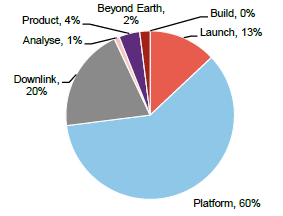
Figure 2: SSIT portfolio by geography as at 31 December 2025
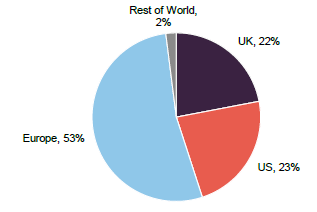
Figure 2 shows the portfolio’s geographical split as at 31 December 2025, illustrating that the portfolio continues to have good diversification and is not overly dependent on any one jurisdiction. The allocation changes are minimal: the UK has increased by 3 percentage points, while Europe and the rest of the world have dropped by 1 percentage point each.
Recent investment and exit activity
£2.9m invested in follow-ons
SSIT committed £2.9m to follow-on investments during the six months ended 31 December 2025, including a total of £2.6m in follow-ons into ALL.SPACE, £0.3m into Quadsat and £0.1m into Taranis. All of these follow-ons occurred during the first quarter of the current financial year and there have been no new investments so far during the current financial year.
Full exits of listed holdings – Arqit and Spire Global
As discussed in our last note, SSIT’s holding in Arqit was sold following a share price rally in early October 2025 for £3.3m, at a sale price equivalent to 15% of the initial sterling cost of the holding. Spire Global was also fully exited in October 2025 for £2.9m, at a sale price equivalent to 29% of the initial sterling cost of the holding.
Portfolio cash runway and SSIT cash burn
Figures 3 and 4 provide illustrations of the breakdown of SSIT’s portfolio by its funding requirements through to cash-flow break-even, in terms of fair value and number of companies respectively, as at 31 December 2025. These figures were based on latest projections from the portfolio companies’ management teams at that time.
Figure 3: SSIT portfolio by funding duration as at 31 December 2025 (fair value)
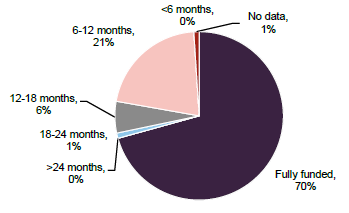
Figure 4: SSIT portfolio by funding duration at 31 December 2025 (number of co.s)
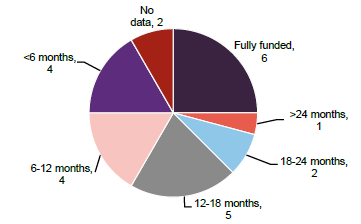
SSIT says that at 31 December 2025, around three quarters of its portfolio (77% of fair value) had a robust cash runway, with 70% fully funded and a further 7% funded for 12 months or more. As at 31 December 2025, the company had £22.1m of cash reserves (30 September 2025: £19.4m), with a potential £3.9m of additional liquidity from its remaining three holdings in listed companies (equivalent to 1.2% of the NAV). As we have discussed in previous notes, SSIT is considered in its spend – for example, follow-on investments are very targeted – which helps mitigate the funding risk associated with its portfolio.
$2.2bn was raised by SSIT’s portfolio companies during H1 FY2026.
During the half year to 31 December 2025, SSIT’s portfolio companies raised approximately $2.2bn, already exceeding at the halfway stage the $2.1bn raised during FY2025. Over $475m of this was raised by private companies, with the remainder accounted for by listed holdings. Of the eight private companies that completed rounds, around 75% were led by or saw substantial participation from external investors. In our view, this underscores both the sustained appetite for SpaceTech and growing confidence in the commercial progress being made across the portfolio.
As highlighted elsewhere in this note, a number of SSIT’s core holdings continue to demonstrate meaningful operational momentum. In the year to 31 December 2025, revenues across the top 10 holdings grew by an average of 79%, alongside improving revenue visibility and clearer pathways towards EBITDA profitability.
85% of SSIT’s portfolio value, including seven of its top 10 holdings, are projecting EBITDA profitability in 2026.
Management teams representing more than 85% of SSIT’S portfolio value, including seven of its top 10 holdings, are projecting EBITDA profitability in 2026. With SSIT also receiving income and portfolio companies raising capital at what appear to be sensible valuations, we continue to believe that funding needs across the portfolio remain manageable.
The trust’s balance sheet remains liquid, despite the absence of new equity issuance, aided by disciplined recycling and selective participation in follow-on rounds, as well as exits of listed investments in Arqit and Spire.
Maturity profile
SSIT is a growth capital fund and, as such, its portfolio is skewed towards businesses that have progressed beyond the seed and Series A stages. It invests in more mature companies that have already commercialised, or are in the process of commercialising, their products and are moving towards profitability.
In effect, SSIT piggybacks on Seraphim’s venture capital arm to filter out companies that carry significant execution risk and are typically at the earliest point in their commercial development, such as start-ups. In practice, SSIT’s investments are concentrated in the later stages of the funding cycle, with around 70% deployed in Series C or Series D rounds – usually the final stages of private funding prior to a potential IPO.
Top holdings
Figure 5 shows SSIT’s top 10 holdings as at 31 December 2025 and how these have changed since 30 September 2025 – this being the most recently available data when we last published. All of the holdings shown in Figure 5 were constituents of SSIT’s top 10 when we last published and there have only been some small adjustments to the rankings.
As is also illustrated in Figure 5, the top four holdings – ICEYE, ALL.SPACE, D-Orbit and HawkEye 360 – have all seen significant valuation uplifts during the last half year, which were linked to completed financing rounds/corporate activity. These uplifts were material – totalling £69m across all four holdings – requiring SSIT’s board to make an announcement on 16 February 2026, ahead of the release of the interim results on 5 March 2026.
We discuss some of these in greater detail below and further discussion of SSIT’s holdings can be found in our previous notes – see page 22 of this note.
Figure 5: SSIT 10-largest holdings as at 31 December 2025
| Stock | Subsector | Country | As at 31/12/25 (%) | As at 31/12/25 (£m) | As at 30/09/25 (£m) | Change (£m) |
|---|---|---|---|---|---|---|
| ICEYE | Platform/Earth observation | Finland | 39.0 | 131.6 | 105.1 | 26.5 |
| ALL.SPACE | Downlink/ground terminals | UK | 15.9 | 53.8 | 28.1 | 25.7 |
| D-Orbit | Launch/in-orbit services | Italy | 12.4 | 41.9 | 33.5 | 8.4 |
| HawkEye 360 | Platform/Earth observation | US | 10.1 | 34.1 | 20.6 | 13.5 |
| LeoLabs | Product/data platforms | US | 3.7 | 12.4 | 12.0 | 0.4 |
| SatVu | Platform/Earth observation | UK | 3.3 | 11.2 | 11.2 | – |
| Xona Space Systems | Platform/navigation | US | 3.1 | 10.5 | 10.3 | 0.2 |
| Skylo | Satcoms | US | 2.0 | 6.8 | 4.4 | 2.4 |
| Tomorrow.io | Data platforms | US | 1.3 | 4.3 | 3.6 | 0.7 |
| Zeno | Space infrastructure | US | 1.1 | 3.7 | 3.6 | 0.1 |
| Total of top 10 | 91.9 | 310.2 | 232.4 | 77.8 |
ICEYE – valuation uplift supported by strong financial delivery and defence-driven backlog
ICEYE (iceye.com) has seen a step-change in both its commercial position and valuation over the past year, driven by a series of large-scale defence contract wins and materially improved financial performance. Most notably, the company has secured a €1.7bn multi-year agreement with the German government in December 2025, to be delivered through its joint venture with Rheinmetall, marking one of the largest contracts awarded to a commercial SAR provider and reinforcing ICEYE’s position at the forefront of Europe’s defence-led space investment cycle.
This growing strategic relevance is now being matched by financial scale and profitability. ICEYE’s unaudited FY2025 results highlight an inflection point, with revenue exceeding €250m and EBITDA surpassing €100m, alongside cash generation of over €130m from operations and a cash balance of more than €350m. The company has also built a contracted backlog of €1.5bn, providing strong forward revenue visibility and underlining the durability of demand, which is increasingly driven by long-term sovereign intelligence requirements rather than cyclical commercial spend.
Reflecting this, SSIT has reverted back to valuing ICEYE using a basket of 15 comparable public companies, with the average EV/sales figure further reduced to discount the valuation to reflect a lack of liquidity as ICEYE is a private company. The manager believes the switch back to this method is justified by the company’s increasing scale, profitability and earnings visibility, particularly in light of the German government contract win and expanding order book.
Series of significant contract wins has continued into 2026
At the beginning of December, ICEYE announced that it had completed a €150m Series E funding round led by General Catalyst, which will be used to support further expansion of its constellation and manufacturing capabilities. This follows its announcement in October of an agreement with IHI Corporation in Japan to deliver four satellites, further broadening its international footprint, and its $168m contract with the Finnish Defence Forces, that was signed in September. ICEYE began 2026 with an announcement in January that it has been awarded a contract by the Swedish Armed Forces, increasing its traction across NATO-aligned markets.
SSIT’s manager believes ICEYE is emerging as one of the clearest beneficiaries of rising global demand for space-based ISR, particularly as European governments seek to close capability gaps relative to the US and China. With a growing order book, increasing geographic diversification and improving financial visibility, the company appears well positioned for further growth and underpins a significant portion of SSIT’s NAV progression discussed on page 15.
SSIT’s manager believes there is significant upside for ICEYE once it has delivered on its IPO ambitions. Mark highlights Planet Labs – another small satellite constellation operator – that is listed on NYSE and is currently valued at c.$10bn. Mark points out that Planet Labs has lower revenues than ICEYE and, unlike ICEYE, Planet Labs is not yet profitable.
ALL.SPACE – moving closer to operational deployment as defence use cases firms up
SSIT’s manager observes that ALL.SPACE (all.space) is transitioning from development into early-stage deployment. Recent milestones highlight growing traction for its multi-orbit connectivity technology, particularly in defence applications.
A key development is the certification of ALL.SPACE’s next-generation tactical terminal capability on the SES O3b mPOWER network, achieved in collaboration with SES Space & Defense. This marks the first multi-orbit, electronically steered terminal certified for the network and enables simultaneous, full-duplex connectivity across GEO and MEO from a single platform. The certification is particularly significant as it allows the terminal to support sovereign and secure communications services under existing government frameworks, including programmes of record, highlighting its readiness for real-world deployment.
This builds on earlier progress, including the Hydra MAX terminal achieving Technology Readiness Level 9 (TRL9) following successful trials with the US Army under its Next Generation Tactical Terminal (NGTT) programme. Together, these developments demonstrate that ALL.SPACE’s technology has now been validated in relevant operational environments and is approaching scalable deployment.
As we have discussed previously, ALL.SPACE is developing a “one antenna to connect to any satellite” solution, enabling seamless interoperability across constellations and orbits. This aligns closely with modern defence architectures where resilient, multi-layered communications are essential. The company’s electronically steered antenna, with no moving parts, is designed to deliver enhanced reliability in contested environments across land, maritime and mobile command applications.
SSIT’s manager highlights that these milestones not only demonstrate continued technical and commercial progress, but also point to increasing alignment with major defence procurement programmes and architectures. As adoption accelerates, the manager believes ALL.SPACE is well positioned to convert this momentum into repeat orders and broader deployment. If it can establish itself as a standard for multi-orbit connectivity, it has the potential to become a critical enabling technology within next-generation space-based communications networks.
Reflecting this, ALL.SPACE has seen a meaningful uplift in valuation, with fair value around 1.8x cost.
D-Orbit – scaling space logistics platform with fresh capital and expanding partnerships
D-Orbit (dorbit.space) has continued to make steady strategic progress, reinforcing its position as a leading provider of in-orbit logistics and transportation services. As we have discussed in our previous notes, the company sits at the heart of an increasingly important part of the space value chain – effectively providing the “last mile” delivery infrastructure for satellites once they reach orbit.
A key development was the first close of its D-Orbit’s Series D funding round in January 2026, which raised €110m (€45m of which was primary capital) including a $53m tranche from the lead investor Azimut, Italy’s largest independent asset manager. The valuation from this funding round drove the uplift in SSIT’s carrying value for D-Orbit discussed in the performance section on page 15 (its fair value now stands at around 3.6x cost). Proceeds are earmarked to expand manufacturing capacity, pursue acquisitions, and further develop D-Orbit’s in-space computing capabilities. SSIT’s manager thinks that funding provides D-Orbit with the resources needed to scale its platform at a time when demand for orbital services is accelerating.
Operationally, the company continues to demonstrate its ability to execute through regular missions – for example, it successfully launched two ION orbital transfer vehicles on SpaceX’s Transporter-15 mission in November, marking its 200th payload deployment. SSIT’s manager says that the ION platform is central to D-Orbit’s strategy, enabling not just satellite deployment but also hosted payloads and, increasingly, edge computing in orbit.
Alongside this, D-Orbit is expanding its international footprint and strategic relationships. A newly signed cooperation agreement with ELT Group aims to develop joint space capabilities aligned with Saudi Arabia’s Vision 2030. This is consistent with broader industry trends, where governments are prioritising domestic space capabilities and resilient infrastructure. SSIT’s manager believes the continued build-out of its ION-based network – combining transportation, hosting, and computing – positions it well to capture value as satellite constellations proliferate and demand grows for more flexible, service-based orbital architectures.
HawkEye 360 – continuing to scale its RF intelligence platform as demand accelerates
HawkEye 360 (he360.com) operates the world’s largest commercial radio frequency (RF) intelligence satellite constellation. This platform is able to detect and geolocate signals from radios, radars, and other emitters from space – a capability that has become increasingly relevant as defence and security users seek to monitor activity that is otherwise invisible to traditional imaging systems. SSIT’s manager comments that the company has continued to demonstrate strong commercial and operational momentum, reinforcing its position as a leading provider of space-based radio frequency (RF) intelligence.
In December, the company completed its $150m Series E financing round, which included both equity and debt finance, and was backed by both existing and new investors. The valuation from this funding round drove the uplift in SSIT’s carrying value for HawkEye 360, which is discussed in the performance section on page 15 (its fair value now stands at around 1.8x cost).
The proceeds were used to accelerate the acquisition and integration of Innovative Signal Analysis, which has added advanced signal-processing capabilities to the company’s offering and strengthened its analytics platform. SSIT’s manager expects these developments will allow the company to accelerate constellation expansion and data product development. As we discussed in our last note, Cluster 12 became fully operational during September and this was followed by the launch of Cluster 13 in January, further enhancing coverage and revisit rates. HawkEye 360 has further clusters under contract.
December also saw the company secure a multi-year data access agreement worth over $100m with an undisclosed strategic international partner. This contract is part of a growing trend of defence organisations relying on commercial space-based RF intelligence and provides the company with improved recurring revenue streams. December also saw the US Navy renew a contract worth nearly $98.8m, for a fourth consecutive year, focusing on maritime domain awareness in the Indo-Pacific.
SSIT’s manager believes that HawkEye 360 is well positioned to benefit from structural increases in defence spending and the growing importance of multi-source intelligence. It says that, as ISR requirements evolve beyond imagery to include signals intelligence, HawkEye 360’s differentiated dataset and expanding analytics capabilities should support continued growth. The key focus will be on scaling its constellation and converting strong demand into further sustained, recurring revenues.
On 10 April 2026, HawkEye 360 announced that it had filed a registration statement for a proposed IPO on the New York Stock Exchange under the ticker “HAWK”, which was followed by an amended registration statement on 27 April that also included a prospectus (click here to read).
Based on the midpoint of the indicated $24–$26 offer range, HawkEye 360 would be valued at around $2.36bn on a fully diluted basis, implying a post-money valuation of roughly $2.76bn after the planned $400m capital raise. For SSIT, which valued the holding at 10.1% of NAV at 31 December 2025, the indicated pricing suggests an uplift of approximately £11.1m, or 4.66p per share, equivalent to c 3.3% of NAV.
Assuming the IPO proceeds, SSIT’s stake will be subject to a six-month lock-up post IPO. However, while SSIT’s strategy is to realise long-term value through exiting its investments over time, it can continue to continue to hold portfolio companies post IPO and so can hold on to the investment until it finds an optimal time to make the disposal.
Although a timeline for the transaction is still to be set out, the proposed listing provides further evidence of portfolio maturity as well as an indicator of the latent value embedded value within SSIT’s portfolio, which may not yet be fully reflected in its share price.
LeoLabs – building momentum as commercial SSA becomes increasingly important
As we discussed in our last note, LeoLabs (leolabs.space) has continued to strengthen its position in space situational awareness (SSA), a segment that is becoming increasingly important as orbital congestion rises and governments seek greater visibility over space assets. The company’s ground-based radar network is capable of tracking objects as small as 2cm in low earth orbit, supporting both collision avoidance and broader space domain awareness.
LeoLabs reported more than $60m of contract awards in 2025, driven in part by strong growth in US government demand, reflecting a broader trend toward reliance on commercial providers for SSA data. SSIT’s manager says this allows governments to augment their own capabilities with more scalable, real-time solutions.
LeoLabs is also continuing to expand its infrastructure footprint. New radar systems are under development, including the first “Scout” radar in Hawaii (expected to be operational in 2026) and a “Seeker” radar planned for the Indo-Pacific region. These will extend coverage and enhance tracking accuracy in strategically important areas. LeoLabs has also secured contracts to integrate its data into US government systems, including the US Space Force’s Unified Data Library, further embedding its services within national space architectures.
SSIT’s manager observes that, as the number of satellites in orbit continues to increase, the need for reliable tracking and collision avoidance is likely to grow, particularly as defence agencies place greater emphasis on space domain awareness. It thinks that LeoLabs is well positioned to benefit from these structural trends and that its combination of proprietary radar infrastructure and scalable data products provides a defensible competitive position, although continued investment will be required to expand coverage globally. The key driver from here will be converting strong government demand into longer-term, recurring revenue streams. In this regard, SSIT’s manager believes that the ‘Golden Dome’ in the US offers a significant opportunity for LeoLabs in the year ahead.
Performance
H1 FY26
As of 31 December 2025, SSIT reported a total NAV of £337.5m (142.30p per share), representing a 20.1% increase from the £281.1m (118.52p per share) NAV that SSIT reported at 30 June 2025. It is also an increase of 40.8% over the course of 2025 (total NAV as at 31 December 2024 was £239.7m or 101.04p per share).
As was the case when we last published, the largest contributor to this growth was unrealised fair value gains within its portfolio – £101.4m or 42.74p per share – supported by defence and geopolitical trends. These gains more than offset realised losses of £26.3m (11.09p per share), which relate to the sale of SSIT’s listed holdings in Arqit and Spire, for proceeds of £3.3m and £2.9m respectively, in October 2025. The sales are discussed on page 8 as well as in our last note.
Material valuation increases for SSIT’s top four holdings
On 16 February 2026, SSIT announced material valuation increases for its top four holdings ahead of the announcement of its interim results. These were: ICEYE (an increase of £33m or 34% for its value at the end of December 2025 versus the end of September 2025), ALL.SPACE (£24m or 80%), D-Orbit (£8m or 23%) and HawkEye360 (£4m or 15%) with a total uplift in valuation for these four of £69m. The drivers for these uplifts are discussed in more detail in the top 10 holdings section on pages 9-14.
These significant valuation gains were sufficiently large that a performance fee provision of £16.6m has been included within the NAV calculation. However, the manager has reiterated that payment of the performance fee is subject to a number of conditions that have not yet been met, which include both sufficient cash being available as well as the aggregate of net realised gains, unrealised IPO gains, listed holding fair value change and investment income exceeding the amount to be paid out.
Further NAV growth expected
SSIT’s manager continues to view the changes we have seen in defence and geopolitical trends as significant long-term tailwinds. These are expected to drive quarter-on-quarter NAV growth during the next year and beyond, as recently contracts convert to revenue growth for portfolio companies and further contracts are signed.
Breakdown of portfolio valuation changes
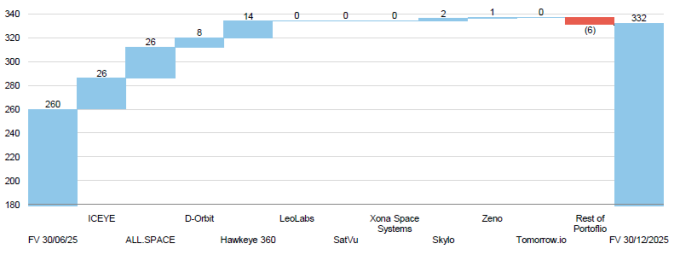
The breakdown of the changes in the fair value of SSIT’s individual holdings over the period can be seen in Figure 6. The total value of SSIT’s portfolio companies increased by £71.8m, or 27.6%, over the half year, from £259.8m to £331.6m. Six new funding rounds were closed by existing portfolio companies during the half year. These included major funding rounds for ICEYE, D-ORBIT and HawkEye360. SatVu completed a £30m funding round with new investment from the NATO Innovation Fund and British Business Bank in February.
SSIT’s manager has reiterated its previous comments that the strength of the unrealised gains reflects the extent of the significant progress made in the underlying holdings. Part of the manager’s approach is to engage highly with its holdings and actively support them in realising these gains over time via IPOs, M&A deals, or secondary market sales.
We would remind readers that SSIT’s portfolio companies do not generally follow fixed valuation schedules. Instead, fair values are updated in response to specific events – such as funding rounds, commercial milestones, or material operational developments. While this approach limits unnecessary NAV volatility, it can lead to periods where a holding’s valuation does not see any fair value progression.
Figure 6: Investment portfolio movements
Xona – 167% valuation uplift following completion of latest funding round
On 26 March 2026, SSIT’s announced a material uplift in the valuation of its holding in Xona Space Systems, following the completion of an oversubscribed US$170m series C funding round. This resulted in a 167% increase in the fair value of SSIT’s holding, from £10.5m at end-December 2025 to £28.0m, adding approximately £17.5m – or 7.37p per share – to SSIT’s NAV.
We have discussed Xona (www.xonaspace.com) in our previous notes on SSIT but, to recap, the company is developing a next-generation low-earth orbit satellite navigation system that is designed to enhance the accuracy and resilience of existing GPS infrastructure. This is a strong example of the benefits of having exposure to dual-use SpaceTech as, in addition to its use in civilian applications, this technology is becoming increasingly critical for defence and national security applications, providing a virtuous circle.
Xona’s technology is able to deliver centimetre-level positioning accuracy – approximately 50-100x improvement over traditional GPS – through a simple software upgrade to existing devices. This is a step-change in precision and reliability, which SSIT’s manager expects to unlock a wide range of high-value applications, including autonomous vehicles, drones, robotics and advanced air mobility solutions as well as supporting next-generation industrial and logistics use cases.
SSIT’s manager highlights that existing satellite navigation systems already support trillions of dollars of global economic activity, bracing critical infrastructure across transportation, telecommunications, financial systems and supply chains. It says that, by enhancing both the accuracy and resilience of positioning, navigation and timing (PNT) services, Xona is positioning itself at the forefront of the next evolution of global GPS infrastructure.
SSIT’s manager highlights Xona as being a great example of its broader development programme. Seraphim first engaged with Xona’s founder when he was still at business school, bringing him onto its accelerator programme to help him get ready for raising money. Seraphim then co-led all of Xona’s early rounds of financing, with SSIT then following on in later rounds.
Portfolio returns
SSIT’s positive NAV growth was driven by unrealised returns
From inception on 14 July 2021 to 28 February 2026, SSIT has delivered a NAV total return of 45.2%. While SSIT’s listed equity allocation has been a detractor to SSIT’s performance, this has been more than offset by the increase in the value of its unlisted portfolio, which has accelerated recently.
Figure 7: SSIT performance from launch to 31 March 2026
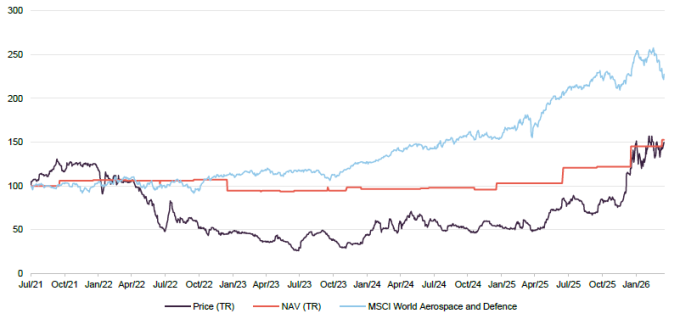
We continue to use the MSCI World Aerospace and Defence Index as a comparator for SSIT. As we have discussed in our previous notes, the index started to pull away significantly from October 2023, when the Israel-Gaza conflict broke out. Since then, geopolitical tensions have remained elevated and, reflecting commitments by Europe in particular to spend more on defence, the index began to pull away at a faster rate. However, as the market has started to recognise the dual use nature of SpaceTech, and strong valuation uplifts have come through to SSIT’s portfolio, SSIT’s NAV has been starting to narrow the gap. The war in Ukraine illustrated SpaceTech’s importance and the recent hostilities in Iran have only underlined that message.
In our last note, we commented that, given that SSIT benefits from the same tailwinds that have been driving defence stocks, the widening gap did not look sustainable. Since this time, the gap has narrowed but we continue to believe that SSIT has strong catch-up potential. We would remind readers that SSIT’s manager believes that approximately 70% of its portfolio has defence applications, and that its investee companies continue to demonstrate growing profitability – 85% of the portfolio is expected to be EBITDA profitable this year.
Figure 8: SSIT performance over periods ended 31 March 2026
| 3 months (%) | 6 months (%) | 1 year (%) | 3 years (%) | 4 years (%) | Since launch2 (%) | |
|---|---|---|---|---|---|---|
| Price | 25.0 | 111.9 | 171.7 | 299.5 | 42.9 | 50.0 |
| NAV1 | 5.2 | 25.2 | 48.1 | 63.1 | 43.9 | 52.7 |
| MSCI World Aerospace and Defence | (1.5) | 1.8 | 17.2 | 48.0 | 45.8 | 52.2 |
Premium/(discount)
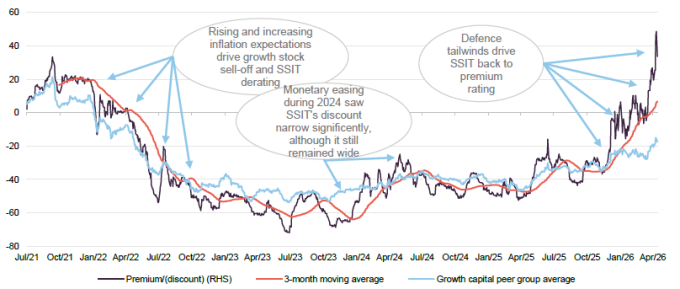
As Figure 9 illustrates, SSIT has seen a significant improvement in its rating during the last year, and particularly during the last six months. This has occurred as greater geopolitical tensions – in particular, the uncertainty around US commitments to the NATO alliance and their support for Ukraine – have created a massive impetus for European nations and other non-US NATO allies to invest heavily in bolstering their defences, giving with defence applications a significant boost and, increasingly. At the same time, the market has recognised the importance of SpaceTech in defence applications.
Even if current hostilities subside, the current weaknesses in global defence infrastructure and alliances have been exposed and the greater impetus to rearm will not go away. We think the shift from a c50% discount to NAV a year ago to trading at a mid-20s premium today represents a structural change in SSIT’s discount. As is illustrated in Figure 9, SSIT’s discount narrowing has not been enjoyed by its wider growth capital peer group.
For reference, over the last 12 months, SSIT’s shares have traded within a range between a 50.1% discount to NAV to a 48.7% premium to NAV, averaging at a 20.5% discount. On 27 April 2026, SSIT was trading at a 33.6 premium. In contrast, the growth capital peer group average discount ranged between 45.3% and a 15.0% discount, and has averaged 30.6%. As at 27 April 2024, the peer group average discount was 17.4%.
The ongoing conflict in Ukraine continues to highlight both the dual uses of SpaceTech, and its critical nature in defence, putting downward pressure on SSIT’s discount, driving it back to a small premium.
The outbreak of war between Iran, US, and Israel heightened investors’ nerves and led to a setback in SSIT’s share price. However, that feels counterintuitive to us given the defence angle to the SSIT story and we are not surprised that the share price has recovered after the initial move.
As we highlighted earlier in this note, SSIT’s manager continues to expect to see strong quarter-on-quarter NAV growth coming through, and given the potential additional interest that a SpaceX IPO – expected later this year – looks likely to create, there could be significant upside in the share price from here, which could justify a higher premium today. Against this backdrop, the current share price could offer a compelling opportunity in our view.
Figure 9: SSIT premium/(discount) from launch1
Potential fundraise via a C-share issue
On 16 April 2026, SSIT’s board published a circular outlining a potential C-share offering that could raise up to £350m. Open to both institutional investors through a placing and retail investors through a Retail Book offer (click here for more information), the issue will allow the trust to raise fresh capital without creating cash drag for existing shareholders while the proceeds are deployed.
With SSIT trading at a substantial premium, we think issuing new shares should benefit existing shareholders by improving secondary market liquidity and lowering the trust’s expense ratio by spreading its fixed costs over a larger asset base. It should also reduce the blended management fee rate, currently 1.25% on net asset up to £300m and 1% above that level.
SSIT’s manager has said that it has a strong pipeline of new opportunities, and that it expects further NAV growth from the existing portfolio as recent contract wins feed through into stronger revenues and stronger business momentum. Combined with the prospect of increased investor interest in the SpaceTech sector if the long-anticipated IPO of SpaceX finally materialises, SSIT appears to be seizing the initiative at a moment when both sentiment and fundamentals appear to be in its favour.
SWOT analysis
Figure 10: SWOT analysis for SSIT

| SSIT offers a unique investment proposition in the London-listed closed end funds space. While a few other trusts have a proportion of their portfolio in SpaceX, only SSIT gives investors pure play exposure to some of the most exciting private companies in SpaceTech. |
| SSIT offers a way for all investors to get exposure to this high growth and otherwise difficult to access sector, for the price of a share. |
| SSIT’s portfolio has displayed impressive growth recently with a number of its largest portfolio companies showing very material valuation uplifts. Median revenue growth of 79% for the top 10 companies over the past 12 months. |

| SSIT could suffer periods when absolute and/or relative performance is difficult, particularly when the market backdrop is unhelpful for growth investors, such as when inflation and interest rates pick up. |
| No prospect of a yield, although this should be well understood by shareholders. |

| There are increasing signs that growth investing is coming back into favour, against a backdrop of interest rate cuts, both in the US and globally. The political temperature has risen across the globe and wars in Ukraine and Iran illustrate how important SpaceTech is to modern defence. With Europe rapidly rearming and other nations looking to bolster their defences, some of SSIT’s holdings could have long growth runways. |
| Investors appear to be looking more favourably at SpaceTech, recognising its increasing importance in defence and, while its share price has benefitted, it still looks compelling versus aerospace and defence companies more broadly. The investment opportunity offered by SpaceTech is way larger than any one company (as owning just Nvidia or OpenAI would miss much of the broader AI revolution). SSIT provides this broad exposure in a way that owning SpaceX – directly or indirectly – cannot. |

| The market could once again turn against growth investing, particularly if inflation re-emerges as a threat and nominal GDP growth falters. However, the need for nations to bolster their defences will likely outweigh such considerations. |
| Given the concentrated nature of the portfolio, single stock issues could hurt performance. |
Bull vs bear case
Figure 11: Bull vs bear case for SSIT


| Performance | SSIT’s portfolio, which has considerable dual use SSIT’s portfolio, which has considerable dual use applications, has been benefitting from strong defence tailwinds, which look set to continue. Inflation is edging up fuelled by energy price rises, but the growth outlook has also deteriorated, limiting the capacity to raise interest rates, which should be positive for growth capital stocks. Manager takes a focused approach, doubling down on positions it views as the most promising. |
SSIT’s typical investee company requires funding, which has been difficult in an environment of higher interest rates where the IPO window has been shut. The funding environment appears to be improving for higher quality SpaceTech companies, although SSIT could see its performance suffer if this reversed. The flip side of manager’s focused approach is that it can skew the portfolio – for example, ICEYE accounts for 39% of NAV. |
| Dividends | SSIT focuses on capital growth rather than income. It is only likely to pay a dividend to maintain its investment trust status and it would need to recover significant revenue losses first. | Investors should not consider investing in SSIT if they require income from their investment. |
| Outlook | SpaceTech investing appears to be coming into favour with investors, which should suit SSIT. The upcoming SpaceX IPO, could raise the profile of SpaceTech to SSIT’s benefit. | Growth focused investments generally benefit from subdued inflation and interest rates. Although US inflation has been edging up, the direction of interest rates still looks to be down for now. |
| Discount | SSIT may be trading fairly close to NAV, but its manager is convinced that the NAV will rise quarter-on-quarter and believes this should support SSIT trading on a meaningful premium in anticipation. ICEYE is converting its €1.6bn order backlog which should provide significant growth given it is 39% of NAV. | SSIT’s discount could come under pressure if inflation picks up or if the SpaceTech and/or aerospace and defence sectors move out of favour. SSIT’s size limits its ability to undertake buybacks. |
Previous publications
Readers interested in further information about SSIT may wish to read our previous notes (details are provided in Figure 12 below). You can read the notes by clicking on them in Figure 12 or by visiting our website.
Figure 12: QuotedData’s previously published notes on SSIT
IMPORTANT INFORMATION
This marketing communication has been prepared for Seraphim Space Investment Trust Plc by Marten & Co (which is authorised and regulated by the Financial Conduct Authority) and is non-independent research as defined under Article 36 of the Commission Delegated Regulation (EU) 2017/565 of 25 April 2016 supplementing the Markets in Financial Instruments Directive (MIFID). It is intended for use by investment professionals as defined in article 19 (5) of the Financial Services Act 2000 (Financial Promotion) Order 2005. Marten & Co is not authorised to give advice to retail clients and, if you are not a professional investor, or in any other way are prohibited or restricted from receiving this information, you should disregard it. The note does not have regard to the specific investment objectives, financial situation and needs of any specific person who may receive it.
The note has not been prepared in accordance with legal requirements designed to promote the independence of investment research and as such is considered to be a marketing communication. The analysts who prepared this note are not constrained from dealing ahead of it, but in practice, and in accordance with our internal code of good conduct, will refrain from doing so for the period from which they first obtained the information necessary to prepare the note until one month after the note’s publication. Nevertheless, they may have an interest in any of the securities mentioned within this note.
This note has been compiled from publicly available information. This note is not directed at any person in any jurisdiction where (by reason of that person’s nationality, residence or otherwise) the publication or availability of this note is prohibited.
Accuracy of Content: Whilst Marten & Co uses reasonable efforts to obtain information from sources which we believe to be reliable and to ensure that the information in this note is up to date and accurate, we make no representation or warranty that the information contained in this note is accurate, reliable or complete. The information contained in this note is provided by Marten & Co for personal use and information purposes generally. You are solely liable for any use you may make of this information. The information is inherently subject to change without notice and may become outdated. You, therefore, should verify any information obtained from this note before you use it.
No Advice: Nothing contained in this note constitutes or should be construed to constitute investment, legal, tax or other advice.
No Representation or Warranty: No representation, warranty or guarantee of any kind, express or implied is given by Marten & Co in respect of any information contained on this note.
Exclusion of Liability: To the fullest extent allowed by law, Marten & Co shall not be liable for any direct or indirect losses, damages, costs or expenses incurred or suffered by you arising out or in connection with the access to, use of or reliance on any information contained on this note. In no circumstance shall Marten & Co and its employees have any liability for consequential or special damages.
Governing Law and Jurisdiction: These terms and conditions and all matters connected with them, are governed by the laws of England and Wales and shall be subject to the exclusive jurisdiction of the English courts. If you access this note from outside the UK, you are responsible for ensuring compliance with any local laws relating to access.
No information contained in this note shall form the basis of, or be relied upon in connection with, any offer or commitment whatsoever in any jurisdiction.
Investment Performance Information: Please remember that past performance is not necessarily a guide to the future and that the value of shares and the income from them can go down as well as up. Exchange rates may also cause the value of underlying overseas investments to go down as well as up. Marten & Co may write on companies that use gearing in a number of forms that can increase volatility and, in some cases, to a complete loss of an investment.