
Monks (MNKS), the less aggressive sister fund to Baillie Gifford’s Scottish Mortgage Trust (SMT), technically underperformed in the year to 30 April but prodigious share buybacks by its board ensured shareholders beat a “storming” 31% advance in the FTSE World index.
The £2.5bn global investment trust delivered a 29.3% underlying return, 0.7% behind the benchmark, as stock markets recovered from the scare over US tariffs and rallied on the extraordinary rollout of artificial intelligence (AI).
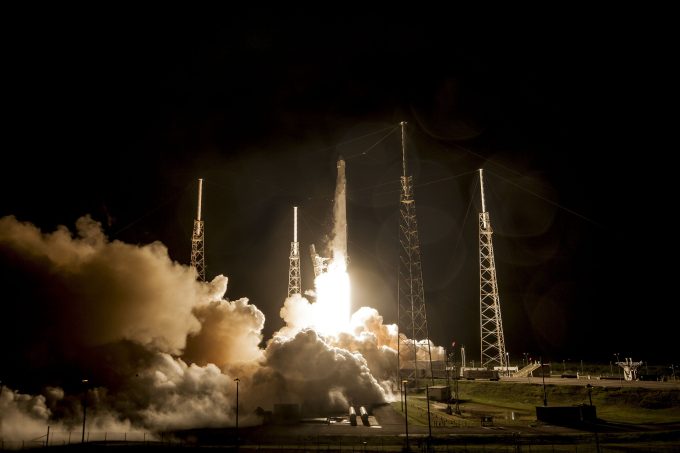
Monks also benefited from having 2% exposure to SpaceX as Elon Musk’s company surged towards last month’s record $1.3trn flotation.
Shareholders did better than the index return with a 35.6% total advance as Monks’ share price narrowed the gap, or discount, to the net asset value (NAV) of its investments to 5.7% from 10.1%.
That was in response to a concerted effort by the board, led by new chair Randeep Grewal, to push the discount to mid-single digits by buying back £432.6m, or 16.1%, of the trust’s shares.
Buybacks jumped from £321m in the previous year and by reducing the amount of stock in the market helped match supply with improving investor demand.
Grewal, a former surgeon turned fund manager who also sits on the board of Global Smaller Companies Trust (GSCT), said Monks’ board was “encouraged by the portfolio’s recovery and by the operational and strategic progress made by many of the underlying holdings during the year” with the performance enhanced by gearing, or borrowing, of 8.5%.
Monks has a broader growth portfolio than its £16bn sister Scottish Mortgage, dividing its holdings between stalwarts, cyclicals and rapid growth stocks. SMT, a better performing but more volatile trust, focuses on the latter.
In the last financial year, it was another of Baillie Gifford trusts that was the biggest contributor to Monks’ returns. Schiehallion (MNTN), a now £2bn private equity fund focused on backing exceptional growth companies before they float on the stock market, soared 116% on the back of its holdings in SpaceX and other tech companies such as Italy’s Bending Spoons. Monks held an average 4% of assets in Schiehalllion which generated 2.2% of its excess return over the benchmark.
A couple of smaller positions did even better. Samsung Electronics shot up over 279% and Comfort Systems, a US provider of cooling equipment much in demand from AI datacentres, gave a white hot return of more than 357%.
These made up for stocks weighing on returns such as the 23% fall in China’s Tencent on AI disruption fears and the absence from the portfolio of chip maker Broadcom which rallied 115%.
Former lead fund manager Spencer Adair retired in March with Michael Taylor joining Helen Xiong and Malcolm MacColl as a co-manager. Grewal said the team had become increasingly focused on valuation discipline following the painful 2022 crash in growth stocks from which Monks has only recently recovered.
For example, the managers trimmed their holdings in Samsung and Comfort after their strong gains and sold out of FTAI, another top performer, after the US company moved to use its aircraft engines to power datacentres, which opened up a more uncertain future even if it had seen the shares more than double.
Seeking good value and resilience, the team added two US energy companies: EOG, a shale oil producer; and EQT, a gas producer, which were benefiting from tight supply and high demand. They also introduced three banks: Credicorp in Peru, UOB in Southeast Asia and SEB in Scandinavia, liking their conservative management teams and “clear growth drivers”.
The growth fund declared a single dividend of 0.9p per share, up from 0.5%. Ongoing charges edged slightly higher to 0.44% from 0.43%.
Data from Baillie Gifford shows that at the end of May, Monks’ portfolio had returned 59.1%, 31.3% and 262% over three, five and 10 years, behind the 73.8%, 93.7% and 295.5% of the FTSE World index. Those have underpinned 69.7%, 23.3% and 297.8% shareholder returns, with the latter showing modest longer-term outperformance of the benchmark.
Our view
Matthew Read, senior analyst at QuotedData, said: “These is a much better set of results for Monks after what has been a difficult couple of years and, while it has lagged its benchmark slightly, the FTSE World Index was a tough comparator in a very strong year for global equities, with a lot of performance coming from a narrow group of AI-related names. Monks has benefited from AI-related exposure too but its exposure has been much broader with it benefiting from bottlenecks in areas as energy, copper, defence-adjacent infrastructure and selected financials, in addition to the such as usual chips, memory and datacentre infrastructure. We think this is sensible in a market where AI is clearly creating both creating winners and losers, but the long-term impacts are still very much unknown.”
Stay a step ahead. Our daily newsletter brings you the latest on investment trusts and active ETFs. Subscribe here.
