
Strong NAV growth, more winners emerging?
Seraphim Space Investment Trust (SSIT) claims to have reported progress across its portfolio, with a series of transactions involving its holdings. ICEYE’s latest funding round has seen a marked uplift in valuation, HawkEye 360 has listed, and ALL.SPACE has been acquired by York Space Systems. At the same time, SSIT’s £137m C share issue has provided fresh capital to back both existing holdings and new opportunities, while the launch of Seraphim’s New Space ETF could provide a new source of demand for the shares. ICEYE’s valuation growth has potentially increased concentration risk, but the manager believes it is the first portfolio company to have “popped”, with businesses such as Xona, Pixxel and Hubble offering potential to follow. With the structural backdrop for SpaceTech appearing supportive and the manager expecting further NAV growth, SSIT’s current discount may not reflect these expectations.
The world’s first listed SpaceTech fund
A diversified, international portfolio of predominantly growth-stage, privately-financed ‘SpaceTech’ businesses that have the potential to dominate their field and be category leaders with first mover advantages in areas such as global security (defence), climate and sustainability, connectivity, autonomous mobility, telecommunication and smart cities.
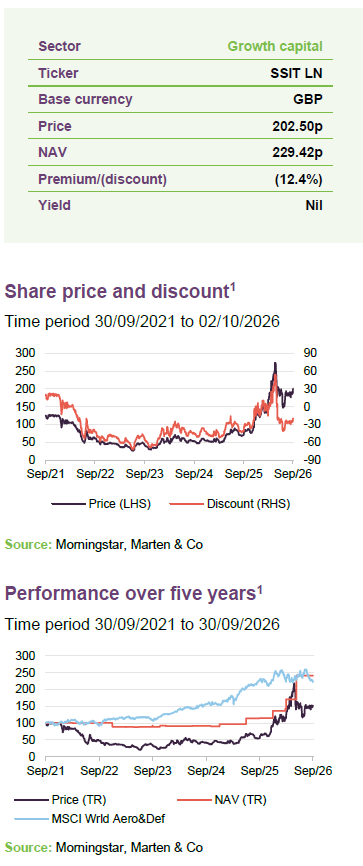
| Year ended | Share price total return (%) | NAV total return1 (%) | MSCI World Aerospace and Defence TR (%) |
|---|---|---|---|
| 30/09/2022 | (51.8) | 1.0 | (4.0) |
| 30/09/2023 | (28.5) | (8.1) | 10.2 |
| 30/09/2024 | 24.2 | (0.3) | 20.0 |
| 30/09/2025 | 31.8 | 24.3 | 16.8 |
| 30/09/2026 | 169.5 | 91.9 | 18.5 |
Fund profile
More information is available on the trust’s website investors.seraphim.vc
SSIT aims to generate capital growth over the long term through investment in a diversified international portfolio of predominantly growth-stage (B-stage or later), privately financed SpaceTech businesses (which SSIT defines as entities that rely on space-based connectivity and/or precision, navigation, and timing signals or whose technology or services are already addressing, originally derived from, or potentially benefiting, the space sector).
SSIT’s manager believes its portfolio companies are typically category leaders with the potential to scale globally. According to the manager, they frequently benefit from first-mover advantages across areas such as global security, cybersecurity, food security, climate change and sustainability.
SSIT was launched in July 2021, hitting its capital raise target, and held cash of about £178.4m at launch. Total assets at the end of December 2025 were £337.5m.
SSIT’s AIFM is Seraphim Space Manager LLP (Seraphim).
Measuring success
SSIT is targeting annualised NAV returns of 20% over the long term. The trust has no formal index benchmark but, given the subject matter of this note, we have compared it with the MSCI World Aerospace and Defence Index.
Manager’s view
Addressing investor concerns
SSIT’s manager says that a number of issues have been raised during recent investor meetings and its recent investor webinar, that it intends to address. These issues are addressed in turn below. The manager states that its long-term themes remain intact, and our April 2026 note explores these in more detail (see page 16 of this note).
SSIT’s concentration in ICEYE and whether the manager remains comfortable with this: ICEYE’s performance potentially presents a concentration consideration for SSIT: as the company’s valuation increases, the portfolio’s exposure to it may rise. However, the manager remains comfortable with the position. Seraphim believes that ICEYE still has substantial growth ahead of it and does not think that concentration, in itself, is a reason to sell a business whose prospects it believes continue to improve. Mark Boggett, CEO of Seraphim VC, SSIT’s manager, describes ICEYE as SSIT’s first portfolio company to have “popped”: it is the most mature of the trust’s investments and appears to be benefiting from the commercial and defence opportunities that Seraphim anticipated when it first invested.
Seraphim’s conviction appears to have been tested by opportunities to realise profits
That conviction has persisted despite opportunities to realise profits. Mark highlights ICEYE’s latest funding round, which included secondary liquidity. SSIT was invited to sell but chose not to, just as it had declined to reduce its position during an earlier funding round. Crystallising gains could also have brought forward a performance fee for the manager, but Seraphim sees potential upside from continuing to own ICEYE and believes it outweighs the option of selling today.
Are other portfolio companies capable of developing into businesses of comparable scale to ICEYE and thereby reducing the portfolio’s concentration over time: Seraphim believes that ICEYE is the first portfolio company to have grown substantially in value and that others may follow. It argues that other businesses are at an earlier stage but are addressing very large markets and could, in time, become much larger contributors to NAV. The manager highlights Xona Space Systems as an example – it is developing a private GPS network that the manager says is designed to provide stronger signals, centimetre-level accuracy and military-grade security. Funding rounds have also taken place at Pixxel and Hubble Network, which the manager believes have potential in Earth observation and satellite-enabled connectivity respectively. Both attracted third-party capital, which the manager views as supporting its assessment that a number of SSIT’s holdings could increase in value over time.
Maintaining the ICEYE holding is a strategic initiative, which has the board’s support
Is SSIT’s board aligned with the manager’s position on ICEYE and the trust’s wider capital allocation: The size of SSIT’s ICEYE position raises a governance question as well as an investment one: is the board comfortable allowing a single holding to account for such a large part of SSIT’s NAV? Seraphim’s stance on running ICEYE has seemingly been consistent for years and is documented. Mark observes that, while the board’s role is not to select individual investments, it does have responsibility for overseeing risk and capital allocation, and the manager has been subject to continued scrutiny as ICEYE has become an increasingly large part of NAV.
The C share issue may have provided SSIT with capital to pursue opportunities that it previously was unable to pursue
The deployment of the proceeds from the recent C share issue, including the pace of deployment and discipline around valuations: Mark says that the C share issue has provided SSIT with capital to pursue opportunities that it previously could not pursue because of limited cash. Hubble Network (see pages 8 and 9) is an example: Seraphim VC had invested at an early stage and wanted to participate in a subsequent funding round through the trust but lacked the resources to do so. Mark says the new capital has enabled SSIT to make a follow-on investment in this company.
Commitments have already exceeded the £40m threshold required for the first C share conversion
Commitments have already exceeded the £40m threshold required for the first C share conversion and so investor concern appears to have shifted from whether the money would be deployed quickly enough to whether it might now be deployed too quickly. However, Seraphim has long said it has a solid pipeline of further investments should it have the capital. Seraphim states that one of its advantages is that many of its opportunities are businesses it has followed for years and it has already invested in via the wider Seraphim platform. Familiarity does not remove the need to maintain price discipline but the test may be whether the C share proceeds are deployed into businesses capable of generating attractive returns from the valuations paid. SSIT’s manager believes that they could be.
Rather than deploying the C share proceeds to new investments, should they be used instead for share buybacks: A small number of investors have suggested using the C share proceeds to buy back ordinary shares at a discount, arguing that this could provide an immediate uplift in value. Mark takes a different view: the capital was raised specifically to invest in SpaceTech businesses, not to buy back SSIT shares, and he does not believe it is appropriate to change that purpose after the event. This does not necessarily rule out buybacks as a future discount-control tool, but that is a separate issue from how the C share proceeds may be used.
The discount appears to contrast with improving fundamentals in the portfolio
Why is SSIT trading at a discount and what could help close it: Mark says that the discount remains difficult to reconcile with the improving fundamentals in the portfolio. Part of the explanation is likely to be the combination of private assets, volatility, concentration in ICEYE, the relative immaturity of space as an investment theme and possibly that the NAV has risen quickly. Mark believes better communication could help, as could evidence that other holdings may follow ICEYE’s path. As discussed above, Seraphim’s New Space ETF, in which SSIT is the largest holding, may be a new source of demand that could broaden the shareholder base and help narrow the discount.
SSIT provides investors with exposure to a portfolio spanning a range of space-based activities
Why should investors own SSIT rather than seeking direct exposure to individual space businesses such as SpaceX: SSIT differs from direct exposure to SpaceX. Rather than backing a single company, investors gain exposure to a portfolio spanning Earth observation, communications, positioning, defence and commercial applications, including businesses that are not available on public markets.
Seraphim also cites active management as an advantage. Seraphim uses its accelerator and venture activities to identify companies early, build knowledge and conviction, and then scale exposure as they mature. As noted above, Xona is an example of this model in action. SpaceX appears to be among the most prominent names in the space currently, but SSIT focuses on identifying the next generation of space businesses.
Growing investor conviction in space as an investment theme: Investor conviction in space as a long-term investment theme appears to be strengthening. The sector is growing, increasingly commercial and may be difficult to access through conventional public markets. Falling launch and satellite costs may be enabling new business models.
Mark Boggett says SSIT’s NAV may have further growth potential
Mark has set out his view of the growth outlook for dual use SpaceTech and its potential implications for SSIT. Despite the recent gains, Mark believes SSIT has further NAV growth potential. ICEYE may currently be ahead of other portfolio companies, but Mark believes that all of SSIT’s portfolio companies have the potential to follow a similar growth trajectory and expects to see quarter-on-quarter NAV growth through the remainder of this year and next.
Asset allocation
At 31 March 2026, SSIT held 24 direct investments – 23 portfolio companies plus an investment in another fund – with a total fair value of £433.3m, up from £331.6m as at 31 December 2025, with valuation gains appearing to account for most of the increase. The portfolio remains concentrated, with the top 10 holdings accounting for 98.1% of NAV as at 31 March 2026, compared with 91.9% at 31 December 2025, a proportion that may have increased further with the latest valuation uplift for ICEYE (see below). The deployment of the C share proceeds and subsequent conversion to ordinary shares (the first conversion will happen at the end of September) may help to offset this. Nonetheless, SSIT appears to continue to provide exposure across a broad spread of SpaceTech subsectors.
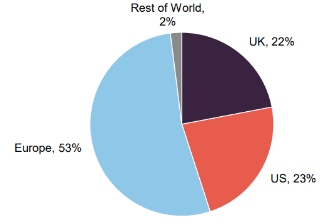
SSIT’s manager reiterates that the portfolio is focused on companies it considers to be at the top of their field and to have strong growth potential. The manager states that it does not take a broad-brush approach. Instead, the manager says SSIT’s investments are chosen for their quality and leadership. It adds that, while the portfolio remains highly concentrated at the individual holding level, it retains meaningful diversification across SpaceTech subsectors and geographies.
Platform businesses continue to represent the largest portion of the portfolio, which SSIT’s manager says reflects its focus on companies building constellations or space-based infrastructure that it considers to have strong operating leverage – for example, ICEYE’s SAR constellation and Xona’s emerging LEO PNT (position and timing) network.
Figure 1: SSIT portfolio by sub-sector as at 31 December 2025
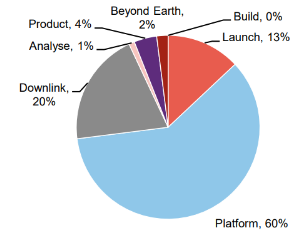
Figure 2: SSIT portfolio by geography as at 31 December 2025
Recent investment and exit activity
£21.3m of C share proceeds invested in follow-ons
SSIT committed £0.7m to a follow-on investment in ALL.SPACE during the quarter end 31 March 2026. As highlighted on page 3, August saw initial investments for the C share portfolio – £21.3m in existing portfolio companies Pixxel and Zeno Power, followed by a £22.2m investment in Hubble Network, discussed below.
Hubble Network – bringing Bluetooth connectivity to space
£22.2m of C share proceeds invested in new holding Hubble Network
Hubble Network (hubble.com) is the first all new investment in SSIT to be made using the C share proceeds and potentially illustrates the scale of the opportunity emerging in new space. The company was founded by the entrepreneurs behind Life360, which also owns Bluetooth tracking specialist Tile. Their experience with Tile appears to have highlighted one of Bluetooth’s main limitations – its short range – which they decided to address.
Work to extend that range eventually demonstrated that Bluetooth signals could be detected over miles and, following testing using a weather balloon, from the edge of space. This may have implications for the internet of things. Conventional satellite tracking equipment can be relatively expensive and power hungry, making it possibly uneconomic to monitor lower-value goods or require regular battery replacement. Bluetooth, in comparison, is low-cost, lightweight and has low power consumption, which may enable a range of applications.
One application is to combine its network with smart labels that include a Bluetooth device. These can be attached to individual items, potentially allowing businesses to track goods throughout their journey through a supply chain. Other potential uses include military equipment and inventories, individual parcels, industrial assets, consumer products and agricultural goods.
Hubble is building a satellite network for its service
Hubble’s aim is to enable low-cost, low-power devices to connect directly to satellites using Bluetooth, and it is now building a satellite network to provide this service. It currently has seven satellites in orbit and plans to deploy a much larger constellation. Seraphim believes that this gives Hubble one of the largest addressable markets it has encountered. The underlying technology has already been demonstrated. The challenges now relate to execution: expanding the constellation, attracting customers and scaling the network.
Hubble also provides an example of Seraphim’s venture-to-growth approach. Seraphim first invested at seed stage, which may have given it time to build its knowledge of the founders, technology and market before increasing exposure through SSIT as the business developed and Seraphim’s conviction increased. SSIT’s participation in Hubble’s previous funding round was limited, due to a lack of available cash, but it was able to increase its exposure in the latest round, supported by the C share.
Portfolio cash runway and SSIT cash burn
Figures 3 and 4 show SSIT’s portfolio funding requirements to reach cash-flow break-even, by fair value and number of companies respectively, as at 31 December 2025 (this being the most recently available information). The analysis is based on portfolio companies’ latest management projections at that date.
Figure 3: SSIT portfolio by funding duration as at 31 December 2025 (fair value)
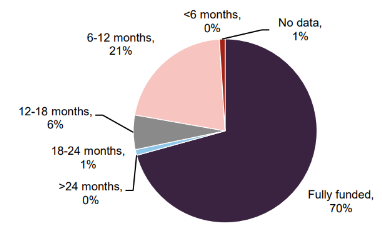
Figure 4: SSIT portfolio by funding duration at 31 December 2025 (number of co.s)
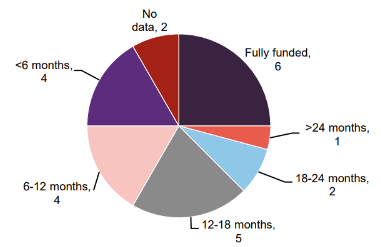
SSIT says that at 31 March 2026, 86% of its portfolio by fair value had a robust cash runway, with 73% fully funded and a further 13% funded for 12 months or more. As at 31 March 2026, the company had £20.9m of cash reserves (31 December 2025: £22.1m), with a potential £4.1m of additional liquidity from its remaining three holdings in listed companies (equivalent to 1.0% of the ordinary share NAV).
As discussed in previous notes, SSIT appears to be selective in its spending – for example, follow-on investments are targeted – which may help mitigate the funding risk associated with its portfolio. However, as discussed on page 3, the C share issue provides capital to deploy in both new and existing investments.
Maturity profile
SSIT is a growth capital fund and, as such, its portfolio is skewed towards businesses that have progressed beyond the seed and Series A stages. It invests in more mature companies that have already commercialised, or are in the process of commercialising, their products and may be moving towards profitability.
SSIT uses Seraphim’s venture capital arm to screen out companies that may carry significant execution risk and are typically at the earliest point in their commercial development, such as start-ups. In practice, SSIT’s investments are concentrated in the later stages of the funding cycle, with around 70% deployed in Series C or Series D rounds – usually the final stages of private funding prior to a potential IPO.
Top holdings
Figure 5 shows SSIT’s top 10 holdings as at 31 March 2026 and how these have changed since 31 December 2025 – this being the most recently available data when we last published.
Figure 5: SSIT 10-largest holdings as at 31 March 2026
| Stock | Subsector | Country | As at 31/03/26 (%) | As at 31/03/26 (£m) | As at 31/12/25 (£m) | Change (£m) |
|---|---|---|---|---|---|---|
| ICEYE | Platform/Earth observation | Finland | 47.1 | 198.4 | 131.6 | 66.8 |
| ALL.SPACE | Downlink/ground terminals | UK | 13.6 | 57.4 | 53.8 | 3.6 |
| HawkEye 360 | Platform/Earth observation | US | 9.8 | 41.4 | 34.1 | 7.3 |
| D-Orbit | Launch/in-orbit services | Italy | 9.8 | 41.3 | 41.9 | (0.6) |
| Xona Space Systems | Platform/navigation | US | 6.7 | 28.4 | 10.5 | 17.9 |
| LeoLabs | Product/data platforms | US | 3.7 | 15.8 | 12.4 | 3.4 |
| SatVu | Platform/Earth observation | UK | 2.6 | 11.2 | 11.2 | 0 |
| Tomorrow.io | Data platforms | US | 2.1 | 8.8 | 4.3 | 4.5 |
| Skylo | Satcoms | US | 1.6 | 6.9 | 6.8 | 0.1 |
| Zeno | Space infrastructure | US | 0.9 | 3.8 | 3.7 | 0.1 |
| Total of top 10 | 98.1 | 421.3 | 310.2 | 111.1 |
All of the holdings shown in Figure 5 were constituents of SSIT’s top 10 when we last published, and there have been some adjustments to the rankings, as well as uplifts in valuations, with ICEYE and Xona Space Systems covered in particular – updates are provided below. As discussed in the performance section (see page 11-14), HawkEye 360 completed its IPO and listed on Nasdaq. Further discussion on all of SSIT’s holdings can be found in our previous notes – see page 16 of this note.
ICEYE – completion of series F financing round has added 73p to SSIT’s NAV
Seraphim chose not to sell any ICEYE shares as part of the financing, which may reflect its view of ICEYE’s growth prospects
ICEYE (iceye.com) remains SSIT’s largest holding. Its €1bn Series F financing round – comprising €450m of new capital and €550m of secondary liquidity – has now completed following regulatory approvals. The new valuation implies an increase of around £202m, or 102%, in the fair value of SSIT’s holding and an uplift of approximately 73p per ordinary share relative to the 31 March 2026 NAV. This is expected to be reflected in the 30 September 2026 NAV and may also feed into the first partial conversion of the C shares.
Seraphim chose not to sell any ICEYE shares as part of the financing, despite the availability of secondary liquidity. As highlighted in the manager’s view section, SSIT’s manager says that this reflects its continued conviction that ICEYE may have further growth ahead and could be on a path towards an eventual IPO.
Xona Space Systems – secured regulatory approval to use GPS spectrum
Xona has raised around $200m and is preparing to build out its initial constellation.
Xona Space Systems (xonaspace.com) has secured FCC regulatory approval to use GPS spectrum, which SSIT’s manager views as a major milestone. The company is developing a commercial LEO positioning, navigation and timing network that is designed to complement existing GPS infrastructure. The company states that this network offers much stronger signals, centimetre-level accuracy and military-grade security.
The company has demonstrated the technology in orbit, raised around $200m and is preparing to build out its initial constellation. Seraphim believes Xona could develop into a very substantial business, describing its opportunity as potentially analogous to a “GPS equivalent of Starlink”.
Performance
Q3 FY26
As of 31 March 2026, SSIT reported a total NAV of £421.3m (177.63p per share), representing a 24.8% increase from the £337.5m (142.3p per share) NAV reported at 31 December 2025. It is also an increase of 49.9% over the first three quarters of the year ended 30 June 2026 (total NAV as at 30 June 2025 was £281.1m or 118.52p per share). Details of performance for the first half of FY26 can be found in our last note.
As was the case at the time of the previous publication, the largest contributor to this growth appeared to be unrealised fair value gains within its portfolio – £95.5m or 40.3p per share – which may have been largely attributable to the performance of ICEYE, funding rounds at Xona Space Systems and Tomorrow.io and the HawkEye 360 indicative IPO pricing, all of which may be supported by defence and geopolitical trends. There was also a £5.5m FX gain and £0.7m of acquisitions.
Material valuation increase in the value of ICEYE
As discussed on page 11, ICEYE completed its Series F financing, including the receipt of the necessary regulatory approvals, which appears to have crystallised a valuation uplift for SSIT’s NAV of 73p per share. Given the timing of the transaction, this falls into the first quarter of the current financial year (the year ending 30 June 2027). Mark Boggett believes this provides a positive start to the current year and adds further evidence to support his view that SSIT may continue to see quarter-on-quarter NAV growth for the current year and beyond (see below).
HawkEye 360 – potential to re-rate as sentiment improves
Figure 6: HawkEye 360 share price (USD)
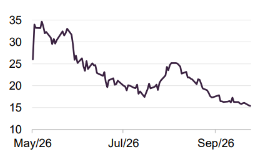
HawkEye 360 (www.he360.com) completed its IPO on the New York Stock Exchange in May 2026, pricing at $26 per share, the top of its indicated range. The company issued 16m new shares, raising $416m of gross proceeds and implying a post-IPO equity valuation of approximately $2.84bn. This represented a 38% increase in HawkEye 360’s enterprise value, net of the IPO proceeds, compared with the valuation used by SSIT at 31 December 2025. SSIT held 2.43m HawkEye 360 shares at the time of the flotation, giving its stake an implied value of approximately $63.2m at the IPO price. Its holding is subject to a six-month lock-up following the IPO.
HawkEye 360’s shares opened at $33.80, above the $26 offer price but, following the initial surge in interest post IPO, HawkEye 360’s share price has declined (it is trading at $14.99 at the time of writing and we have included the impact of this movement in our own live estimate of SSIT’s NAV). This is despite the company reporting that it continues to perform well from an operational perspective.
The company’s Q2 results saw revenue rise 87% year-on-year to $49.8m, international revenue increase 134% and an order backlog that stood at $292.2m. While HawkEye 360 reported a $15.3m net loss and adjusted EBITDA decreased to $7.0m from $7.8m a year earlier, international revenue was up 134% year-on-year to $21m, operating cash flow was up 152% to $11.6m and free cash flow was $5.4m, up from a deficit of $1.3m for the prior year.
Derating may reflect market sentiment rather than a deterioration in the business’s fundamentals
SSIT’s manager believes that HawkEye 360 continues to perform well – noting, for example, that revenue growth, order backlog and contract momentum all remain robust. It views recent share price weakness as a short-term market sentiment issue, rather than an indication of deterioration in trading, and believes that the company could see an improvement if it continues to deliver and profitability improves.
HawkEye 360 reports accelerating demand for its RF signals-intelligence offering, particularly from defence, intelligence and allied-government customers. It expects to benefit from its forthcoming constellation expansion through Clusters 15 and 16 and the first Block 3 Kestrel satellites, alongside the integration of Innovative Signal Analysis’s algorithms. The company has announced $18m in Middle East contract awards.
ALL.SPACE
Figure 7: ALL.SPACE share price (USD)
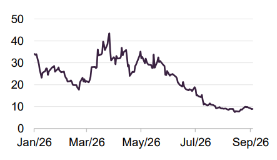
ALL.SPACE was acquired by York Space Systems (www.yorkspacesystems.com) with effect from 8 July 2026, with SSIT receiving US$17.9m in cash (£13.4m) and 1.24m in York shares. As part of the transaction, SSIT could receive up to a further $8.1m through escrow and holdbacks, pending various potential post completion adjustments. The deal followed a period of valuation increases for ALL.SPACE, with SSIT marking the holding up from £30m at 30 September 2025 to £54m at the end of December and £57.4m (13.6% of NAV) at 31 March 2026 amid corporate activity around the business.
For SSIT, however, the value ultimately realised may depend in part on the performance of York’s shares. At York’s share price on completion, the initial consideration was worth about £34.7m, potentially rising to around £40.7m if all deferred amounts are received, below ALL.SPACE’s March carrying value. This shortfall appears to reflect weakness in York’s listed share price rather than a deterioration in the agreed transaction value, and SSIT retains exposure to any potential recovery through the shares it received. We have included the impact of this movement in our own live estimate of SSIT’s NAV.
Further NAV growth expected
SSIT’s manager continues to view changes in defence and geopolitical trends as significant long-term tailwinds. Mark Boggett, Seraphim VC’s CEO, said that he expected these tailwinds could contribute to quarter-on-quarter NAV growth during this year and beyond, as recent contracts may convert to revenue growth for portfolio companies and further contracts may be signed.
Figure 8: SSIT performance from launch to 30 September 20261
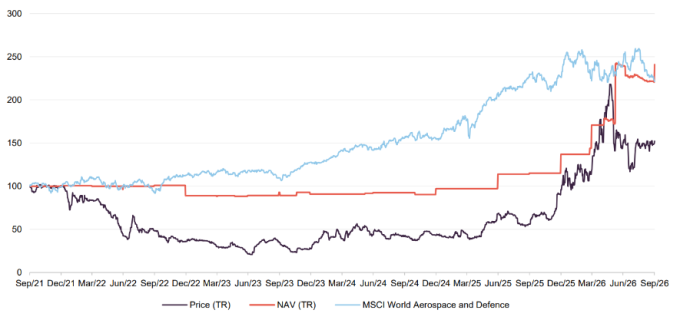
In our recent notes, we commented that, given SSIT may benefit from the same factors that appear to have supported defence stocks, the performance gap between MSCI World Aerospace and Defence Index and SSIT’s share price potentially did not appear sustainable. Since this time, the gap has narrowed. SSIT’s manager believes that approximately 70% of its portfolio has defence applications, and that its investee companies’ profitability is growing – 85% of the portfolio is expected to be EBITDA profitable this year.
Figure 9: SSIT performance over periods ended 30 September 2026
| 3 months (%) | 6 months (%) | 1 year (%) | 3 years (%) | 5 years (%) | Since launch1 (%) | |
|---|---|---|---|---|---|---|
| Price | 1.6 | 28.9 | 169.5 | 341.2 | 52.2 | 90.8 |
| NAV2 | (7.7) | 53.3 | 91.9 | 137.7 | 120.6 | 134.1 |
| MSCI World Aerospace and Defence | 1.5 | 18.3 | 18.5 | 66.0 | 75.5 | 77.1 |
Premium/(discount)
As illustrated in Figure 10, SSIT has seen an increase in its rating since April last year, particularly since December. Greater geopolitical tensions – in particular, the uncertainty around US commitments to the NATO alliance and their support for Ukraine – appear to have prompted European nations and other non-US NATO allies to rethink their security arrangements. They are also investing to bolster their defences.
The ongoing conflict in Ukraine appears to highlight both the dual uses of SpaceTech and its role in defence
At the same time, the ongoing conflict in Ukraine appears to highlight both the dual uses of SpaceTech, and its role in defence. This also appears to be reflected in hostilities elsewhere, for example in the conflict between Iran, US, and Israel. Even if current hostilities subside, the current weaknesses in global defence infrastructure and alliances have potentially been exposed and the greater impetus to rearm may persist.
The market’s recognition of SpaceTech’s role in defence may have been a factor in SSIT’s discount to NAV narrowing from c50% 18 months ago to the mid-20s premium seen prior to the announcement of plans to issue the C share in April (which we covered in our last note). The C share may have helped to satisfy some pent-up demand, which could partly explain why SSIT’s premium subsequently narrowed. Concentration risk associated with ICEYE in particular may be another factor, as may the pace at which the NAV has moved.
However, given the valuation gains that may have occurred since SSIT’s NAV was last published (as at 31 March 2026), we have built our own live estimate of SSIT’s NAV, which adjusts for: the impact of the HawkEye 360 IPO; the purchase of ALL.SPACE by York Space Systems and its payment in part cash and York SpaceSystem Shares; and the completion of ICEYE’s series F funding round. This NAV has been used for the charts and tables throughout this report including Figure 10.
SSIT’s discount narrowing appears to have diverged from that of its wider growth capital peer group
Using this live estimate, over the last 12 months, SSIT’s shares have traded within a range between a 44.6% discount to NAV to a 49.4% premium to NAV, averaging at a 13.5% discount. On 2 October 2026, SSIT was trading at a 12.4% discount. In contrast, the growth capital peer group average discount ranged between 35.0% and a 10.7% discount, and has averaged 23.8%. As at 2 October 2026, the peer group average discount was 21.4%.
The current discount potentially represents an opportunity given the potential long term structural growth drivers for SpaceTech, and the potential for further NAV growth to come through. In addition, the launch of the Seraphim New Space UCITS ETF, with its 10% allocation to SSIT, could provide a source of demand for SSIT’s shares while the ETF is growing (the reverse may also be true).
Figure 10: SSIT premium/(discount) since 30 September 20211
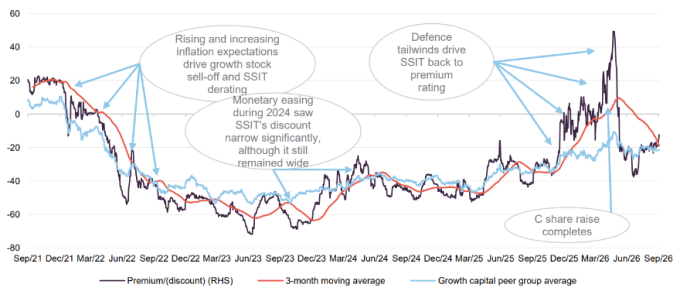
IPO, the purchase ALL.SPACE by York Space Systems and its payment in part cash and York Space System Shares and the recent completion of ICEYE’s series F funding round.
Previous publications
Figure 11: QuotedData’s previously published notes on SSIT
IMPORTANT INFORMATION
Marten & Co (which is authorised and regulated by the Financial Conduct Authority) was paid to produce this note on for Seraphim Space Investment Trust Plc.
This note is for information purposes only and is not intended to encourage the reader to deal in the security or securities mentioned within it.
Marten & Co is not authorised to give advice to retail clients. The research does not have regard to the specific investment objectives financial situation and needs of any specific person who may receive it.
The analysts who prepared this note are not constrained from dealing ahead of it but, in practice, and in accordance with our internal code of good conduct, will refrain from doing so for the period from which they first obtained the information necessary to prepare the note until one month after the note’s publication.
Nevertheless, they may have an interest in any of the securities mentioned within this note.
This note has been compiled from publicly available information. This note is not directed at any person in any jurisdiction where (by reason of that person’s nationality, residence or otherwise) the publication or availability of this note is prohibited.
Accuracy of Content: Whilst Marten & Co uses reasonable efforts to obtain information from sources which we believe to be reliable and to ensure that the information in this note is up to date and accurate, we make no representation or warranty that the information contained in this note is accurate, reliable or complete. The information contained in this note is provided by Marten & Co for personal use and information purposes generally. You are solely liable for any use you may make of this information. The information is inherently subject to change without notice and may become outdated. You, therefore, should verify any information obtained from this note before you use it.
No Advice: Nothing contained in this note constitutes or should be construed to constitute investment, legal, tax or other advice.
No Representation or Warranty: No representation, warranty or guarantee of any kind, express or implied is given by Marten & Co in respect of any information contained on this note.
Exclusion of Liability: To the fullest extent allowed by law, Marten & Co shall not be liable for any direct or indirect losses, damages, costs or expenses incurred or suffered by you arising out or in connection with the access to, use of or reliance on any information contained on this note. In no circumstance shall Marten & Co and its employees have any liability for consequential or special damages.
Governing Law and Jurisdiction: These terms and conditions and all matters connected with them, are governed by the laws of England and Wales and shall be subject to the exclusive jurisdiction of the English courts. If you access this note from outside the UK, you are responsible for ensuring compliance with any local laws relating to access.
No information contained in this note shall form the basis of, or be relied upon in connection with, any offer or commitment whatsoever in any jurisdiction.
Investment Performance Information: Please remember that past performance is not necessarily a guide to the future and that the value of shares and the income from them can go down as well as up. Exchange rates may also cause the value of underlying overseas investments to go down as well as up. Marten & Co may write on companies that use gearing in a number of forms that can increase volatility and, in some cases, to a complete loss of an investment.