
Plenty to do
AVI Global Trust (AGT) recently secured an improved bid for what was its largest holding, Toyota Industries. This has freed up cash for redeployment into new investments as markets have declined in response to the war with Iran. The manager, Asset Value Investors (AVI), says that it remains positive about AGT’s prospects. AVI reports that Japanese companies are more open to engagement, that it has identified a number of targets in Korea (where the government is putting pressure on undervalued companies to address corporate governance issues), and is making progress with engagement efforts with UK-listed investment companies.
Extracting value from discounted opportunities
AGT aims to achieve capital growth through a focused portfolio of investments, particularly in companies whose shares stand at a discount to estimated underlying net asset value. It invests in quality assets held through unconventional structures that tend to attract discounts; these types of companies include holding companies, closed-end funds, and asset-backed special situations.
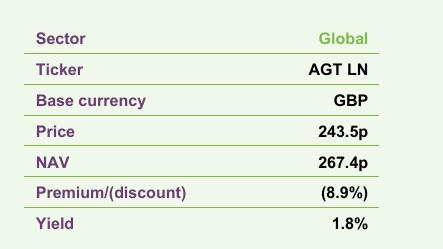
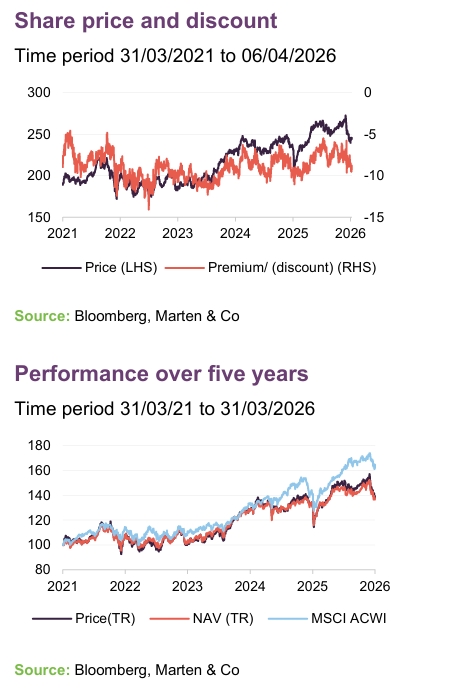
| 12 months ended | Share price total return (%) | NAV total return (%) | MSCI ACWI total return (%) | MSCI ACWI ex US TR (%) |
|---|---|---|---|---|
| 31/03/2022 | 7.3 | 7.3 | 12.4 | 3.5 |
| 31/03/2023 | (4.8) | (3.6) | (1.4) | 1.0 |
| 31/03/2024 | 26.2 | 24.6 | 20.5 | 10.6 |
| 31/03/2025 | 1.1 | 0.9 | 4.9 | 3.9 |
| 31/03/2026 | 6.7 | 5.7 | 17.5 | 22.0 |
Fund profile
Holding companies, closed-end funds, and asset-backed special situations
AGT aims to achieve capital growth through a focused portfolio of investments in companies whose shares stand at a discount to estimated underlying net asset value. It invests in assets held through structures that tend to attract discounts; these types of companies include family-controlled holding companies, closed-end funds, and asset-backed special situations such as asset-rich Japanese companies.
Hear about the fund
For performance measurement purposes, AGT compares itself to the MSCI All Country World Total Return Index, expressed in sterling terms, but the manager says that the performance benchmark does not influence portfolio construction and the trust’s active share is typically close to 100%.
AGT’s AIFM is Asset Value Investors (AVI), which was established in 1985, when the trust’s current approach to investment was adopted. At that time, AGT had assets of £6m and was known as the British Empire Securities and General Trust, later shortened to British Empire Trust. The trust adopted its current name on 24 May 2019.
Market backdrop
Early in 2025, AI-related stocks declined after the release of DeepSeek’s latest model, which appeared to raise concerns over the valuations of some of these companies. In April, this was followed by a broader market downturn after Trump’s tariff announcements on “Liberation Day”. Equity markets subsequently recovered, rising steadily until the outbreak of war between Israel, the USA, and Iran.
Figure 1: MSCI ACWI (in Sterling)
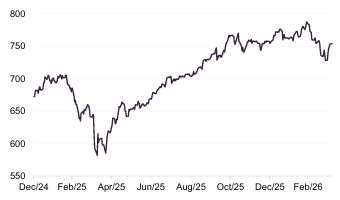
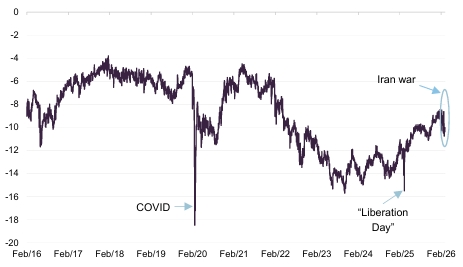
Figure 2: S&P 500 relative to MSCI ACWI
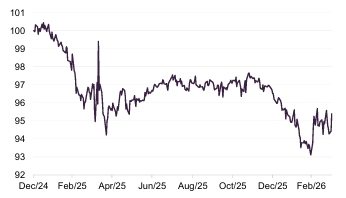
Within these numbers, another trend has been the underperformance of US equities relative to the global market. Figure 2 shows that this began in January, around the time of DeepSeek, which may suggest that investors became concerned about the size of their investments in AI-related US mega-cap stocks.
The Iranian war may have implications for energy prices, inflation, and interest rates. This appears to be reflected by recent falls in equity markets.
Figure 3: Sterling performance of selected MSCI indices since the outbreak of war with Iran on 28 February 2026
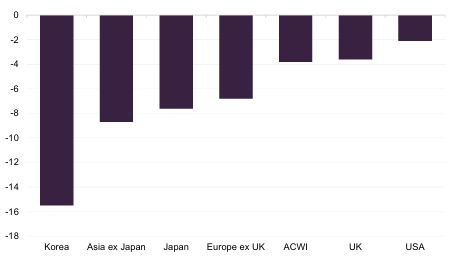
Japan and Korea, which are an important part of AGT’s portfolio, have been importing most of their oil from the Middle East. As Figure 3 shows, they appear to have been among the markets most affected since the outbreak of war.
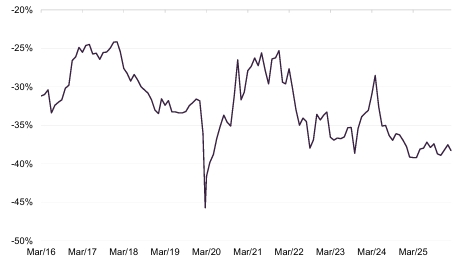
Investment companies’ discounts had been narrowing, which may have been encouraged by activism including AVI’s engagement with various private equity trusts. However, in recent weeks, signs of growing investor unease about falling markets and an increasingly uncertain outlook appears to have reversed this trend.
Figure 4: Median discount all investment companies
AGT’s weighted average discount on the underlying portfolio is towards the bottom end of its range
Within AGT’s portfolio, the managers have been reallocating cash from investments that have performed well into new opportunities, which they say has kept the weighted average discount on the underlying portfolio towards the lower end of its range.
Figure 5: Weighted average discount on AGT’s underlying portfolio
AGT’s exposure to Korea has risen from 3% of the portfolio last June to 17% at the end of February
Korea
One change between AGT’s portfolio today and that of 30 June 2025 (the data that was used when the company was last published on) is a separately disclosed significant position in Korea. Exposure to the country increased from 3% of the portfolio to 17% at the end of February 2026.
Macroeconomics
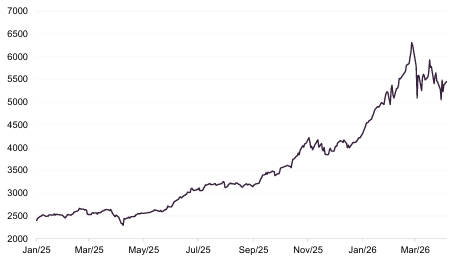
Figure 6: Korea Composite Stock Price Index (KOSPI)
In the previous note, a section was dedicated to the potential opportunity in Korea. The manager believes the market is undergoing a multi-year re-rating, which it attributes to sweeping corporate governancereforms.
The Korean government is promoting corporate governance improvements as a way of building household wealth
The manager says that the push for reform is coming from the relatively new (elected last June) government of President Lee Jae Myung, which has stated an intention to build household wealth and redirect savings from the property market into equities. The stated aim is to improve housing affordability and, in turn, make it easier for people to afford to have children and improve a birth rate which is currently at record lows.
Reforms enacted under Korea’s “value-up” initiative to date include a law requiring directors to consider the interests of all shareholders, a mandate for the cancellation of all treasury shares, and the introduction of tax incentives intended to encourage higher dividends.
September will see the introduction of mandatory cumulative voting. This is intended to make it possible for minority investors to get their nominees elected to a board. Under the current system, an investor who holds 1,000 shares voting on four directors would cast 1,000 votes on each resolution. Under cumulative voting, votes can be concentrated, allowing all 4,000 to be cast for a single candidate and none for any of the other nominees. The reform also changes audit committee independence requirements. Rather than being appointed by the board, at least two members must be elected separately by shareholders and no one shareholder can cast more than 3% of the company’s votes.
About 40% of Korean companies are trading at less than 0.5x book
AVI also highlights the Anti-Stock Price Suppression Act, which is intended to address distortions related to Korea’s inheritance tax regime. A majority of Korean companies are controlled by families or a single shareholder, and high death duties are reported to have created an incentive to keep share prices low. Even after the returns shown in Figure 6, at the end of February about two thirds of Korean companies were trading below book value, and around 40% below 0.5x book. Currently, for inheritance tax purposes, unlisted companies are valued using a blend of asset value and net income and listed ones on the four-month average market price. The proposed legislation would introduce a minimum valuation for listed companies of either 0.8x or 1.0x book, depending on the final bill, which it is hoped will reduce the incentive to keep share prices below this level.
There is also a suggestion that companies trading below book value may be required to publish plans to improve their valuation.
So far, around 200 of Korea’s 2,800 listed companies have voluntarily published a value-up plan. However, AVI believes that the quality of these is low and describes them as mostly boilerplate. AVI also believes that if the government passes a law to make these mandatory and regulates their contents, this could have a material impact.
Japan
AVI states that it is as optimistic about the opportunity in Japan as it has been previously. According to AVI, there are two main reasons for this: the new government’s pro-growth policies, and what it sees as an increased willingness by companies to embrace corporate governance reform.
Macroeconomics
Sanae Takaichi became Prime Minister in October 2025 and secured her position with a victory in a general election on 8 February 2026. Her government is pursuing a pro-growth agenda, but high levels of government debt and a weak yen appear to be making its job more difficult. After decades of low to no inflation, the inflation rate has risen and remained elevated for some time. Whilst companies were once reluctant to raise prices, AVI states that this has changed and is feeding through into profitability.
Figure 7: Tokyo Stock Price Index (TOPIX)
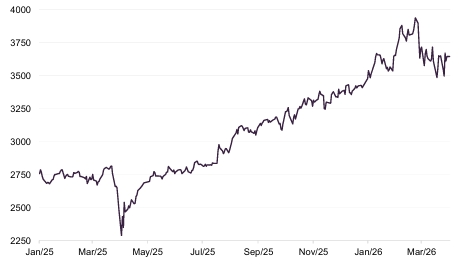
According to AVI, Japanese companies are more open to AVI’s engagement efforts than they have been previously. AVI comments that access to directors and management teams has improved, and that companies are increasingly willing to consider raising dividend pay-out ratios and implementing share buy backs. AVI has observed that more activists are following the AVI model of suggesting specific improvements to businesses, which are intended to unlock value and improve ROIC. This includes measures such as divesting low-return divisions, reducing cash holdings, selling surplus real estate, and unwinding cross-shareholdings.
Asset allocation
At the end of February 2026, there were 37 holdings in AGT’s portfolio.
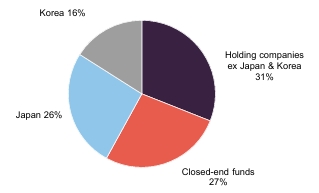
AGT’s asset allocation is driven by the manager’s stock selection decisions and market moves. As discussed above, since the last publication, using data from June 2025, AGT’s exposure to Korea has increased from 3% to 17%. This appears to have been funded by a reduction in European exposure from 39% to 25%. The portfolio breakdown in Figure 9 now shows Korea as a separate category, while the weighting in holding companies has decreased from 48% to 31%.
Figure 8: AGT geographic breakdown as at28 February 2026
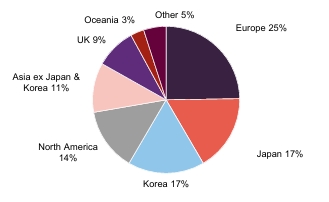
Figure 9: AGT look-through portfolio exposure as at 28 February 2026
Recent activism
HarbourVest Private Equity
Figure 10: HarbourVest Private Equity (GBp)
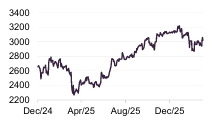
HarbourVest Private Equity (HVPE) is trading on a 29.9% discount. As part of a package of measures introduced by the HVPE board, the company will hold a continuation vote at its AGM in July 2026. AVI states that it has had a dialogue with the chairman and manager.
In January, AVI published an open letter to HVPE’s board in which it requested one of the following:
- An end to new investments until the discount had averaged less than 15% for a year, and in the meantime:
- cash proceeds from distributions to be applied 70:30 to paying down the RCF and redeeming shares at NAV;
- once the RCF had been paid down, 100% of free cash flow to be applied to redeeming shares at NAV; and
- secondary sales of investments to free up cash to accelerate the above plan.
- Investors to be given a choice of whether to participate in a managed run-off of the portfolio under which no new investments would be permitted. Investors would be able to choose between a continuation or resolution share class.
- The board to run a formal sales process for the company or its portfolio.
Chrysalis
Chrysalis (CHRY) was discussed in the previous AGT note. After analysing CHRY, AGT initiated a holding early in 2024, when CHRY was trading at a discount of approximately 50% to a net asset value that was about 40% below its 2021 peak. Over time, AVI built up a stake of approximately 18%, becoming CHRY’s largest shareholder. Most of this stake is held in AGT, but there is also a position in some other funds managed by AVI.
AVI believed that CHRY’s track record did not justify making any new investments and engaged with the board, adding that it helped steer the board towards the recent proposals for a managed wind-down of the company. These proposals were approved by shareholders at an EGM held on 24 March 2026.
Figure 11: Chrysalis (GBp)
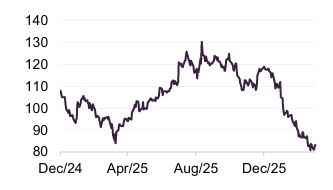
So far, the proposals appear to have had limited impact on CHRY’s rating, with the shares trading on a 50% discount once again. AVI attributes this to various factors, including a public disagreement between CHRY’s managers and its board, after the board served notice on Chrysalis Investment Partners (CIP), as well as market weakness in stocks perceived as vulnerable to agentic AI (although AVI states that it does not believe this is relevant to CHRY’s portfolio). AVI says that it sees value in CIP’s continued involvement in some capacity but has nominated Sam Dobbyn to CHRY’s board on the basis that he had relevant experience of winding down a similar company, Allied Minds, and would also be supportive of him taking charge of that process.
CHRY’s lock up on its stake in Klarna has now expired, which creates the potential to realise cash. However, the stock is also trading close to an all-time low and at roughly a quarter of its IPO price. The CIP team had previously stated that Klarna’s IPO price was too low. AVI also suggests that CHRY could consider selling its stake in Smart Pension, particularly given the ongoing consolidation in that sector. AVI references the recent sale of Cushon by NatWest to Willis Towers Watson as an example.
Top 10
Figure 12: 10 largest holdings at 28 February 2026
| Holding | Industry | Country/region | Percentage of NAV 28/02/26 (%) | Percentage of NAV 30/06/25 (%) | Change(%) |
|---|---|---|---|---|---|
| Toyota Industries | Industrials | Japan | 8.5 | 1.8 | 6.7 |
| D’Ieteren | Holding company | Belgium | 6.8 | 7.3 | (0.5) |
| Jardine Matheson | Holding company | Hong Kong | 6.0 | 2.2 | 3.8 |
| Chrysalis Investments | Closed-end fund | UK | 6.0 | 7.8 | (1.8) |
| News Corp | Holding company | US | 5.9 | 7.0 | (1.1) |
| Vivendi | Media | France | 5.5 | 6.6 | (1.1) |
| HarbourVest Global PE | Closed-end fund | UK | 5.4 | 5.1 | 0.3 |
| Mitsubishi Logistics | Industrials | Japan | 5.4 | 2.9 | 2.5 |
| Samsung C&T | Industrials | Korea | 5.0 | 1.2 | 3.8 |
| Cordiant Digital Infrastructure | Closed-end fund | UK | 4.4 | 4.7 | (0.3) |
| Total | 58.9 | 58.2 |
AGT’s current top 10 is presented above. Compared to the data used in our last note, there have been four new entrants: Toyota Industries (AGT’s largest holding), Jardine Matheson, Mitsubishi Logistics, and Samsung C&T. They replaced Gerresheimer AG, Oakley Capital Investments, Partners Group Private Equity, and Aker.
Toyota Industries
Figure 13: Toyota Industries (JPY)
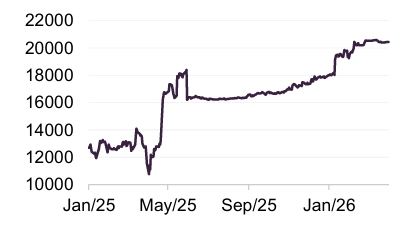
Toyota Industries (toyota-industries.com) was discussed in the previous note as the subject of a bid from a special-purpose vehicle backed by funding from Toyoda Fudosan, Toyota Motor Corporation, and Akio Toyoda. The initial offer was JPY16,300 per share, which AVI felt materially undervalued the company. AGT already had a position but increased its stake following the bid, as AVI believed that pressure would be put on the company to improve the offer terms, and that its downside was capped.
Following pressure from another activist investor, Elliott, the latest bid equates to about book value. AVI believes this is probably still too low for the company, but considers it a reasonable result. AVI feels that, had the previous lower offer been accepted, it would have disadvantaged minority shareholders and represented a setback for corporate governance in Japan.
While it was the largest holding at the end of February, AGT received cash for its stake early in March. This left it with a net cash position of about 3% just ahead of the Iran-war-related selloff in markets.
D’Ieteren
Figure 14: D’Ieteren (EUR)
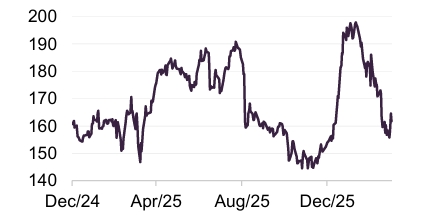
D’Ieteren (dieterengroup.com) is a Belgian holding company whose principal asset is a 50.01% stake in Belron (belron.com), a windscreen replacement and repair business (trading as Autoglass in the UK). AVI comments that this is a resilient business both economically and operationally. It was discussed in our December 2024 note, when the near-term focus was the dislocation in the share price that appeared to be associated with a large special dividend. AVI currently sees potential for a corporate action that could trigger a re-rating. It noted that Clayton Dublier & Rice bought a 40% stake in Belron in 2018 and in 2021 sold down half of that to a consortium of Hellman & Friedman, GIC and BlackRock.
D’Ieteren has reportedly engaged Rothschild & Co to explore strategic options for its Belron stake, and there is discussion of a potential IPO later this year.
Jardine Matheson
Figure 15: Jardine Matheson (USD)
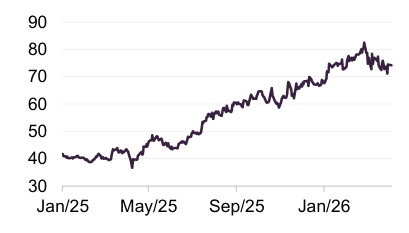
Jardine Matheson (jardines.com) is a stock that has been in and out of AGT’s portfolio over many years. AVI believes that the attraction is a change in the way that the company is managed. AVI comments that there has been a shift from a centralised management model to a more devolved one, with Jardine Matheson taking on more of the characteristics of a holding company. Significant investments include Astra International (astra.co.id), an Indonesian conglomerate that is also Southeast Asia’s largest automotive business, Hongkong Land (hkland.com), DFI Retail (dfiretailgroup.com), and Mandarin Oriental (mandarinoriental.com) the hotel business.
AVI feels that the individual portfolio companies are being better run as a result of the structural changes. It adds that non-core assets such as surplus real estate and minority equity positions are being sold, leaving a leaner, more focused operation at the holding company level with more emphasis on return on investment. AVI believes that there may be further potential, adding that it has been taking advantage of recent volatility to increase the size of the position.
Mitsubishi Logistics
Figure 16: Mitsubishi Logistics (JPY)
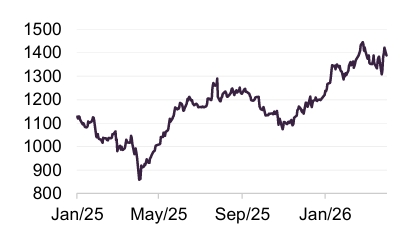
Mitsubishi Logistics (mitsubishi-logistics.co.jp) is one of the major logistics distribution companies in Japan. AVI believes that the operational side of the business is well-run. The company owns significant real estate, which includes both the logistics and distribution warehouses from which it operates, as well as a separate real estate investment portfolio.
The properties are generally not revalued in the company’s accounts, so AVI has worked with third-party valuers to produce its estimate of their value. AVI believes that the real estate assets and the company’s investment securities may be worth more than the entire market cap of Mitsubishi Logistics. AVI has been engaging with the company with the intention of helping it unlock that value, potentially by spinning off the property into a JREIT.
AVI controls approximately 4.7% of the company across the various funds that it manages. AVI Japan Opportunities Trust also has a stake, which is one of the few that now overlap with AGT.
AVI states that there is a similar situation with undervalued property at Tokyo Gas, which is another AGT holding.
Samsung C&T
Figure 17: Samsung C&T (KRW)
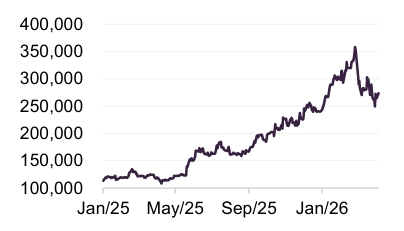
Samsung C&T (samsungcnt.com) was the original company in the Samsung chaebol. Its business is organised in four divisions: engineering & construction, trading & investment, fashion, and resort. It is also the holding company through which the Lee family controls the wider Samsung Group. In particular, it has stakes in Samsung Electronics and Samsung Biologics, which are both listed companies. AVI says that Samsung C&T’s shares are trading at approximately a 59% discount to their assessment of intrinsic value.
AVI comments that these are businesses with strong operational metrics. Samsung Biologics is described as a leading global contract development and manufacturing organisation (CDMO) for biopharmaceuticals by biomanufacturing capacity. It reported 30% revenue and 50% EBITDA growth in 2025. Samsung Electronics reported a 33% increase in EPS over 2025, which management attributes in part to results within its memory division. Industry forecasts suggest that, due to AI-related capital expenditure, demand for memory chips may exceed supply, which could continue to support revenue growth. Samsung’s new HBM4 (high bandwidth memory) chips are reported to be contributing to its market share gains, competing with SK Hynix in this segment.
AVI based its investment decision in part on the belief that Samsung’s technology could catch SK Hynix, which, according to AVI, would increase the attraction of Samsung C&T.
AVI says that C&T has made some moves that it considers shareholder-friendly, such as Samsung Biologics spinning out its Samsung Bioepis biosimilars business (the biopharmaceuticals equivalent of generic drugs). AVI believes that Samsung Biologics would attract a higher valuation as a more focused CDMO company.
AVI highlights that members of the Lee family appear to be increasing their stakes in Samsung C&T. However, AVI says that it believes there is more that Samsung C&T could be doing to boost its share price, such as raising the dividend pay-out ratio from its current c.20% level.
Other holdings
Youngone Holdings/Youngone Corporation
Figure 18: Youngone Corporation (KRW)
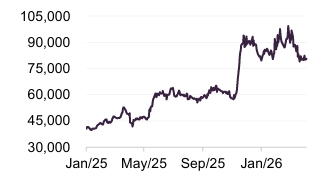
Youngone Corporation (youngonecorporation.com), spun out of Youngone Holdings in 2009, is among the top three premium garment manufacturers globally, specialising in outerwear. Its clients include global brands such as Arcteryx, Patagonia, The North Face, and Lululemon, and these companies tend to give Youngone one-to-three-year contracts. Manufacturing facilities are distributed worldwide.
AVI views it as a high-quality company; however, it trades on about 5x EV/forward EBIT, a significant discount to peers which tend to trade on multiples closer to three times that level. Youngone Corporation also has a portfolio of real estate and net cash of about 35% of its market cap.
AVI has been engaging with the holding company with the aim of improving board diversity, addressing what it considers to be an overly generous remuneration structure, and finding ways to improve ROIC.
Youngone Holdings trades on a 35% discount to AVI’s assessment of the value of its assets, based on Youngone Corporation’s current share price.
Hyosung Corporation
Figure 19: Hyosung Corporation (KRW)
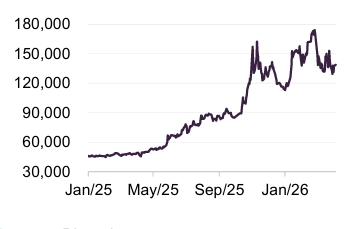
Hyosung Corporation (hyosung.com) is a family holding company. AVI believes that it trades on about a 77% discount to intrinsic value. According to AVI, its stake in Hyosung Heavy Industries (hyosungheavyindustries.com) alone is worth three times Hyosung Corporation’s market cap.
Hyosung Heavy Industries operates in the power systems market, providing components such as transformers, switchgears, and voltage converters. The company also supplies solutions for customers seeking to build or upgrade grids or install renewables and energy storage solutions. The market appears to be expanding as power grids globally are being upgraded to accommodate more widely distributed and intermittent renewable power, as well as increased demand for power associated with growth in AI. AVI notes that Hyosung Heavy Industries is the only Korean company in this market with existing manufacturing facilities in the US. According to AVI, this may provide an advantage when competing for US business.
The company also has a residential construction division, which appears to be growing more slowly. AVI expects that the company will gradually exit from this business to offer pureplay exposure to the power grid transformation theme.
AGT has additional exposure to the power grid market through a holding in HD Hyundai, a holding company that has a position in HD Hyundai Electric.
Kyocera
Figure 20: Kyocera (JPY)
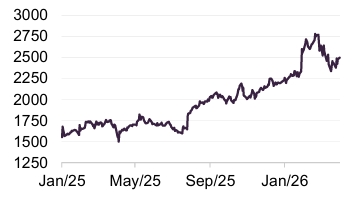
Kyocera (kyocera.com), which AGT first invested in during 2023, is a conglomerate that AVI views as overly complex. Historically rooted in ceramics, the business now spans a wide range of products, including ceramic kitchen knives and semiconductor packaging.
AVI observes that some of Kyocera’s businesses are market-leading; for example, the semiconductor business reportedly has a 50% global market share. Kyocera also owns a stake in KDDI, which is a listed Japanese telecoms company. In 2023, the stake in KDDI accounted for approximately 60% of Kyocera’s market cap.
Following engagement with AVI and others, Kyocera has agreed to sell down a third of its KDDI stake and return capital to shareholders. The CEO has been changed, and the company is reviewing its portfolio of businesses.
Performance
Figure 21: AGT NAV total return performance versus objective over five years ending 31 March 2026
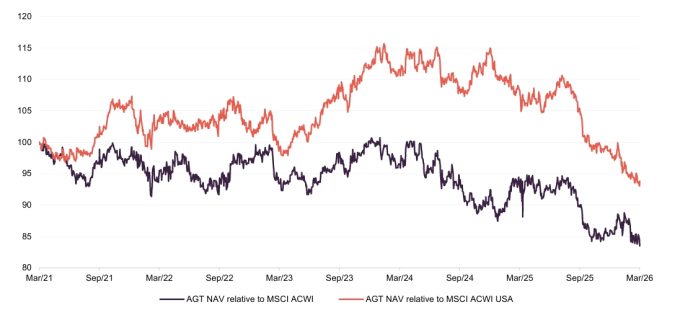
AGT has lagged the two comparative indices in Figure 21 in recent years although, as Figure 22 shows, its returns remain comparable to its peers. As discussed earlier in the note (see page 3 onwards), macroeconomic influences may have contributed to market volatility, including the recent impact of the war in Iran. Given AVI’s investment approach, AGT may not track indices over the short term. However, the five-year figures suggest that AGT has delivered long-term performance, and the wide weighted average discount on the underlying portfolio that is illustrated in Figure 5 on page 5, along with the individual stock stories, suggests there may be potential for further positive returns.
Figure 22: Total return cumulative performance over various time periods to 31 March 2026
| 3 months(%) | 6 months(%) | 1 year(%) | 3 years(%) | 5 years(%) | |
|---|---|---|---|---|---|
| AVI Global Trust share price | (6.2) | (6.7) | 6.7 | 36.2 | 39.2 |
| AVI Global Trust NAV | (4.1) | (5.0) | 5.7 | 32.8 | 37.4 |
| MSCI ACWI | (1.3) | 2.1 | 17.5 | 48.6 | 64.6 |
| MSCI ACWI ex US | 1.1 | 6.2 | 22.0 | 40.2 | 46.6 |
| Peer group1 median share price | (3.2) | (2.4) | 14.5 | 33.1 | 37.4 |
| Peer group1 median NAV | (6.2) | (4.0) | 9.2 | 36.2 | 29.4 |
Premium/discount
Over the 12-month period ended 31 March 2026, AGT’s share price discount to NAV has moved between a range of 11.1% to 5.5% and averaged 8.0%. As of 6 April 2026, the company’s discount was 8.9%.
Figure 23: AGT premium/discount over five years to end March 2026
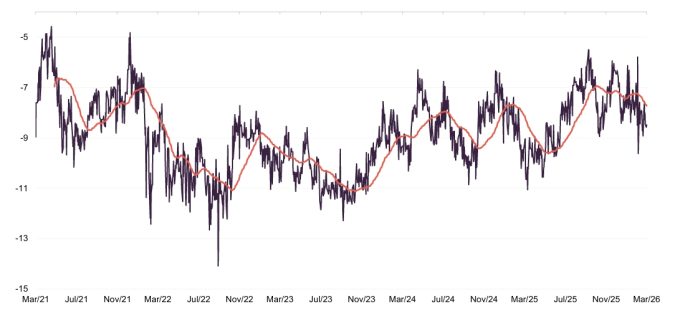
AGT’s discount appears to have been on a broad narrowing trend in recent years and has remained in single figures since the end of May 2025. AGT’s board continues to manage its discount via share buybacks during periods when it considers the discount to be wide and when the board believes that buying back shares is in the interests of shareholders. Since we last published, AGT has repurchased over 15.0m shares.
Capital structure
Simple capital structure
As of 1 April 2026, AGT had 424,479,755 ordinary shares in issue, of which 21,873,084 shares are held in treasury. The number of total voting rights is 402,606,671. There are no other classes of share capital.
AGT does not have a fixed life. Its financial year end is 30 September, and its AGMs are usually held in December.
Fees and costs
The investment manager is entitled to an annual management fee of 0.70% of the first £1bn of AGT’s net assets and 0.60% of any net assets above £1bn.
The investment management agreement can be terminated on six months’ notice.
A breakdown of directors’ fees is shown below. For the year ended 30 September 2025, the only other expenses of note were marketing expenses of £514,000 (FY24: 605,000), and advisory and professional fees of £537,000 (FY24: £487,000).
The ongoing charges ratio (based on the trust’s own running costs) for the year ended 30 September 2025 was 0.85%, compared to 0.87% for the prior year.
Gearing
As at 30 September 2025, AGT had non-current liabilities valued at £161.3m. These are made up of six different unsecured loan notes, denominated in Sterling, euros, and yen, and with maturity dates between 2032 and 2039. The coupons on the yen debt are as low as 1.38%, whereas the coupon on the Sterling debt is 4.184%.
At 28 February 2026, net gearing, with debt at fair value, was 4.7%.
Board
AGT has five directors, all of whom are non-executive, are independent of the manager, and do not sit together on other boards.
Calum Thomson is the longest-serving director. He plans to retire at the AGM in December 2026, at which point Anja Balfour is expected to take over as the senior independent director. A new director is scheduled to be recruited later this year.
Figure 24: Directors’ length of service, fees, and shareholding Role Appointed Length
| Role | Appointed | Length of service (years) | Fees (GBP) | Shareholding | |
|---|---|---|---|---|---|
| Graham Kitchen | Chairman | 01/2019 | 7.3 | 57,000 | 139,000 |
| Calum Thomson | Senior independent director/ chair of the audit committee | 04/2017 | 9.0 | 47,500 | 44,490 |
| Anja Balfour | Director | 01/2018 | 8.3 | 37,000 | 50,000 |
| Neil Galloway | Director | 09/2021 | 4.6 | 37,000 | 60,000 |
| June Jessop | Director | 01/2023 | 3.3 | 37,000 | 52,000 |
Graham Kitchen
Graham has over 25 years’ experience as an investment manager at Invesco, Threadneedle and, until March 2018, Janus Henderson, where he was global head of equities. He was previously chair of the Investment Committee for the Cancer Research Pension Fund, member of the investment committee of Independent Age and chairman of Invesco Select Trust Plc and Perpetual Asset Management UK Limited. Graham held the position of interim global head of investment strategy at Perpetual Group until March 2024. He is a non-executive director and senior independent director of The Mercantile Investment Trust Plc, and a non-executive director of TR Property Investment Trust Plc and Places for People.
Calum Thomson
Calum is a qualified accountant with over 30 years’ experience in the financial services industry, including 21 years as audit partner at Deloitte LLP, specialising in the asset management sector. He has wide ranging experience in auditing companies in the asset management sector, and latterly as a non-executive director and audit committee chairman.
Calum is a non-executive director and audit committee chairman of Diverse Income Trust Plc, The Bank of London and The Middle East Plc, Ghana International Bank Plc, Patria Private Equity Trust Plc, and TPT Retirement Solutions Ltd. He is a non-executive director of Schroder Unit Trusts Limited and Schroder Pension Management Limited. Calum is also chairman of The Tarbat Historic Trust (a Pictish museum) and a trustee of Suffolk Wildlife Trust.
Anja Balfour
Anja has over 20 years’ experience in managing Japanese and international equity portfolios for Stewart Ivory, Baillie Gifford and Axa Framlington.
She is a non-executive director of Scottish Friendly Assurance Society and was previously chairman of Schroder Japan Growth Fund Plc, a trustee of Venture Scotland, a member of the Finance and Corporate Services Committee of Carnegie UK Trust and a non-executive director of Martin Currie Asia Unconstrained Trust Plc.
Neil Galloway
Currently based in London, Neil has spent most of his career working in Asia, but also has experience in the Americas, Europe, and the Middle East. Following a successful banking career, he has held senior finance and management roles, almost entirely with or for family-controlled companies, overseeing finance, treasury, risk management, legal, IT, projects, and business development, with experience in significant business transformation programmes in large and complex businesses.
Neil is a non-executive director of The Merchants Trust Plc, and was previously CFO of Pepco Group N.V., executive vice president of IWG Plc and an executive director and CFO of DFI Retail Group Holdings Limited based in Hong Kong (the Jardine Matheson subsidiary mentioned on page 10). His industry experience spans banking, hospitality, retail (mass market, luxury, and franchise operations), real estate and services industries.
June Jessop
June was previously senior business manager at Stewart Investors and a member of the EMEA Management Committee of First Sentier Investors (of which Stewart Investors is a sub-brand).
She spent 30 years in financial services, gaining broad experience in portfolio management, client relationship, business development and, latterly, general management roles. June has been an investment manager for institutions, charities, and private clients.
June is a non-executive director of Aberforth Geared Value and Income Trust Plc.
Previous publications
Readers interested in further information about AGT may wish to read our previous notes listed below. You can read them by clicking on the links in Figure 25 or by visiting our website.
Figure 25: QuotedData’s previously published notes on AGT
| Title | Note type | Date |
|---|---|---|
| Double discount on quality-focused portfolio | Initiation | 25 January 2021 |
| Focused high conviction portfolio | Update | 5 August 2021 |
| Bargain hunting | Annual overview | 20 May 2022 |
| Doubly blessed | Update | 8 March 2023 |
| An historic opportunity | Annual overview | 21 November 2023 |
| Thriving under pressure | Update | 6 June 2024 |
| Building on solid foundations | Annual overview | 5 December 2024 |
| No shortage of targets | Update | 5 August 2025 |
Important Information
This marketing communication has been prepared for AVI Global Trust Plc by Marten & Co (which is authorised and regulated by the Financial Conduct Authority) and is non-independent research as defined under Article 36 of the Commission Delegated Regulation (EU) 2017/565 of 25 April 2016 supplementing the Markets in Financial Instruments Directive (MIFID). It is intended for use by investment professionals as defined in article 19 (5) of the Financial Services Act 2000 (Financial Promotion) Order 2005. Marten & Co is not authorised to give advice to retail clients and, if you are not a professional investor, or in any other way are prohibited or restricted from receiving this information, you should disregard it. The note does not have regard to the specific investment objectives, financial situation and needs of any specific person who may receive it.
The note has not been prepared in accordance with legal requirements designed to promote the independence of investment research and as such is considered to be a marketing communication. The analysts who prepared this note are not constrained from dealing ahead of it, but in practice, and in accordance with our internal code of good conduct, will refrain from doing so for the period from which they first obtained the information necessary to prepare the note until one month after the note’s publication. Nevertheless, they may have an interest in any of the securities mentioned within this note.
This note has been compiled from publicly available information. This note is not directed at any person in any jurisdiction where (by reason of that person’s nationality, residence or otherwise) the publication or availability of this note is prohibited.
Accuracy of Content: Whilst Marten & Co uses reasonable efforts to obtain information from sources which we believe to be reliable and to ensure that the information in this note is up to date and accurate, we make no representation or warranty that the information contained in this note is accurate, reliable or complete. The information contained in this note is provided by Marten & Co for personal use and information purposes generally. You are solely liable for any use you may make of this information. The information is inherently subject to change without notice and may become outdated. You, therefore, should verify any information obtained from this note before you use it.
No Advice: Nothing contained in this note constitutes or should be construed to constitute investment, legal, tax or other advice.
No Representation or Warranty: No representation, warranty or guarantee of any kind, express or implied is given by Marten & Co in respect of any information contained on this note.
Exclusion of Liability: To the fullest extent allowed by law, Marten & Co shall not be liable for any direct or indirect losses, damages, costs or expenses incurred or suffered by you arising out or in connection with the access to, use of or reliance on any information contained on this note. In no circumstance shall Marten & Co and its employees have any liability for consequential or special damages.
Governing Law and Jurisdiction: These terms and conditions and all matters connected with them, are governed by the laws of England and Wales and shall be subject to the exclusive jurisdiction of the English courts. If you access this note from outside the UK, you are responsible for ensuring compliance with any local laws relating to access.
No information contained in this note shall form the basis of, or be relied upon in connection with, any offer or commitment whatsoever in any jurisdiction.
Investment Performance Information: Please remember that past performance is not necessarily a guide to the future and that the value of shares and the income from them can go down as well as up. Exchange rates may also cause the value of underlying overseas investments to go down as well as up. Marten & Co may write on companies that use gearing in a number of forms that can increase volatility and, in some cases, to a complete loss of an investment.