
Primed to perform?
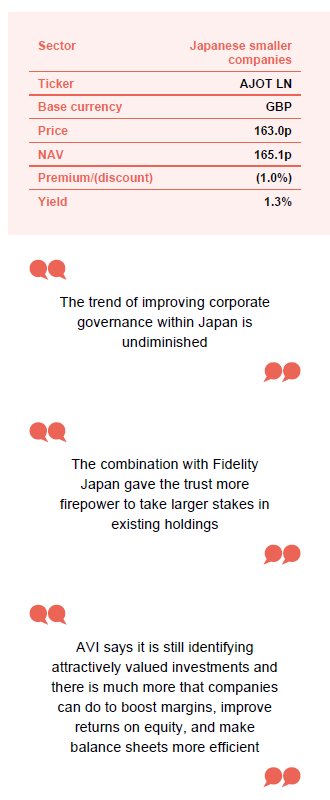
AVI Japan Opportunity Trust (AJOT) has made good use of the extra resources gained from its merger with Fidelity Japan. The trust holds large positions in undervalued and overcapitalised companies, aiming to unlock their hidden value.
More companies are now open to working with AJOT, so much of this progress happens privately. As AGM season continues, AJOT’s manager has submitted several proposals that could help drive further NAV growth for the trust.
Unlocking value in Japanese smaller companies
AJOT aims to achieve capital growth in excess of the MSCI Japan Small Cap Index by investing in a concentrated portfolio of over-capitalised small-cap Japanese equities. Asset Value Investors (AVI) leverages its four decades of experience investing in asset-backed companies to engage with company management and help to unlock value in this under-researched area of the market.
At a glance
Share price and premium/(discount)
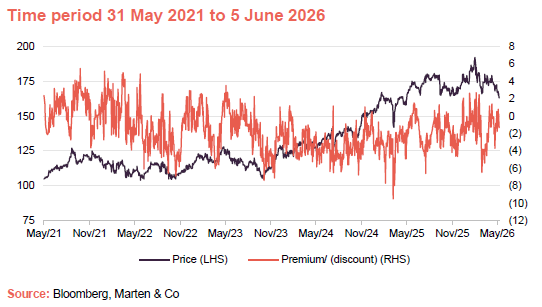
Over the 12 months ended 31 May 2026, AJOT’s shares traded between a 2.7% premium and a 6.6% discount to net asset value (NAV). The average discount over the period was 1.6%. At 8 June 2026, AJOT was trading at a 1.0% discount.
AJOT’s robust discount controls, including its annual tender offer, have helped it trade relatively close to NAV. Once the dislocation of the combination with FJV was behind it, AJOT has often traded at a premium and been able to issue shares.
Performance over five years
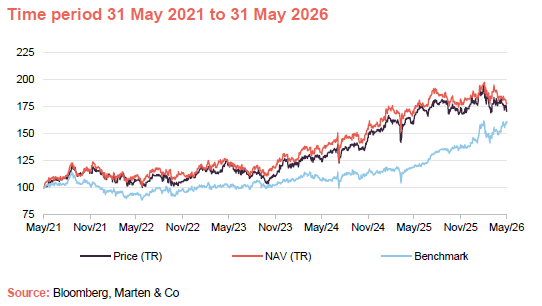
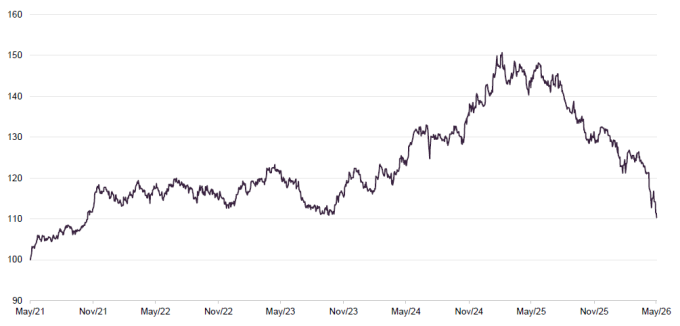
Although the short-term period has been more difficult, AJOT’s NAV and share price returns are still ahead of its performance benchmark, the MSCI Japan Small Cap index, over the long-term.
The nature of AJOT’s investment approach means that returns are driven by the manager’s stock selection and the success of its campaigns to unlock value. There will be periods where AJOT’s returns diverge meaningfully from the index, and therefore its performance is best considered over the long term.
| Year ended | Share price total return (%) | NAV total return (%) | MSCI Japan Small Cap total return (%) | MSCI AC World total return (%) |
|---|---|---|---|---|
| 31/05/2022 | 7.0 | 11.1 | (6.4) | 5.4 |
| 31/05/2023 | 13.3 | 7.8 | 7.1 | 3.3 |
| 31/05/2024 | 2.3 | 12.3 | 8.0 | 20.8 |
| 31/05/2025 | 34.3 | 28.5 | 11.3 | 8.0 |
| 31/05/2026 | 3.2 | 2.7 | 33.7 | 30.7 |
Fund profile
More information is available at the fund’s website www.ajot.co.uk
AJOT invests in Japanese small- and mid-cap companies with strong balance sheets, focusing on those holding significant cash, listed securities, or other assets. The manager aims to engage with these businesses to unlock this hidden value.
Asset Value Investors Limited (AVI) is AJOT’s AIFM and investment manager, with Joe Bauernfreund the lead manager of the portfolio. Most of AVI’s growing Japan-focused team are Japanese speakers. AVI has managed Japanese investments for over 40 years and launched AJOT in October 2018 to target opportunities in Japan. As of April 2026, AVI and its staff held over £4.4m in AJOT shares.
In November 2025, AJOT merged with Fidelity Japan Trust (FJV), issuing 110.7m shares for assets worth about £184m. AJOT provides annual exit opportunities at a small discount to NAV, helping its shares trade close to NAV. The latest exit in January 2026 saw 26.9m shares bought back at a 2% discount to NAV after costs.
AJOT measures performance against the MSCI Japan Small Cap Total Return Index in sterling, but does not use it to build the portfolio. As a result, AJOT’s portfolio differs significantly from the index.
Japan
Since our last update, Prime Minister Sanae Takaichi won a landslide victory in the snap general election held in early February. This result gave the Liberal Democrat Party a strong majority in parliament, creating a more stable political environment.
Figure 1: MSCI Japan versus MSCI ACWI
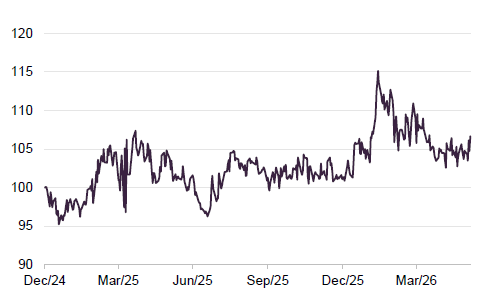
Figure 2: MSCI Japan Small Cap versus MSCI Japan
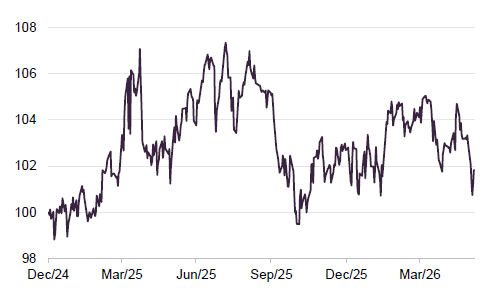
The Japanese market has outperformed the MSCI ACWI, with smaller companies slightly ahead of larger ones. This is despite challenges like a weak yen, higher energy costs from the Iran war (as Japan imports most of its oil from the Gulf), and trade tensions with China affecting Japanese exports.
AVI believes that relative to the wider market, AJOT’s portfolio is less sensitive to sectors that are heavily impacted by higher fuel costs
AVI believes AJOT’s portfolio is less exposed to sectors hit hardest by rising fuel costs. For example, Eiken Chemical does not rely on petroleum feedstock, and Mitsubishi Logistics, while sensitive to fuel prices, is mainly attractive for its surplus real estate. The company has also offset higher fuel costs with surcharges, so AJOT’s investment case is less impacted.
Defence spending and large investments in AI are boosting related sectors. Higher commodity prices are supporting mining stocks and suppliers. Wages are rising, suggesting more persistent inflation, but this has not led to increased consumer spending. Interest rates, unchanged since December 2025, have helped financial stocks.
The yen remains weaker than expected, limiting returns for sterling investors, but there is pressure for it to strengthen to reduce imported inflation. Japanese retail investors are being encouraged to buy equities as inflation makes cash less attractive, which has helped lift the stock market.
Corporate governance progress continues
The trend of improving corporate governance within Japan is undiminished
AVI reports that Japan’s trend towards better corporate governance continues. With the new AGM season underway, AVI plans to remain active in promoting shareholder-friendly resolutions.
The FJV deal has allowed the trust to take larger stakes in existing holdings and invest in new ones. AJOT now holds between 20% and 40% of shares in four or five companies. However, from May 2026, Japan introduced new rules similar to the UK’s Takeover Panel. Crossing a 30% stake now triggers a mandatory bid for the company, making future 40% stakes unlikely.
Investors in Japanese shares must declare holdings of 5% or more. AVI notes that such declarations often prompt a re-rating as other investors expect positive developments. AVI also observes that companies are now much more open to engagement than when AJOT was launched.
Even mainstream investors are focusing on corporate governance
The manager seeks consensus by speaking with many other shareholders, while avoiding forming concert parties. AVI often invests alongside similar-minded investors and notes that mainstream investors are now more engaged with corporate governance issues.
AVI believes there is still significant potential in the strategy, as it continues to find attractively valued opportunities. It sees scope for companies to further improve margins, boost returns on equity, and make their balance sheets more efficient.
Japan’s corporate governance regime may also improve further. The Financial Services Agency is reviewing the Corporate Governance Code for the first time since 2021, with results expected later this year.
Investment process – how the portfolio is selected
Start with a simple quantitative screen
Japan has around 4,000 listed companies. AVI targets small- and mid-cap firms with market values between £50m and £4bn, where it can take significant stakes and influence change.
AVI screens the market at least monthly for companies holding excess cash or listed securities, though finding accurate data often requires detailed analysis, as cash may be obscured, such as being lent to a parent company.
Many of these companies are not attractive investments, with some existing mainly to provide jobs or pay pensions. Since activism can take time to deliver results, AVI avoids poor-quality firms that could lose value faster than it can unlock it.
Exclude loss-making and highly cyclical businesses
AVI excludes loss-making and highly cyclical businesses, focusing instead on solid, resilient companies with good profit growth prospects, often with high margins. It assesses value using measures like EV/EBIT.
AVI then considers how to unlock value, such as by engaging with like-minded shareholders and other key stakeholders.
About 80–120 companies pass AVI’s initial screening. The team researches five to ten in detail each month, leading to around one to three new investments per quarter.
Portfolio construction
The manager keeps a small number of thoroughly researched “ready to go” opportunities from the target list. Every stock in the portfolio is chosen for its potential to outperform the market based on quality and growth. Extra returns are expected when specific events unlock the stock’s underlying value.
15–25 positions
AJOT typically holds 15–25 positions, with AVI comfortable at the lower end of this range. A risk overlay is used to avoid over-exposure to any sector or group. Ideally, the manager would allocate evenly across opportunities due to uncertainty around engagement outcomes, but actual position sizes depend on liquidity, conviction in engagement success, and potential for corporate events. Smaller positions usually reflect limited available capital, not a preference for small holdings. At the end of February 2025, about 70% of the portfolio was in the top 10 positions.
Before buying, analysts prepare a detailed internal note, and allocation decisions are based on business quality, engagement potential, and liquidity. AVI is willing to be patient, as aligning stakeholders can take time. Positions are exited if the desired outcome seems unachievable or if stock quality declines significantly. The typical holding period is three to five years, though recent turnover has been higher due to privatisations and corporate events.
AJOT’s portfolio is therefore quite different from benchmark indices.
AVI’s approach to engagement
AVI tailors its engagement to each company’s unique business model and governance challenges. Rather than being hostile, AVI prefers to work privately with management to find solutions, meeting each investee company about seven times a year. Improving ESG and balance sheet efficiency are key priorities, along with encouraging management to focus on core business areas and develop long-term strategies for growth and higher margins.
If progress is slow, AVI may step up its efforts. Most campaigns remain private until results are announced, if they are made public at all. In rare cases, AVI may go public to increase pressure or submit shareholder proposals to influence board behaviour.
Investment restrictions
There are no restrictions on sector weightings in the portfolio. At the time of investment, no single holding, including those gained through derivatives, is expected to make up more than 10% of AJOT’s total assets.
AJOT can invest up to 15% of its assets in a single stock if the right opportunity comes up. There are no limits on the size of companies it can invest in, but the portfolio usually focuses on small and medium-sized firms. Derivatives may be used to manage the portfolio efficiently and to add gearing.
Asset allocation
On 30 April 2026, AJOT held 28 stocks, seven more than in our last update but still within its usual range, reflecting the manager’s high-conviction approach. The average stock trades at 8.9 times EV/EBIT and has net cash equal to 12.4% of its market cap. About 38% of the average stock’s market cap comes from net cash, investment securities, and stakes in other companies not required for operations.
Figure 3: AJOT sector breakdown as at 30 April 2026
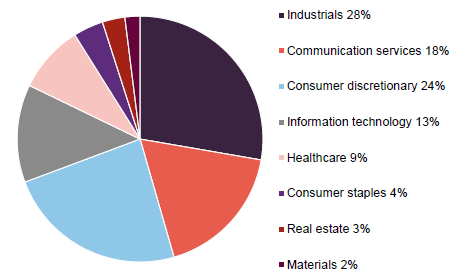
Figure 4: AJOT portfolio split by market cap as at 30 April 2026
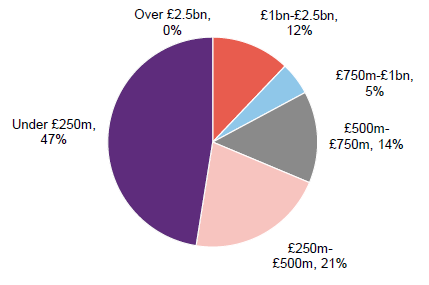
Sector allocations show AVI’s stock selection, with consumer discretionary exposure rising from 16% to 24% and industrials from 22% to 28% since September 2025. Exposure to consumer staples fell by five percentage points. There is also a clear move towards smaller companies, with holdings in firms valued under £250m increasing from 31% to 47%.
10 largest holdings
Since our last update at the end of September 2025, Raito Kogyo, Rohto Pharmaceutical, and Aoyama Zaisan Networks have left the top 10 holdings. They have been replaced by Maruzen Showa Unyu, Asiro, and Sanyo Shokai.
Figure 5: 10 largest holdings at 30 April 2026
| Holding | Industry | AVI ownership1 (%) | EV/EBIT1 (x) | NFV as % of market cap1 | ROI in JPY1 (%) | Percentage of NAV 30/04/26 | Percentage of NAV 30/09/25 | Change (%) |
|---|---|---|---|---|---|---|---|---|
| Mitsubishi Logistics | Logistics | 4.5 | 4.6 | 80 | 14.1 | 9.1 | 8.1 | 1.0 |
| SharingTechnology | Service matching platform | 28.7 | 11.8 | 15 | 24.8 | 8.6 | 7.3 | 1.3 |
| Kurabo Industries | Conglomerate | 5.0 | 2.2 | 83 | 53.7 | 8.3 | 7.8 | 0.5 |
| Eiken Chemical | Diagnostics | 8.2 | 29.5 | 8 | 61.7 | 8.3 | 9.9 | (1.6) |
| Broadmedia | Online education | 38.0 | 11.7 | 33 | 26.5 | 6.7 | 6.3 | 0.4 |
| Atsugi | Apparel, stockings | 5.7 | 7.8 | (2.1) | ||||
| Maruzen Showa Unyu | Logistics | 3.4 | 8.0 | 24 | 9.7 | 5.7 | 2.6 | 3.1 |
| Wacom | Digital pens | 13.7 | 7.0 | 12 | 15.4 | 5.5 | 10.3 | (4.5) |
| Sanyo Shokai | Apparel | 12.1 | 6.9 | 53 | 6.2 | 5.5 | 1.4 | 3.1 |
| Asiro | Media and HR platforms | 35.4 | 9.2 | 10 | 27.7 | 5.4 | – | 5.4 |
| Total | 7.82 | 383 | 68.8 | 85.5 |
In February 2026, Raito Kogyo, a specialist construction company, announced a share buyback and reported strong results. AVI says this, along with its M&A strategy, ESG commitments, and review of its price-to-book target, led to a 20% rise in its share price. AJOT sold shares during this rally.
Rohto Pharmaceutical remains a major holding. AVI plans to submit a proposal to remove chairman Kunio Yamada at Rohto’s June 2026 AGM.
Atsugi, a clothing business held since July 2024, saw its share price fall out of AJOT’s top 10 in the first quarter but recovered in April. The company was loss-making for much of the past decade, and AVI believes it is significantly overcapitalised.
Aoyama Zaisan Networks, a wealth management consultancy, has seen its share price fall since November after a profit warning linked to planned tax reforms.
Maruzen Showa Unyu
Figure 6: Maruzen Showa Unyu (JPY)
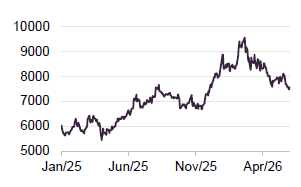
Maruzen Showa Unyu (maruzenshowa.co.jp/en) is a third-party logistics company that has been in AJOT’s portfolio for some time. Its share price rose sharply after strong second quarter results in November 2025, making it one of AJOT’s top 10 holdings. For the year ended 31 March 2026, the company reported over 30% growth in earnings per share, despite only modest sales growth. However, the share price has since come under pressure due to higher fuel costs linked to the Iran war. Investor sentiment may also have been affected by the company’s proposal to introduce “poison pill” measures against takeover attempts, which will be voted on at the next AGM.
Asiro
Figure 7: Asiro (JPY)
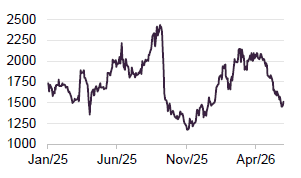
Asiro (en.asiro.co.jp) runs media platforms linking law firms with clients (BenNavi) and job-seekers with recruitment agencies, and also offers legal insurance. AVI holds a large stake. Recent quarterly results were disappointing, but the company is working to improve performance.
Asiro expects AI advances to benefit its business. It has raised its dividend payout ratio from 30% to 40% and plans to buy back shares.
Sanyo Shokai
Figure 8: Sanyo Shokai (JPY)
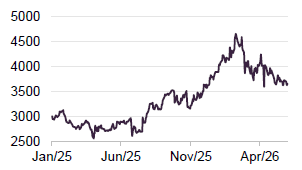
Sanyo Shokai (sanyo-shokai.co.jp/en) makes clothes and accessories, selling mainly through department stores, with a growing online business. Over the past year, it bought back 8% of its shares, cancelling almost all treasury stock. This boosted earnings per share by 11% year-on-year, despite lower sales and profits, as the company benefited from selling investment securities. The dividend was raised by 5%. Modest sales and earnings growth are forecast for FY27.
The company is reviewing its balance sheet and is selling surplus land at its Tokyo head office.
Sapphireterra Capital LLC, Sanyo Shokai’s second-largest shareholder, is urging the company to pay a special dividend of JPY1,200 per share. Sanyo Shokai opposes this, preferring to use its resources for brand development, overseas growth, and acquisitions. Proxy adviser ISS recommends shareholders vote against the special dividend.
Other stocks
Synchro Food
For the first time, AJOT has placed an AVI team member on the board of one of its investments, Synchro Food. AJOT began investing in Synchro Food in March 2025. In September, AVI called an extraordinary general meeting. A vote to dismiss one director and appoint Kaz Sakai passed on 26 December 2025, with support from LIM Advisors and VIS Advisors. As a result, Synchro Food’s chairman and CEO were dismissed. Synchro Food runs inshokuten.com, a B2B platform connecting restaurant businesses with suppliers, staff, and services. AVI believed poor capital allocation was hurting investor confidence.
Broadmedia
AJOT’s large holding in Broadmedia came partly from a tender offer it made in December 2025 at JPY2200 per share. The share price rose to JPY2444 in April 2026 as profitability improved but has since declined.
Eiken Chemical
Eiken Chemical’s share price rose sharply in February 2026 due to takeover rumours but has since declined.
Foster Electric
Figure 9: Foster Electric (JPY)
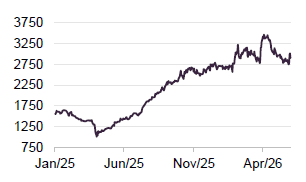
Foster Electric (foster-electric.com/investors), just outside AJOT’s top 10 holdings, makes loudspeakers, audio and electronic equipment. While sales and profits improved last year, recent results have been weaker.
Axium Capital, a value-focused investor, has built a large position, holding 22.5% as of March. AVI also announced a 5% stake in January and may make proposals to the company.
In February, Foster Electric said it would set up its first audit and supervisory committee and raised its dividend forecast to JPY80, up from JPY60 for FY25.
Performance
Up-to-date information on AJOT and its peers is available on our website
While recent performance has been more challenging, AJOT’s NAV and share price returns remain ahead of the MSCI Japan Small Cap index over the long term. AJOT’s results depend on the manager’s ability to pick stocks and unlock value, so returns can differ from the index at times. For this reason, its performance is best judged over longer periods.
Figure 10: Total return cumulative performance over various time periods to 31 May 2026
| 3 months (%) | 6 months (%) | 1 year (%) | 3 years (%) | 5 years (%) | |
|---|---|---|---|---|---|
| AVI Japan Opportunity share price | (12.2) | (1.3) | 3.2 | 41.7 | 71.7 |
| AVI Japan Opportunity NAV | (9.5) | (2.4) | 2.7 | 48.3 | 77.6 |
| Comparator benchmark | (0.5) | 15.4 | 33.7 | 60.6 | 61.0 |
Figure 11: AJOT NAV total return performance relative to MSCI Japan Small Cap index for the five years to 31 May 2026
AVI reports that the main detractors from AJOT’s returns in the six months to March were Aoyama Zaisan, Synchro Food, Atsugi (all discussed above), along with Wacom and DTS.
Digital pen business Wacom’s share price dropped 9.6% over six months, mainly in March 2026, likely due to broader economic worries. Its full-year results to 31 March 2026 showed revenue down 4.9%, but profitability improved over the previous year.
DTS’s share price fell 21.6%, probably because of concerns about the impact of agentic AI on its IT services. However, results to 31 March 2026 were positive, with sales up 7.4% and profits rising 9.6%.
Dividend
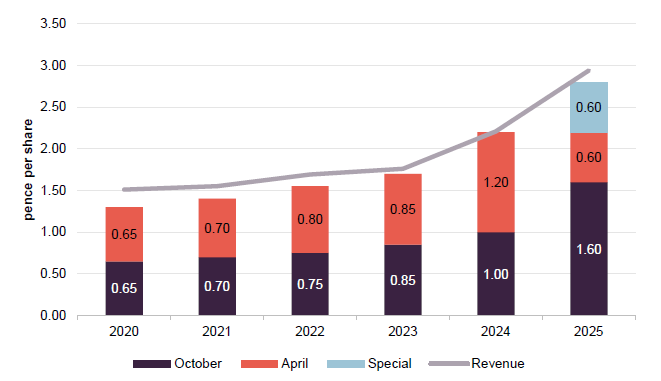
AJOT does not aim for a specific income level. The board pays out most of AJOT’s net revenue as semi-annual dividends in April and October. Dividends have generally been covered by earnings, allowing AJOT to build a revenue reserve, which was £2.1m or 0.95p per share at the end of December 2025.
Figure 12: AJOT dividend history – accounting years ended 31 December
Premium/(discount)
Over the 12 months to 31 May 2026, AJOT’s shares traded between a 2.7% premium and a 6.6% discount to NAV, with an average discount of 1.6%. On 8 June 2026, the shares were at a 1.0% discount.
Figure 13: AJOT premium/discount for the five years to 31 May 2026
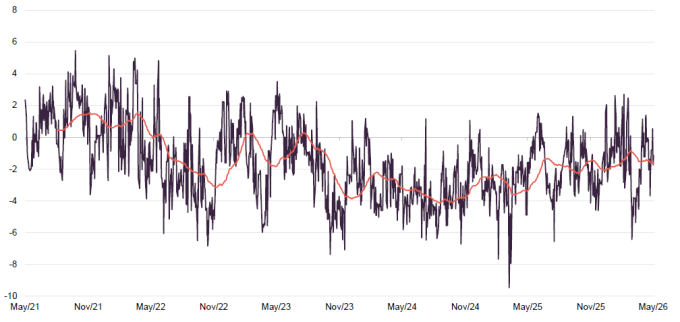
AJOT’s strong discount controls, such as its annual tender offer, have kept the share price close to NAV. After the effects of the FJV combination settled, AJOT often traded at a premium to NAV and was able to issue new shares.
Figure 25 shows monthly share issuance and repurchase since March 2025. On 3 April 2025, AJOT proposed a merger with Fidelity Japan Trust. On 27 November 2025, AJOT issued 110,674,880 new shares in exchange for £184m of assets from FJV.
Figure 14: Number of shares issued/(repurchased) by month
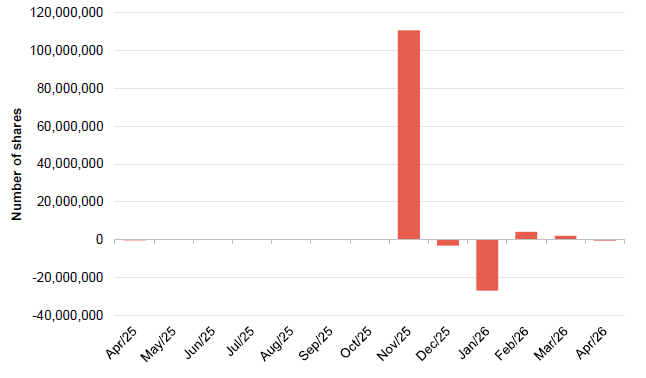
On 9 December 2025, AJOT announced its latest annual tender offer, allowing shareholders to exit at a 2% discount to NAV after costs. Shareholders approved the offer on 13 January 2026, with 26,899,713 shares (10.91% of the issued share capital) tendered. Since then, AJOT has both issued and bought back shares.
At the May 2026 AGM, shareholders authorised directors to issue up to 20% of AJOT’s share capital over the next 15 months or until the next AGM, whichever comes first. New shares, or those reissued from treasury, will only be issued at a price at least equal to NAV plus a premium covering all related costs.
The board was also allowed to repurchase up to 14.99% of the ordinary shares, with any repurchased shares able to be held in treasury.
Structure
Fees and costs
As part of the FJV merger, AVI agreed to a new tiered management fee based on the lower of market value or net assets: 1.0% on the first £300m, 0.95% on the next £50m, and 0.90% above £350m. AVI still reinvests a quarter of its fees into AJOT shares.
Tiered fee based on lower of market cap and NAV
For the year ending 31 December 2025, the ongoing charges ratio was 1.4%, down from 1.5% in FY24. The AJOT board expects this to fall to about 1.25% under the new fee structure.
This fee arrangement is positive, as it encourages the manager to work with the board to keep the discount narrow.
Capital structure
At 31 May 2026, AJOT had 247,873,823 ordinary shares, with 25,475,429 held in treasury. This means 222,398,394 shares were available for trading and voting. There are no other share classes. The company’s financial year ends on 31 December, with AGMs typically in April or May. AJOT has no fixed end date, but shareholders can regularly exit at a price close to NAV.
Major shareholders
Figure 15: Major shareholders as at 12 March 2026
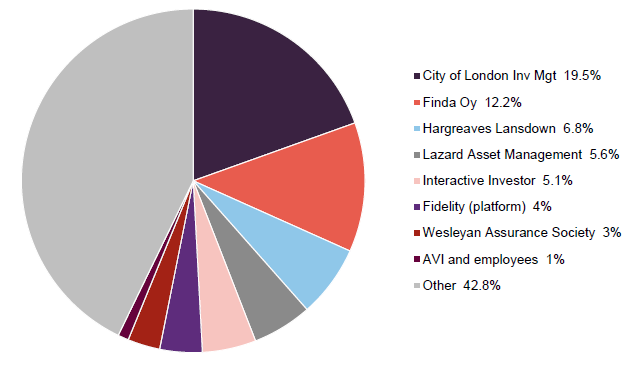
Since the data in Figure 15 was published, AVI has bought another 85,000 shares as part of its commitment to invest at least 25% of its management fee into AJOT shares. Finda Oy has lowered its holding to 2 million shares, now representing 8.99% of AJOT.
Gearing and hedging
AJOT had a JPY6.6bn (about £31m) revolving credit facility due to mature on 2 April 2026, with interest at TONAR plus 1.55%. At the end of March 2026, net gearing was 6%. There has been no update since 2 April, but it is likely the facility has been renewed on similar terms.
AJOT does not plan to hedge its currency exposure at this time, though the board and manager continue to review this.
Management team
Joe Bauernfreund (CEO and CIO)
Joe is chief executive officer and chief investment officer of AVI. He is the sole manager of AVI Global Trust and AVI Japan Opportunity Trust, and responsible for all investment decisions across AVI’s global and Japan strategies. Before joining AVI in 2002, Joe worked for six years at a real estate investment organisation in London. He has a Masters in Finance from the London Business School.
Nicola Takada Wood (managing director Japan)
Nicola joined AVI in January 2025 from Redwheel, where she was portfolio manager and portfolio advisor of the Japan strategy. Prior to that, she was responsible for Japanese equity sales at Mizuho International and Japanese sales trading at Goldman Sachs (Japan). Nicola has a BSc from University of London, SOAS.
Kaz Sakai (head of Japan research)
Kaz started working with AVI in May 2020, researching Japanese companies while completing his MBA at Harvard Business School. He formally joined AVI’s investment team in June 2021. Prior to Harvard, he was engagement manager at McKinsey & Company’s Strategy and Corporate Finance Practice in Tokyo.
Kaz holds a BSc in Geochemistry from the University of Tokyo and an MBA from Harvard Business School.
Shuntaro Shimizu (senior investment analyst)
Shuntaro joined AVI in August 2023 from Bain & Company, where he worked within its management consultancy division. Prior to that, he worked within the Bank of Japan. He has a Bachelor of Law degree from the University of Tokyo and an MBA from Stanford Graduate School of Business.
Ross McGarry (senior investment analyst)
Ross joined AVI in June 2020. He researches South Korean holding companies and asset-backed Japanese companies.
Before joining AVI, Ross completed a one-year programme at Nomura on a UK M&A Investment Banking Industrial Placement. He has a BSc in Economics from the University of Bath.
Jason Bellamy (senior engagement consultant)
Jason joined AVI in March 2020. He works closely with the analyst team and collaborates on the engagement efforts in Japan. Jason brings more than 30 years’ experience in the financial services industry, working for and engaging with global companies, government bodies, regulators and international investors including Sumitomo Mitsui Trust Bank, First Trust Advisors and Aberdeen Standard Investments. He is based in Tokyo.
Jason has a BSc in Economics from The London School of Economics & Political Science (University of London).
Luke Hutcherson (investment analyst)
Luke joined AVI in February 2023. He researches asset-backed Japanese companies and South Korean holding companies. Before joining AVI, Luke completed internships at Tico Capital Management and Ernst & Young. He has a BCom in Finance & Accounting from the University of Sydney and an MSc in Financial Analysis from London Business School.
Yuiko Ozawa (investment analyst)
Yuiko joined AVI in March 2026 after three years working for McKinsey & Company. She has a BA in Sociology from Sophia University.
Ben Levy (ESG analyst)
Ben joined AVI in April 2025. He is responsible for the integration of ESG and sustainability assessments into the investment process.
Prior to joining AVI, Ben was a sustainable finance consultant at Guidehouse where he also served as APAC Co-ordinator for the Partnership for Carbon Accounting Financials. Ben has an MA in Economics from University of Glasgow and an MSc in Climate Change, Management & Finance from Imperial College Business School. He also holds the CFA Certificate in ESG Investing.
Board
Following the recent recruitment of Claire Binyon, AJOT has five directors, all of whom are non-executive and independent of the manager. No director sits on another board together with another member of AJOT’s board. All of the directors stand for re-election at each AGM.
Figure 16: Directors’ length of service, fees, and shareholding
| Role | Appointed | Length of service (years) | Fees (£) | Shareholding | |
|---|---|---|---|---|---|
| Norman Crighton | Chairman | 27/07/2018 | 7.9 | 50,000 | 26,575 |
| Claire Binyon | Director | 27/05/2026 | – | 40,100 | – |
| Andrew Rose | Director | 12/02/2025 | 1.3 | 40,100 | 60,000 |
| Margaret Stephens | Chair of the audit committee | 05/09/2018 | 7.8 | 43,300 | 10,000 |
| Tom Yoritaka | Director | 12/02/2025 | 1.3 | 40,100 | – |
Norman Crighton
Norman Crighton is an experienced public company director, having served on the boards of nine closed-end funds and one operating company. Presently, Norman is also non-executive chair of RM Infrastructure Income plc and non-executive director of Gore Street Energy Storage Fund plc.
Norman has extensive fund experience, having previously been Head of Closed-end Funds at Jefferies International and Investment Manager at Metage Capital Limited, leveraging his 35 years of experience in investment trusts. His career in investment banking covered research, sales, market making and proprietary trading, servicing major international institutional clients over 15 years. His work in many countries included restructuring closed-end funds, as well as several IPOs. As a fund manager, Norman managed portfolios of closed-end funds on a hedged and unhedged basis covering developed and emerging markets.
Claire Binyon
Claire is a chartered accountant and experienced non-executive director with a distinguished career including senior roles in corporate finance, strategic planning, and M&A, across blue-chip multinationals and listed companies in a wide range of sectors.
She currently serves as non-executive director and audit & risk committee chair of Murray International Trust Plc and non-executive director and audit committee chair of JPMorgan American Investment Trust Plc. She previously held non-executive roles as chair of NHBS Ltd and as a non-executive director of IG Design Group Plc (AIM-listed). Her executive career included senior corporate development and strategy leadership positions at InBev, Cadbury, DS Smith, and Fenner (a Michelin group company) amongst others.
Claire is a Fellow of the Institute of Chartered Accountants in England and Wales (FCA), having qualified with Ernst & Young.
Andrew Rose
Andrew retired from Schroders in 2019 after a distinguished 38-year career specialising in Japanese equities. His career included 11 years in Tokyo over three separate secondments, where he was involved in various research and fund management responsibilities across the market capitalisation spectrum. His specific responsibilities included managing several open- and closed-end Japanese equity funds, as well as institutional portfolios.
After retirement from full-time fund management, Andrew served as a non-executive director and member of the Audit and Supervisory Committee at Uhuru Corporation in Tokyo for three years.
Andrew is a British citizen, fluent in reading and speaking Japanese, and resides in the United Kingdom.
Margaret Stephens
Margaret has recently served on the board of Sequoia Economic Infrastructure Income Fund Limited. She previously served as non-executive board member and chair of the audit and risk committee of VH Global Energy Infrastructure Plc and was a partner of KPMG until 2016, having qualified as a Chartered Accountant in 1988. From 2007, she played a key role in building KPMG’s Global Infrastructure Practice, also leading UK and international due diligence and structuring services on major merger and acquisition transactions and public private partnerships. Margaret was a trustee director of the Nuclear Liabilities Fund and chair of the audit committee until January 2024, non-executive board member and chair of the audit and risk assurance committee of the Department for Exiting the European Union and was also a board trustee of the London School of Architecture. Margaret is British and resident in the United Kingdom.
Tom Yoritaka
Tom is a venture capital investor, software executive, and board member with over 30 years of experience in the technology industry in the UK, North America and Japan. He invests in early-stage technology and science-backed startups, and working closely with founders and co-investors, many of whom are leading venture capital funds or C-suite executives of multinational companies. He also sits on the Board of Trustees of SOAS University of London, as well as on boards of various technology industry organisations in the UK.
Previously, Tom served in software product and corporate development executive roles at Cisco Systems, Yahoo! and Microsoft in the US. Early in his career, he worked as a strategy consultant at The Boston Consulting Group in the US and Japan.
Tom is fluent in English and Japanese. He holds dual British/American citizenship and resides in the United Kingdom.
SWOT analysis
Figure 17: SWOT analysis for AJOT
| Strengths | Weaknesses |
|---|---|
| Good track record of achieving positive corporate governance outcomes | Strategy means that performance is lumpy, and short-term returns are behind peers |
| Increased firepower following FJV deal | AJOT has little exposure to hot sectors such as defence and AI capex |
| Opportunities | Threats |
| No shortage of targets | Recent small-cap outperformance could be curtailed by GDP growth hit from energy price spikes |
| Weak yen could rebound, boosting sterling returns |
Bull vs. bear case
Figure 18: Bull vs. bear case for AJOT
| Aspect | Bull case | Bear case |
|---|---|---|
| Performance | AJOT has submitted many proposals and engaged with investee companies and could be poised to reap the rewards of these | Some companies are experiencing difficult trading conditions which is weighing on share prices |
| Dividends | AJOT’s strategy can produce attractive dividends as companies increase payout ratios | Income is a byproduct of the approach and AJOT often targets companies that, amongst other things, are not paying decent dividend income |
| Outlook | AJOT has significant stakes in many companies which should help it achieve its agenda | Wider market outlook could be impacted by a weakening macroeconomic backdrop |
| Discount | Annual exit opportunity has helped keep discount tight | Annual exit opportunity could encourage a short-term mindset, with the potential for a sudden rapid shrinking of assets |
Previous publications
Readers interested in further information about AJOT may wish to read our previous notes listed below. You can read them by clicking on the links in Figure 19 or by visiting our website.
Figure 19: QuotedData’s previously published notes on AJOT
| Title | Note type | Date |
|---|---|---|
| Progress on a number of fronts | Initiation | 20 July 2021 |
| The tortoise triumphs | Update | 15 February 2022 |
| Maintaining its firepower | Annual overview | 21 October 2022 |
| Good governance, better returns | Update | 19 July 2023 |
| The sun has risen | Annual overview | 20 February 2024 |
| Pushing on an opening door | Update | 6 August 2024 |
| Reforms at a tipping point | Annual overview | 24 March 2025 |
| Hi Fidelity! | Update | 23 October 2025 |
IMPORTANT INFORMATION
Marten & Co (which is authorised and regulated by the Financial Conduct Authority) was paid to produce this note on AVI Japan Opportunity Trust Plc.
This note is for information purposes only and is not intended to encourage the reader to deal in the security or securities mentioned within it.
Marten & Co is not authorised to give advice to retail clients. The research does not have
regard to the specific investment objectives financial situation and needs of any specific person who may receive it.
The analysts who prepared this note are not constrained from dealing ahead of it but, in practice, and in accordance with our internal code of good conduct, will refrain from doing so for the period from which they first obtained the information necessary to prepare the note until one month after the note’s publication. Nevertheless, they may have an interest in any of the securities mentioned within this note.
This note has been compiled from publicly available information.
This note is not directed at any person in any jurisdiction where (by reason of that person’s nationality, residence or otherwise) the publication or availability of this note is prohibited.
Accuracy of Content: Whilst Marten & Co uses reasonable efforts to obtain information from sources which we believe to be reliable and to ensure that the information in this note is up to date and accurate, we make no representation or warranty that the information contained in this note is accurate, reliable or complete. The information contained in this note is provided by Marten & Co for personal use and information purposes generally. You are solely liable for any use you may make of this information. The information is inherently subject to change without notice and may become outdated. You, therefore, should verify any information obtained from this note before you use it.
No Advice: Nothing contained in this note constitutes or should be construed to constitute investment, legal, tax or other advice.
No Representation or Warranty: No representation, warranty or guarantee of any kind, express or implied is given by Marten & Co in respect of any information contained on this note.
Exclusion of Liability: To the fullest extent allowed by law, Marten & Co shall not be liable for any direct or indirect losses, damages, costs or expenses incurred or suffered by you arising out or in connection with the access to, use of or reliance on any information contained on this note. In no circumstance shall Marten & Co and its employees have any liability for consequential or special damages.
Governing Law and Jurisdiction: These terms and conditions and all matters connected with them, are governed by the laws of England and Wales and shall be subject to the exclusive jurisdiction of the English courts. If you access this note from outside the UK, you are responsible for ensuring compliance with any local laws relating to access.
No information contained in this note shall form the basis of, or be relied upon in connection with, any offer or commitment whatsoever in any jurisdiction.
Investment Performance Information: Please remember that past performance is not necessarily a guide to the future and that the value of shares and the income from them can go down as well as up. Exchange rates may also cause the value of underlying overseas investments to go down as well as up. Marten & Co may write on companies that use gearing in a number of forms that can increase volatility and, in some cases, to a complete loss of an investment.